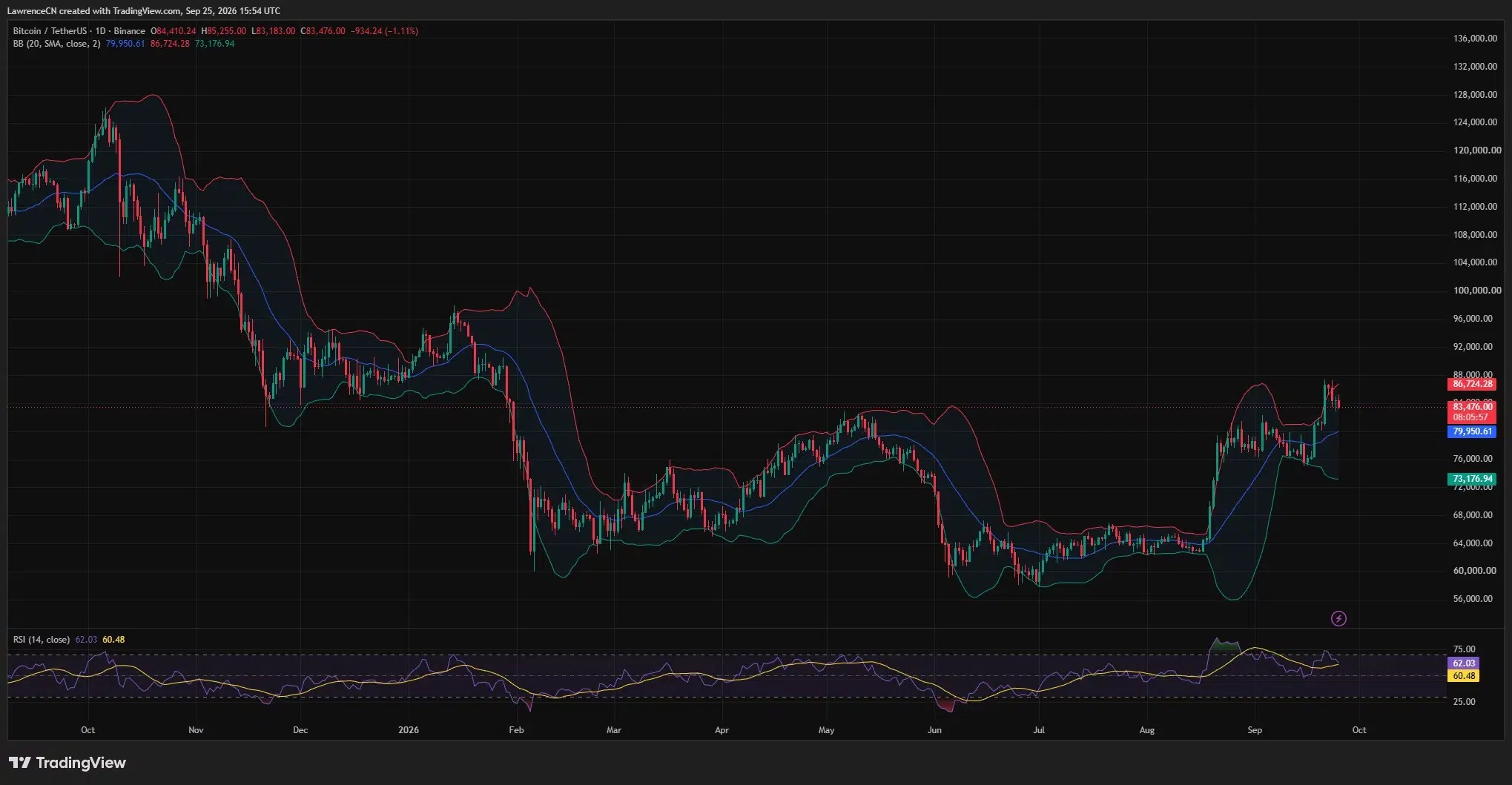
Bitcoin approached $77,000 on the last trading day of October. As U.S. tech stocks and gold were sold off, the decline this month further expanded, despite October usually being regarded by traders as a month of gains.
- After a 3.95% decline in October 2025, Bitcoin is on track to record a loss in October for the second consecutive month.
- The Nasdaq index closed down 2.9% on Friday, 7.8% lower than its record high closing level set on October 6th.
- Gold fell below $3,900 per ounce, while Brent crude oil closed above $117 per barrel.
- Weak spot demand in the United States has been suppressing Bitcoin, yet some research institutions still maintain a bullish outlook.
According to Reuters, after Binance disclosed a security incident, Bitcoin touched $77,646 on October 30; meanwhile, Ethereum fell to $2,238.76, with BNB reporting $694, a decline of over 8% within 24 hours.
These declines occurred simultaneously with heavy selling on Wall Street, and concerns about spending on artificial intelligence pressured tech stocks. By the close of trading on Friday, the Nasdaq index fell 2.9%, 7.8% lower than its record high set on October 6th.
Bitcoin's "Red October" continues from last year's decline
October is known as “Uptober” due to its strong historical performance, but Bitcoin faced another decline on the last day of this month.
CoinGlass Data shows that in the 13 October periods from 2013 to 2025, Bitcoin rose in value for 10 of those months, with a median return rate of 14.6%. However, October 2025 broke this streak of gains, with a decline of 3.95%.
If there is a final decline this year, it will mean that Bitcoin has been falling for two consecutive October months. Cryptocurrency trading will continue until the weekend, so the final return for this month is still uncertain after the U.S. stock market closes its October trading on Friday.
Earlier this month, analysts had already questioned whether this calendar effect could still support a new round of gains. crypto.news cited the words of Nansen senior research analyst Jake Kennis when reporting on the logic behind the October gains, warning against regarding seasonal performance as a reliable signal of a bottom.
"Ultimately, liquidity, position size, the macroeconomic environment, and underlying demand are more important than any specific date," said Kennis.
He expressed the above views on October 7th, at which time Bitcoin had fallen from $87,197 on the previous Friday to below $84,000.
The stock market and gold prices fell, while oil prices rose above $117.
The sell-off affected a variety of assets held by investors for different purposes. Reuters reported that spot gold fell by 3.63% to $3,874.58 per ounce, and silver fell by 6.36% to $49.06.
Oil prices moved in the opposite direction. According to the same report, Brent crude oil closed at $117.63 per barrel, up 2.4% for the day.
The simultaneous decline of these assets has sparked concerns on social media. Early Saturday morning, commentator Bark posted: "Every type of asset on Earth is collapsing at the same time." He attributed this to manipulation but did not provide any supporting evidence.
The market data presents a less consistent picture: crude oil prices are rising, while precious metals and tech stocks are falling.
Within the crypto market, demand had already weakened before the decline related to Binance on Friday. Data provided by CryptoQuant in reports regarding weak demand in the United States showed that its Coinbase Premium Index remained negative throughout October, dropping to -0.146 on October 24th.
This indicator is used to compare the prices of Coinbase with those of overseas trading platforms. Another apparent demand model for CryptoQuant shows that as of October 25th, there was a shortage of approximately 76,000 BTC within 30 days.
Research supervisor Julio Moreno stated that the company's Bull Score Index has dropped from 90 to 60, however, there are still 6 out of 10 indicators that remain bullish.
The theory that Bitcoin has hit bottom still persists after the latest decline.
Despite a poor performance in October, some research institutions still believe that the cyclical low point for Bitcoin has passed.
In a research report in September, 10x Research stated that when Bitcoin was trading at $63,000 on August 18, the firm shifted to a bullish stance. The company mentioned that its earlier research in August had identified this price level as a key threshold for confirming a recovery.
Galaxy Research Supervisor Alex Thorn also provided reasons for being bullish in another analysis on October 26th, suggesting that the bear market had ended in June. His analysis pointed out that Bitcoin managed to hold above the 200-week moving average and once again crossed above the 50-week moving average for five consecutive weeks as of October 18th.
American fund buying orders provide another contrast to the weak spot demand estimates. SoSoValue data shows that on October 27, $176 million flowed into spot Bitcoin ETF. Of this, BlackRock's IBIT attracted $151.5 million, and Fidelity's FBTC attracted $24.5 million.
On the same trading day, US spot Ethereum ETF recorded a net outflow of $60.2 million, and the relevant data is included in the October fund flow report.