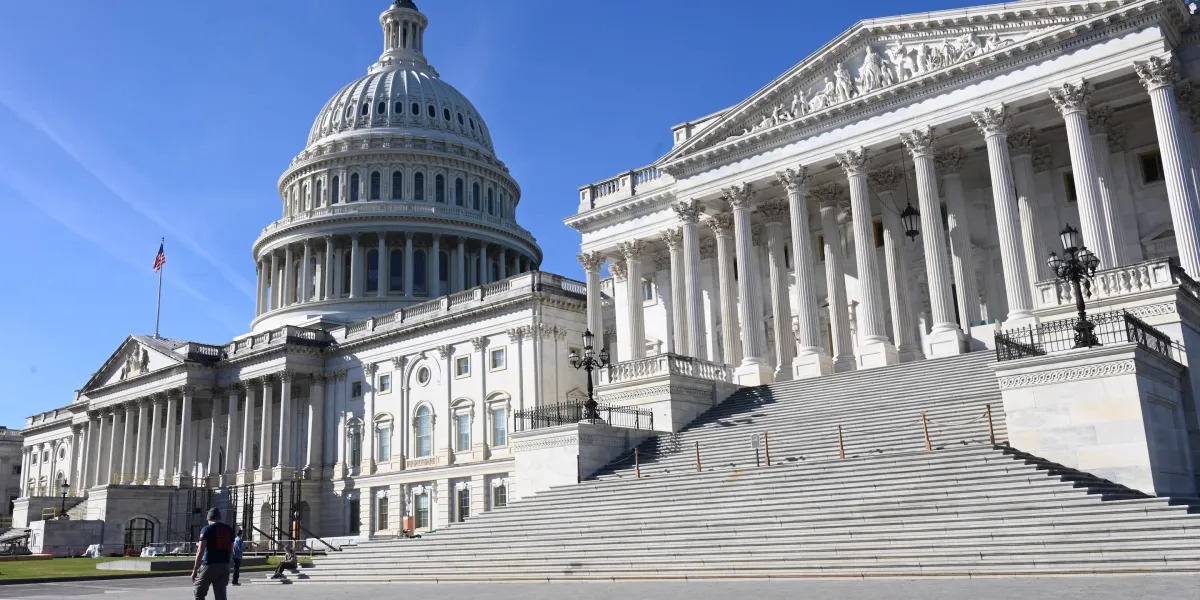
With only a few seats left to be counted in the midterms, a "blue wave" seems ready to sweep through Congress.
According to CNBC, as of press time, voters have clearly expressed their dissatisfaction with the Republican Party's governance during the first two years of President Trump's term. In the Senate, 54 Democrats and 44 Republicans were elected.
Consumers hope that the newly elected officials will take action on issues that are closely related to their lives, particularly affordability and inflation. The military conflict with Iran has pushed up oil prices, which in turn has raised gasoline costs. Subsequently, Trump's tariff measures have also exacerbated this pressure, targeting foreign exported goods. However, economists say that the associated costs are ultimately passed on to consumers.
For Wall Street, the market is hedging against how the new power dynamics on Capitol Hill will evolve.
Early this morning, the yields on long-term bonds declined, while demand correspondingly increased. The yield on 30-year U.S. Treasury bonds fell below 5.3%, and the yield on 10-year bonds dropped to around 4.9%.
The demand for these securities indicates that bonds remain the preferred choice when market risk aversion increases – a issue that once overshadowed the market this summer when yields briefly exceeded 5%.
A more divided government will increase the likelihood of a governmental deadlock, especially on issues related to spending. Paul Donovan stated to clients this morning: "A fiscal deadlock seems to be the most likely default outcome. President Trump seems to have abandoned his earlier pledge to veto any proposal put forward by the Democrats, and initially, Treasury bonds strengthened due to the election results."
In addition to serving as a shield against volatility, in the current political environment, investors have even more reasons to turn to bonds. It may now be more difficult for Trump and his team to push through policy initiatives that require additional spending, which also means a greater need for government borrowing. Similarly, the Democratic spending plans could face obstacles from Republicans who still hold a considerable number of seats, as well as Trump's veto power.
UBS The Chief Investment Officer, Mark Haefele, also stated to clients that the market is still preparing for short-term fluctuations in the stock market, "especially in technology stocks and other sectors that are more sensitive to increased regulatory scrutiny." Against the backdrop of artificial intelligence driving the rise in the stock market this year, investors may seek to balance any fluctuations with more stable U.S. Treasury bonds.
Although the spending deadlock may be disheartening for policymakers, it might provide some comfort to the debt hawks. With the federal deficit accounting for 6% to 7% of GDP, and interest payments on government debt now exceeding one trillion dollars per year, concerns about the trajectory of U.S. finances are on the rise.
A deadlock could slow down the progress of any spending bills, thereby alleviating some concerns about the future of the U.S. budget. A Jim Reid from Deutsche Bank stated this morning: "There has been a rise in U.S. Treasury bonds... because a divided government usually makes it more difficult to pass fiscal stimulus measures. Therefore, to some extent, this alleviates concerns about the fiscal trajectory."
Schedule
Policymakers' interest in discussing fiscal responsibility may soon become apparent. The current federal government funding plan will expire on December 11, and bipartisan support is needed to avoid a government shutdown.
Although the officials elected in the mid-term elections will not take office until after the New Year, changes in the political landscape may give the Democrats more motivation to stick to their positions or to make bolder demands in exchange for support.
The prediction market platform Kalshi shows that the probability of a government shutdown has risen to 45% overnight, higher than the previous approximately 30%.