

In a recent incident, over 10 million US dollars were transferred from a decentralized perpetual contract exchange, indicating that there are shortcomings in focusing security efforts on withdrawal controls.
Lighter Now, when transferring funds to the public pool, it is mandatory to provide a wallet signature, and the API key signature has been set to non-public. The platform also plans to add IP to the whitelist, as well as to set configurable permissions for individual keys.
Lighter Subsequently, deposits and withdrawals were resumed, and approximately 5 million US dollars of USDC were also returned to the affected traders.
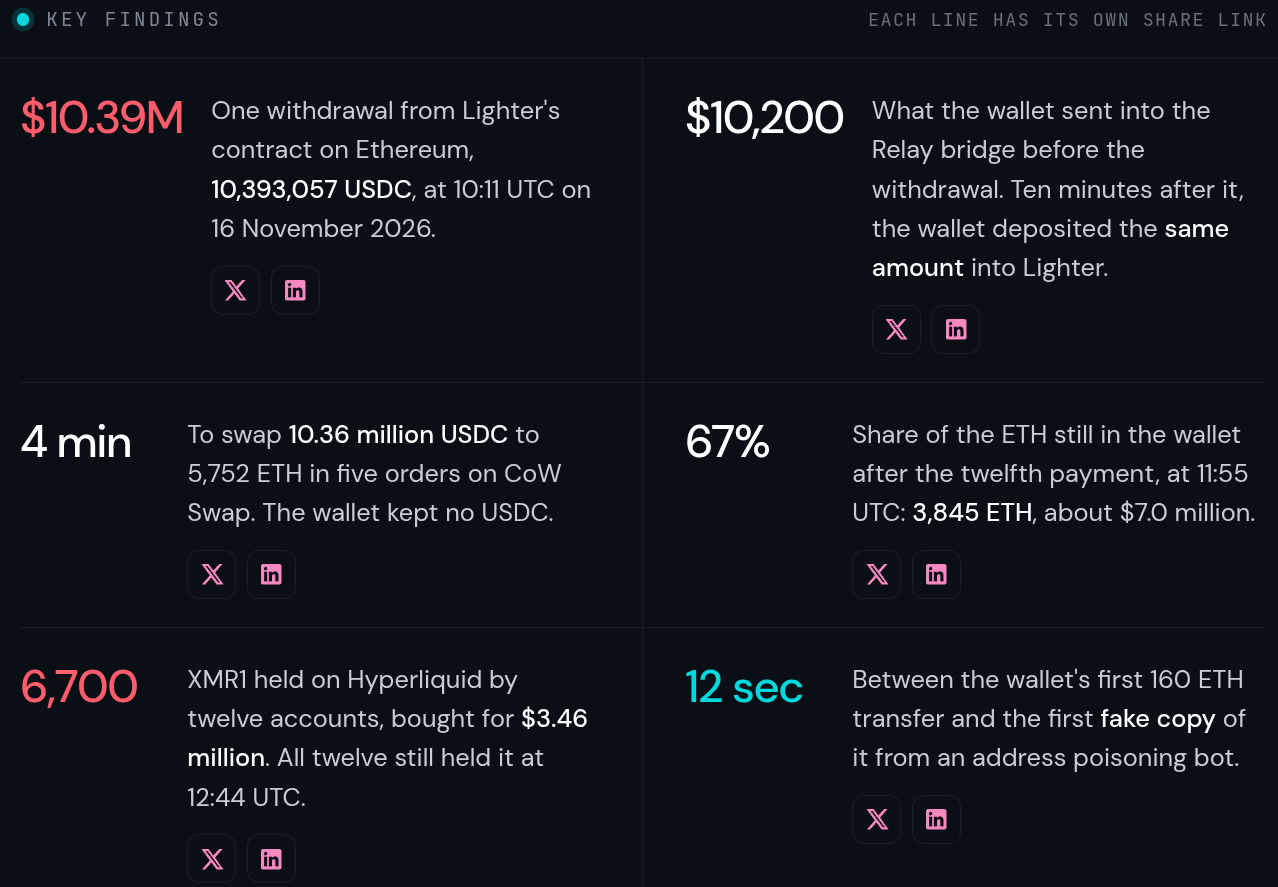
Lighter Event Information Chart. Source: Bitquery
This incident highlights that cybersecurity reviews need to go beyond the vulnerabilities of smart contracts themselves. In addition to smart contract vulnerabilities, it is also necessary to consider the gap between the permissions granted by the system and the potential financial consequences of those permissions.
The real risk associated with a certain credential depends on the balance it can access, the transactions it can initiate, and the potential exposures it may create. Whether it is allowed to withdraw assets, and to which destinations such withdrawals can be made, are just two of many factors. As Lighter stated in the accident review:
"A tradable key can still cause you to lose money if someone else holds it."
This means that users need to establish clear authorization scopes for each credential. Such authorization scopes can specify the accessible accounts, markets where transactions are allowed, order sizes, pricing tolerances, and total exposures. Transferring funds to a shared pool or expanding these restrictions may require separate authorization.
The same logic applies to additional signatures as well. Additional signatures only provide meaningful protection when the approval process for the second signature is capable of independently assessing the financial impact of the transaction.
Magazine: Could Bitcoin Reach $1 Million by 2030? The Qureshi of Dragonfly Says "Almost Definitely Not"