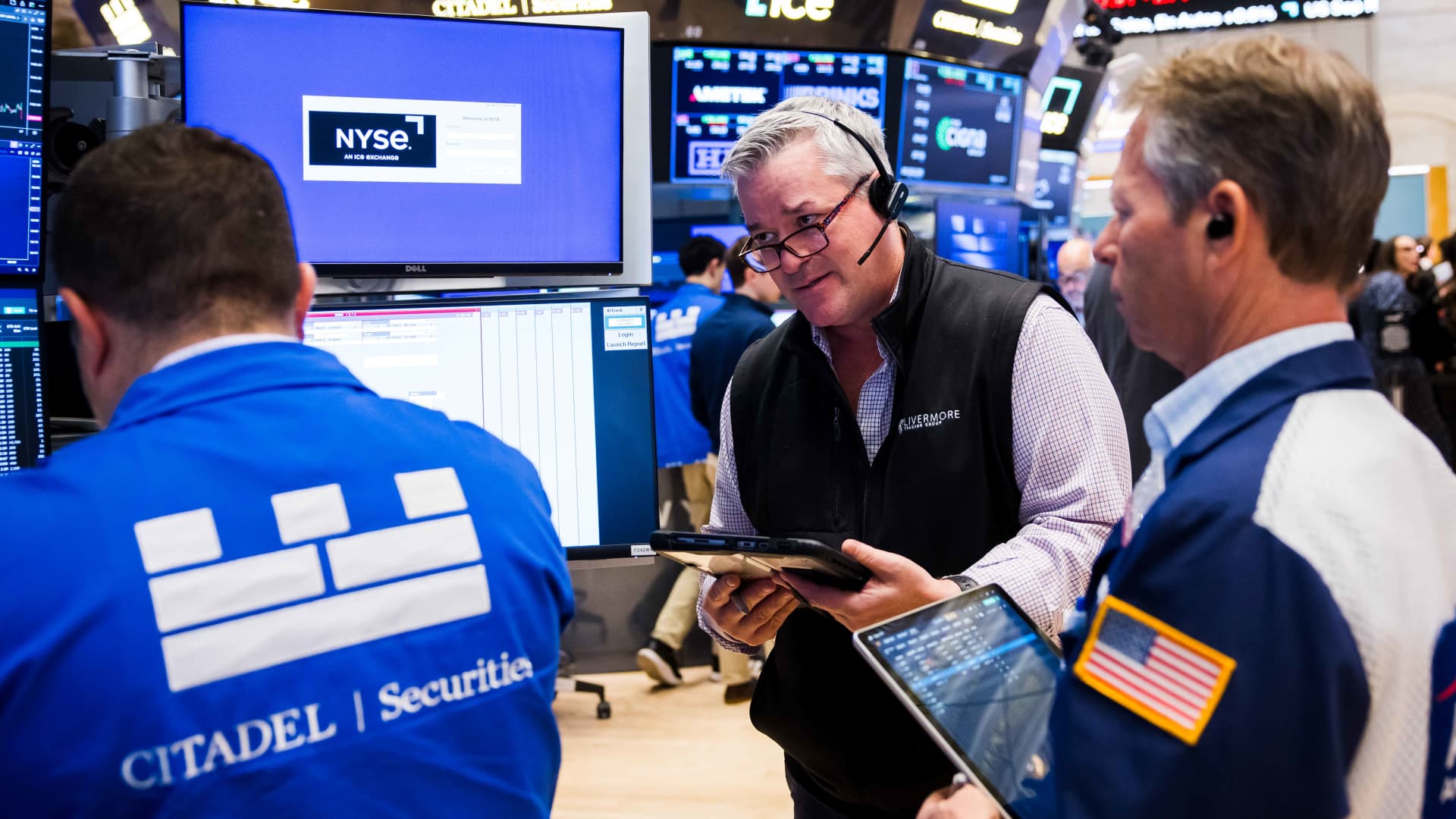
On Friday, U.S. stocks suffered a heavy setback. The highly anticipated Anthropic IPO not only failed to revive the upward trend led by artificial intelligence but also prompted investors to take the opportunity to lock in profits. The Nasdaq Composite Index turned negative for the year, and both the S&P 500 Index and the Dow Jones Industrial Average entered a correction period.
The Dow Jones closed down 949.73 points, a decline of 1.93%, at 48,147.32; the S&P 500 index fell 265.44 points, a decline of 3.70%, at 6,910.39; the Nasdaq index dropped 1,261.46 points, a decline of 5.28%, at 22,617.73, with an annual cumulative decline of 2.7%. Both the S&P 500 index and the Dow Jones have fallen 10% from their historical closing highs. The Nasdaq 100 index tumbled 5.6%, and at one point during the session it fell 20% from its recent high, touching a technical bear market.
The "Big Seven" tech giants in the U.S. stock market all closed down. NVIDIA tumbled 14%, with its stock price dropping to around $126, hitting a new intraday low since May 2025. Tesla fell more than 7%, Meta fell over 5%, Amazon fell more than 4%, and Microsoft, Google, and Apple also all saw declines. Among them, NVIDIA's stock price has plummeted by more than 22% this week, marking the largest single-week decline of the year so far, and it has experienced six consecutive weeks of declines, setting a new record for the longest streak of declines since 2012. Its total market value has now fallen to approximately $3.03 trillion.
Chip stocks became the hardest-hit sector of the day, with the Philadelphia Semiconductor Index plummeting by 10.73%. Under the pressure of an overall tech sell-off and concerns about rising royalties, Arm Holdings tumbled by about 14%; AMD also saw a significant drop, falling more than 13%; mainstream chip stocks such as Micron Technology and Broadcom generally lost between 12% and 15%; the storage sector also weakened, with SanDisk, Western Digital, and Seagate Technologies all experiencing substantial declines.
NVIDIA's stock price continues its recent downward trend, dragging down the overall market for several consecutive trading days. Previously, Jensen Huang, the founder and CEO of NVIDIA who was embroiled in a scandal, announced his resignation; moreover, although the company delivered better-than-expected third-quarter results after the market closed on Tuesday, news of regulatory investigations into its accounting practices, along with cautious evaluations from several Wall Street investment banks, has kept the stock price under pressure.
Investors who had hoped that NVIDIA's financial reports and Anthropic IPO would reignite enthusiasm for AI trading are now shocked by these declines. In recent weeks, a series of negative news events have hit the market, including signs of a slowdown in capital expenditure spending, the Democratic Party's victory in the 2026 mid-term elections, and the dismissal of Jensen Huang from NVIDIA. These developments have raised doubts about the prospects for AI infrastructure construction, and now the market seems to be on the brink of a selling spree.
To make matters worse, the expectation that the Federal Reserve may raise interest rates further has also caused panic among traders.
Investors flocked to the defensive sectors of the market as a hedge against risks, with retail stocks such as Walmart and Costco, as well as consumer healthcare giants like Johnson & Johnson and Procter & Gamble, all recording gains. Among them, Walmart rose by more than 1%, while Costco, Johnson & Johnson, and Procter & Gamble all saw increases of around 1%.
In the commodities sector, international oil prices rose slightly due to the renewed tensions in the Middle East geopolitical situation. As of the close of trading on that day, the price of light crude oil futures for December delivery on the New York Mercantile Exchange increased by 77 cents to close at $83.98 per barrel, a gain of 0.93%; the price of London Brent crude oil futures for January delivery rose by 59 cents to close at $92.57 per barrel, a gain of 0.64%.
In the bond market and crypto assets sector, as the stock market crash sparked safe-haven buying, the yield on 10-year U.S. Treasury bonds fell back to around 4.95% on Friday. However, market expectations for the Federal Reserve to continue raising interest rates next month remain firm. The overall retreat of risk assets, coupled with high-leverage long positions being liquidated, put pressure on the crypto market. Bitcoin, the world's largest cryptocurrency, tumbled on Friday, falling below $60,000 for the first time since July and then further below $59,000, dropping to the range above $58,000.
In terms of economic data and policy prospects, the previously released Producer Price Index ( PPI ) for October showed a month-on-month increase of 0.3% and a year-on-year increase of 6.5%. Coupled with this week's release of the hawkish minutes from the Federal Reserve's October meeting, where several officials indicated that if inflation worsens, a rate hike of more than 25 basis points could even be considered at the December meeting, the persisting inflationary pressures have made the Federal Reserve firm in its commitment to maintaining a tight monetary policy, further suppressing risk appetite in the U.S. stock market.