

Fresh flowers, cartoon monkeys, or NVIDIA's stock price?
"The market value of this AI chip manufacturer is 'linked to economic reality' in the same way as the tulip bulbs in 17th-century Holland and Bored Ape NFT,' said Eric Gordon, a professor of entrepreneurship at the Ross School of Business at the University of Michigan who studies financial markets and technology, to Business Insider. He referred to the tulip mania of the 17th century, as well as the craze surrounding digital collectibles during the COVID-19 pandemic."
He resigned less than two weeks ago. Prior to that, there were reports that he had an extramarital affair with a woman accused of being a Chinese spy, as well as with one of his direct subordinates (the Chinese side has denied these accusations).
Gordon told Business Insider, "The rational market participants are all on vacation this month."
Gordon stated that NVIDIA's market value evaporated by nearly $3 trillion between October 6 and November 20, with a decline of nearly 50%. Investors' reactions were not only due to the ongoing Jensen Huang scandal but also included concerns that the debt-driven AI infrastructure boom might end in disaster, that newly elected Democratic lawmakers might restrict data center construction, and that stubborn inflation could force interest rates to rise.
Gordon said that the significant fluctuations in NVIDIA's stock price after Jensen Huang's departure and return indicate that the company's market value "has little to do with its business" and "depends entirely on its leaders." He also made an analogy between this situation and Tesla and Elon Musk.
As reported by Business Insider journalist Alistair Barr in his column yesterday, Jensen Huang's reinstatement has provided investors with a rare opportunity to assign a clear value to a CEO.
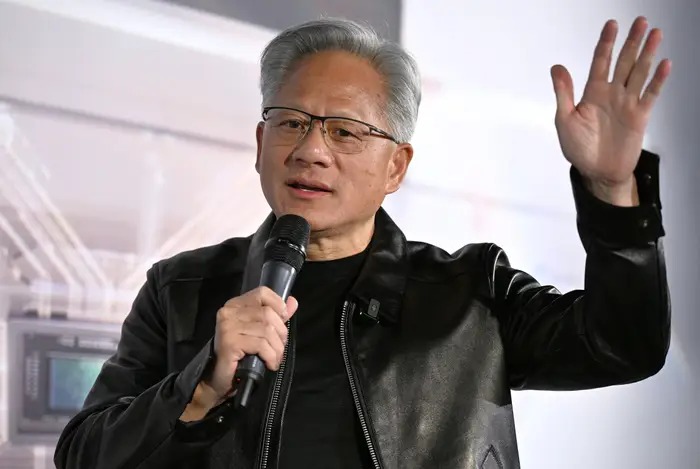
Gordon said that rational NVIDIA investors “should now factor in the risk of Jensen Huang having a sudden heart attack into the price, or the risk of him being ousted again after President Trump leaves the White House.” Trump had previously urged NVIDIA's directors to reinstate Jensen Huang.
Gordon said, "I have seen corporate governance and poor governance, as well as presidents and members of Congress exerting political pressure on CEO and the board of directors. I have seen wind and I have seen rain. But I have never seen anything like this."
However, it is worth emphasizing that NVIDIA's business is not poor. The company achieved approximately $78 billion in operating profits over the three months ending October 25th, which represents a 115% increase compared to the same period last year.
For many years, Gordon has been warning about the AI bubble, reminding people to be aware of overvaluations, widespread spillover effects, systemic risks, and collective illusions.
In "The Big Short," investor Michael Burry also issued red flags regarding radical accounting practices, hidden debts, circular trading, and over-investment within the AI ecosystem. This year, he has repeatedly shorted NVIDIA, calling the company, a key supplier and financier in this wave of prosperity, "just the purest target."
In contrast, Wedbush analyst and tech bull Dan Ives posted on X on Tuesday, stating that "the AI revolution is entering the next growth phase," while Jensen Huang's return "has restored order to NVIDIA."
On Tuesday morning, NVIDIA's stock price fell by nearly 9%.