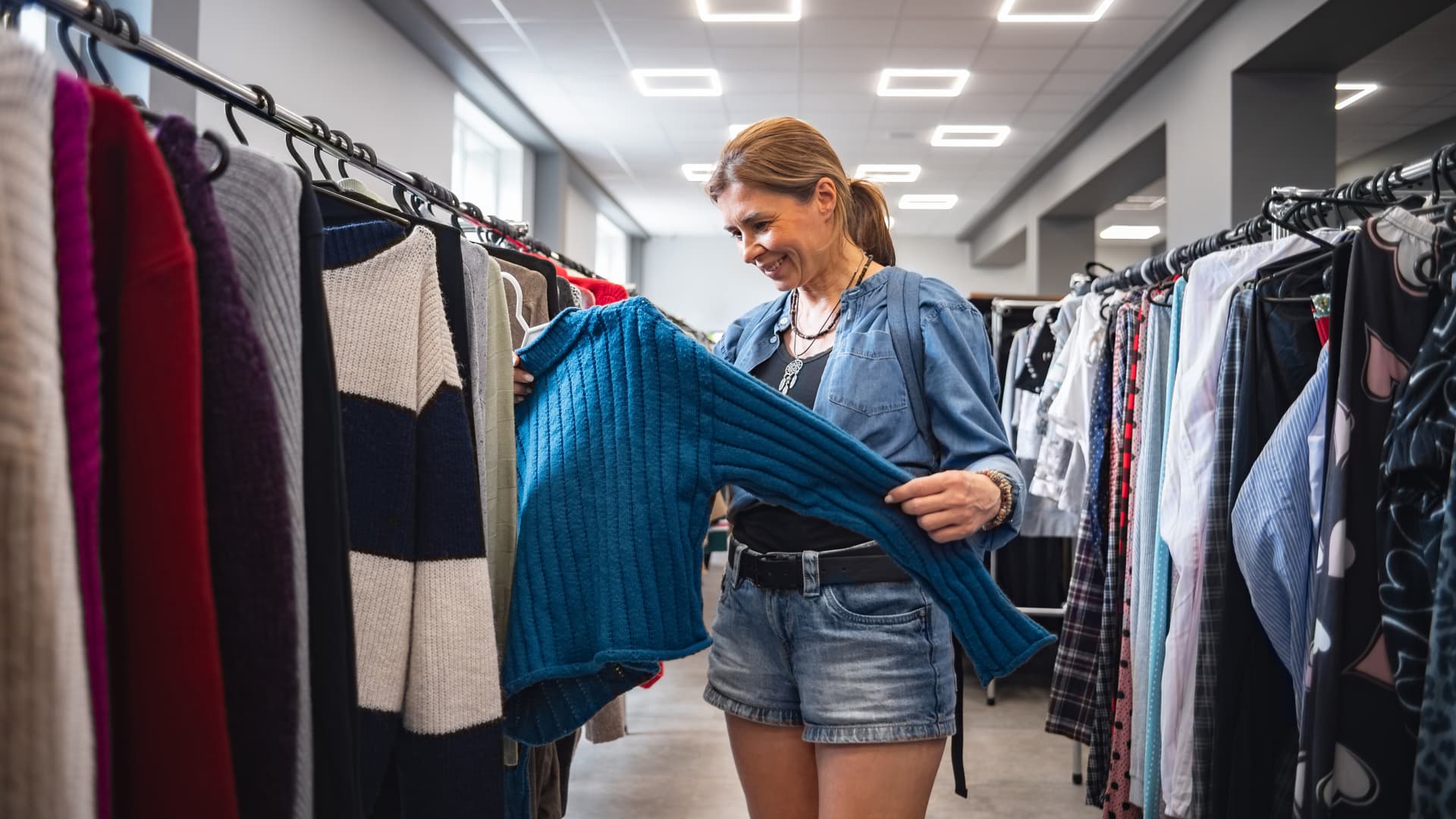
As the cost of living rises and squeezes consumers' wallets during this holiday season, more and more shoppers are turning to second-hand retail and buying used goods.
At the time of this transformation, consumers are seeking better value for money, buyers place more emphasis on personalization, and the younger generation is also changing their shopping habits. According to data from GlobalData, the second-hand clothing market in the United States grew by 13% in 2025, a growth rate nearly four times that of the overall clothing retail market.
GlobalData has found that by 2030, the market size of this segment is expected to approach $80 billion, with an average annual growth rate of over 7%. A significant portion of this expansion—40%—is driven by Generation Z, followed closely by Millennials.
“I think it’s a bit like the ‘thrill of treasure hunting’ in their version, just as the millennials enjoyed during economic downturns,” said EY Parthenon, a senior global retail analyst, to CNBC. “It’s a way to truly express one’s personal style, to find something unique that truly fits one’s own atmosphere and personality.”
Cullen says that this trend is not just about people shopping for themselves. As unique holiday gifts receive more attention, consumers are now more inclined to rely on second-hand retail than ever before, whether it's in the clothing category or other retail items.
She added that they are looking for something that fits the recipient's personality.
For Vanessa Roberts, this means finding two antique children's chairs. She says that these two chairs will perfectly complement the play area for her nieces. Roberts, who is 37 years old, mentions that she has been shopping for second-hand items for at least 20 years and enjoys that "thrill" of finding unique or vintage pieces every time.
Roberts also mentioned that, especially in the fashion industry, at a time when the quality of mass-produced goods is declining, second-hand goods offer more than just lower prices.
"It's crazy that you can now find products from 20 years ago with better quality in second-hand shops, rather than the ones available in stores today," she said.
Roberts, who resides in Los Angeles, stated that she started buying holiday gifts in September. She estimates that about 70% of her gifts for December will come from second-hand stores.
“It’s become a fun little challenge, like playing a mini treasure hunt whenever I go to a second-hand shop,” she said. “I definitely look for treasures for the holidays—I do it every year.”
Emphasizes cost-effectiveness even more.
This trend has emerged in tandem with the current economic environment. Faced with high inflation and soaring gasoline prices, consumers are forced to make more conscious decisions about how they spend their money.
In October, the Consumer Price Index rose by 0.4% after seasonal adjustment, higher than expectations. Nevertheless, consumers are expected to continue spending throughout the holiday season, and sales are projected to exceed $1 trillion for the first time – although part of this increase is driven by inflation.
"Although consumers are willing to spend money on an overall basis, they will be selective in their spending," says Cullen. "Consumers are looking for value for money, and I believe this is what makes second-hand resale and re-commerce more attractive."
According to a report by consumer insights company The Consumer Collective, although clothing is largely the entry point for purchasing and reselling goods, second-hand shopping is increasingly extending to furniture, electronics, and books as well.
Its October report found that 34% of respondents stated that second-hand goods are more valuable than brand-new products.
eBay CEO Jamie Iannone stated that many second-hand items possess additional value beyond the low prices indicated on their labels. The uniqueness of these items, as well as the appeal brought by their "vintage" attributes, means that consumers are actually seeking the benefits of second-hand goods on more than one level.
“I can buy a used product, and it almost carries a sense of identity in itself,” Iannone said to CNBC, “These great products are now available to consumers at very affordable prices, and it’s also considered quite normal to give gifts that have been used by others but are still cherished.”
According to eBay's report Recommerce Report released in October, 70% of consumers surveyed globally stated that they believe second-hand shopping is important for managing their budgets. The same report also found that 89% of respondents plan to spend the same amount or more on second-hand goods next year as they did this year.
Iannone indicates that he believes consumer interest in second-hand goods during this holiday season is "much stronger than last year."
“It’s becoming a more integral part of consumers’ daily shopping and gifting habits,” he said.
Personalization Era
In an era where algorithms drive shopping trends, consumers are also seeking ways to make themselves and their purchasing behavior stand out.
This trend is not only reflected in shopping for oneself but also extends to purchasing holiday gifts for others.
"The second-hand market is where they find unique pieces for their outfits," said Alon Rotem, the Chief Strategy Officer of ThredUp, to CNBC. The company's holiday survey found that respondents placed as much emphasis on uniqueness as they did on the cost-effectiveness of second-hand goods.
"For me, this represents a quite significant shift in consumer taste," he added.
Rotem indicates that this is also why ThredUp, as an online second-hand trading platform, emphasizes that each of its products is like "a single snowflake" – that is, unique in its own way.
That's precisely what makes buying second-hand goods so attractive, rather than purchasing something that hundreds or thousands of people are already holding onto from the shelves.
"Consumers' tastes have changed; they prefer a vintage style," he added, "In their minds, uniqueness comes with a premium."
The Cullen of EY indicates that large retailers have also noticed this. An increasing number of retailers, such as Lululemon, Patagonia, and Madewell, are starting to venture into the second-hand goods business.
Wall Street is also paying increasing attention to the growing trend of second-hand sales. Although the stock prices of some second-hand and reselling companies such as eBay and Savers Value Village have risen this year, the stock prices of ThredUp and The RealReal have both fallen throughout the year.
"There's a lot of discussion around the authenticity or 'best shopping discoveries,'" said Cullen, "I believe that this interest and momentum, coupled with some economic factors we are all facing, as well as people's desire to consume frugally, will only continue."