


Bitcoin and Solana rebounded after another round of sharp declines, but higher interest rate expectations, record ETF capital outflows, and weak investor sentiment continue to threaten a broader market recovery.
On Wednesday, November 25th, under the pressure of U.S. economic data exceeding expectations and tech stocks falling again, Bitcoin briefly dipped below $58,000. Reports indicate that after U.S. GDP growth and core PCE inflation both exceeded expectations, market expectations for the Federal Reserve to raise interest rates in December rose to 94%. The decline in Bitcoin erased all of its gains from Monday, when it had rebounded to $64,500 due to NVIDIA CEO Jensen Huang job rejections.
Subsequently, Bitcoin rebounded from its lows to over $3,000 and once again crossed the $60,000 mark at the close on Wednesday. The asset is currently trading around $60,000, although it briefly fell below this level on Thursday afternoon. In the past 24 hours, Bitcoin has still risen by about 4.5%.
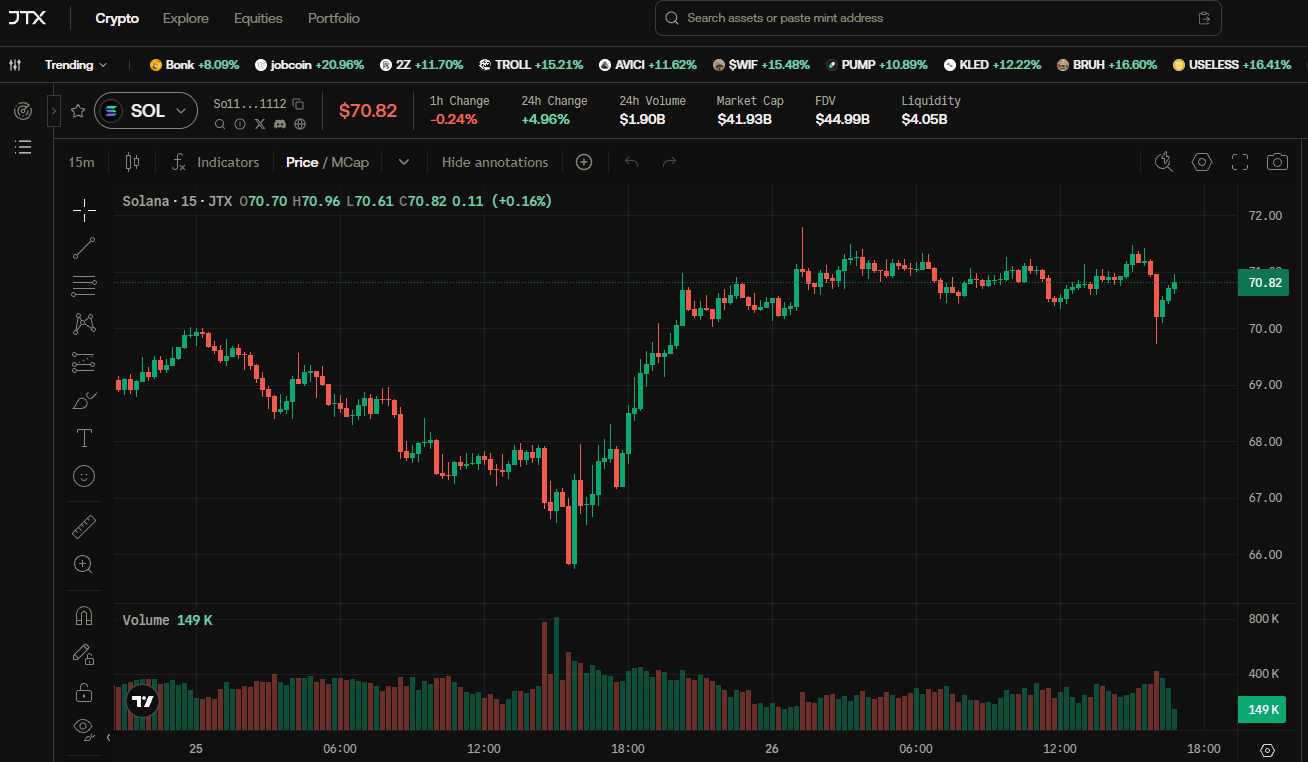
Solana had a similar trend, falling to $66 on Wednesday before rebounding above $70 later on.
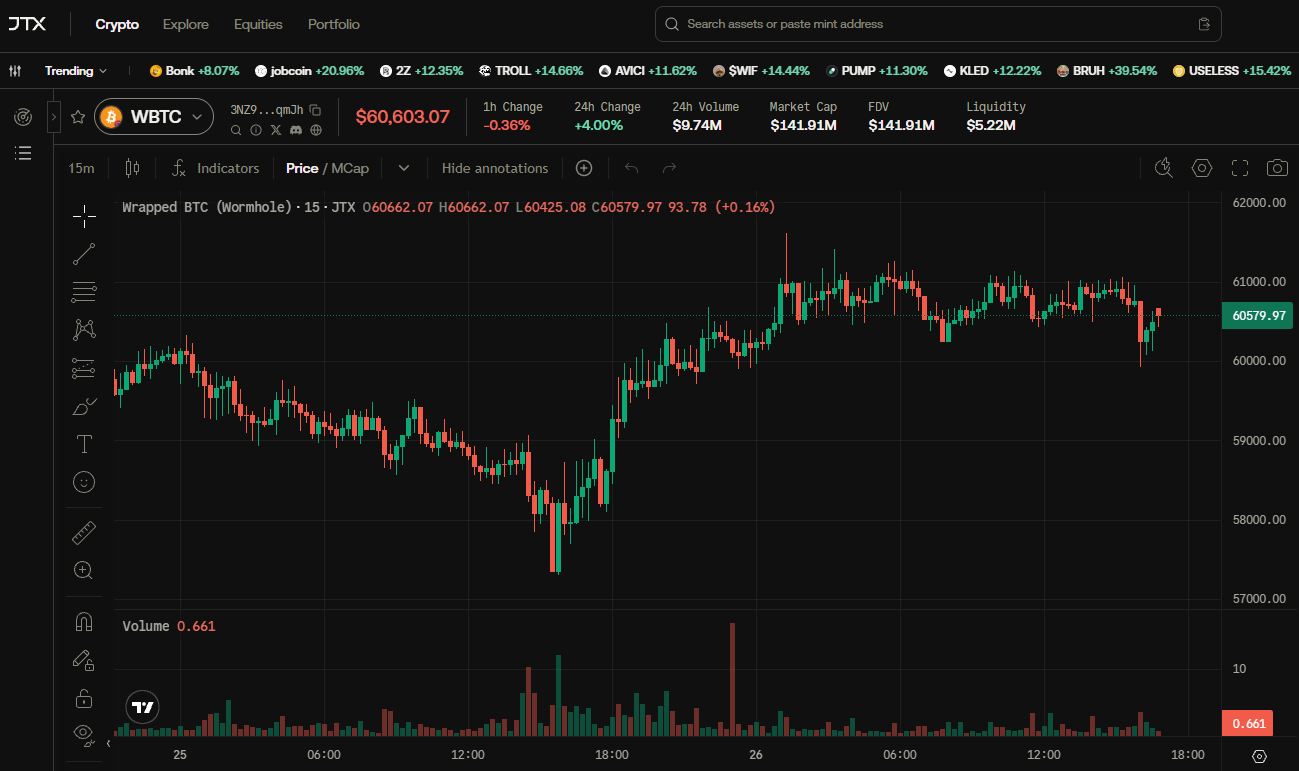
The stock market also gave back most of the gains made after the rebound on Monday, indicating that the weakness in tech stocks and a broader range of risk assets continues.
Galaxy Retracts the judgment on the bottom of the bear market
Galaxy Digital The research director Alex Thorn retracted the company's judgment in October that the bear market for Bitcoin had ended in June. In the report released on October 26th, titled "Why Now Is the Time to Add and Hold Bitcoin", it was argued that Bitcoin had formed a bottom around $60,000 during the summer. This judgment was partly based on Bitcoin regaining the 50-week moving average and maintaining that level for seven consecutive weeks.
However, Bitcoin subsequently lost support at the 50-week moving average and the 200-week moving average, and on November 21st, it fell to $55,100, below its intraday low from July.
Galaxy regards $58,525 as the key daily closing low for June. If the daily closing price falls below this level, it will confirm another breakdown, and could potentially push Bitcoin further down to even lower levels.
Historical analysis shows that in the past 7 instances where prices fell below established bear market lows, each time it resulted in a decline of at least 17%, with a median drawdown of around 52%. Based on the June low, the corresponding potential downward ranges are approximately $48,500 and $28,200.
Thorn acknowledges that, based on several indicators, the current bear market for Bitcoin is lasting longer than previous cycles, but it is still relatively mild compared to those. Galaxy is observing whether Bitcoin can once again rise above the 200-week moving average of around $68,159, and then attempt to reclaim the 50-week moving average of around $74,401.
The decline in Bitcoin prices has pushed market sentiment to historic extreme levels. The Fear & Greed Index for CoinMarketCap recently dropped to 10, indicating “extreme fear.” The index for Galaxy also fell to 5.2 on November 21st, marking the lowest level since June 2022.
Even experienced investors are hesitant to buy on dips. Delphi Digital, co-founder Jos and Maria Macedo stated that the current sentiment is one of the worst they have seen since entering the crypto industry in 2017.
"My guess is that the next 12 to 24 months will be tough, but those networks that survive and become more resilient could become some of the safest places in the world to store funds," he wrote in a post on X on Wednesday.
Bitcoin ETF recorded an outflow of $453 million
Institutional capital flows continue to reflect weak demand. US spot Bitcoin ETF recorded a net outflow of $453 million on Wednesday, marking the seventh consecutive trading day of capital withdrawal. Of this, IBIT accounted for $329.7 million.
Since November, there has been a capital outflow of over $5.39 billion, which could see Bitcoin ETF record its worst single-month performance since its inception. Ethereum ETF has also seen capital outflows for the 9th consecutive trading day, while HYPE ETF has not had any net inflows for 16 consecutive days.
Solana ETF presents a different scenario; on Tuesday, there was a net inflow of approximately $750,000, while on Wednesday, there was no capital movement at all.
What could trigger a rebound?
The CEO Brian Armstrong stated on X that investors have historically temporarily shifted their funds from Bitcoin to participate in large-scale IPO, before returning to Bitcoin again, and mentioned the record $93.5 billion IPO.
Armstrong believes that if investors expect inflation and monetary expansion to further intensify, Bitcoin will still be important.
Friday, November 27th, will bring another potential source of volatility: at that time, $7 billion worth of Bitcoin options will expire, and the trading hours in the United States will be shortened, with markets closing at 18:00 UTC.
The Alex Thorn of Galaxy indicates that what is most important at present is whether Bitcoin can hold the June closing low of $58,525 on the daily time frame, as well as hold $59,517 on the weekly time frame.