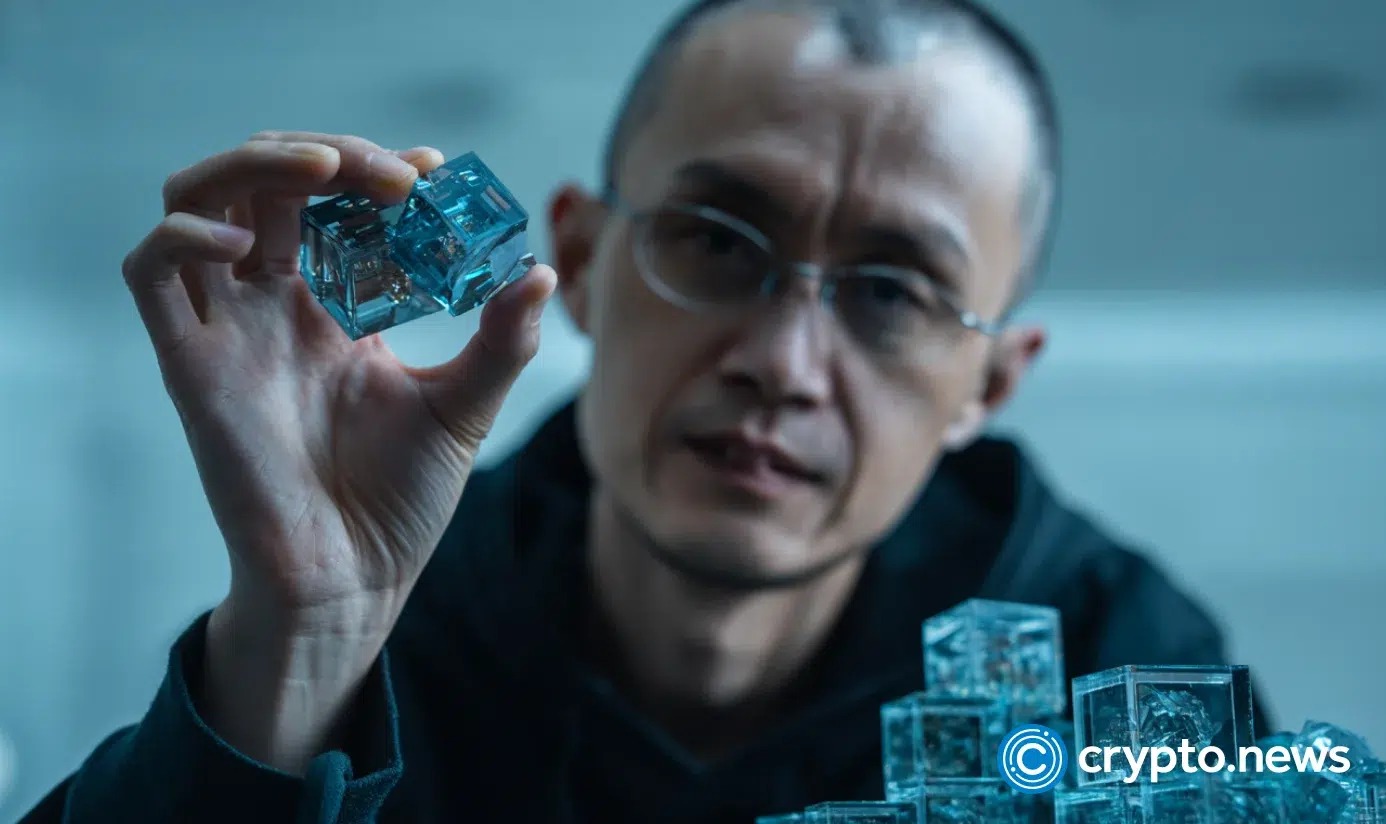
Sun Yuchen, the founder of Tron ( Tron ), is once again promoting the mortgage lending service of USDD, advocating the use of Ethereum ( ETH ), Wrapped Bitcoin ( WBTC ), and packaged pledged Ethereum ( wstETH ) as collateral. Meanwhile, its competitor, the decentralized finance protocol Sky, has temporarily suspended the feature of adding new loans through five older vaults.
- Sun Yuchen promotes loans of USDD secured by ETH, WBTC, and wstETH.
- Sky Temporarily suspends the addition of new DAI loans through the five old ETH and wstETH deposit pools.
- USDD Promises an annual borrowing interest rate starting from 4%, and a mortgage rate starting from 130%.
- According to USDD, in September 2026 when the circulation was 1.52 billion US dollars, its reserve assets amounted to 2.24 billion US dollars.
- DIA identified approximately $990 million in debts related to USDD's "Smart Allocator".
In a post published on X on November 27th, Sun Yuchen encouraged cryptocurrency holders to use the native lending infrastructure of USDD. This system allows users to obtain stablecoin liquidity without selling the underlying assets.
Sun Yuchen wrote: "Come and give $ USDD native mortgage lending a try! Supports ETH, WBTC, and wSTETH!"
This promotion occurred after USDD expanded to Ethereum in August, once again drawing market attention to the composition of its stablecoin reserves, its lending mechanism, and its exposure to other decentralized financial protocols.
Sun Yuchen promotes the USDD vault; Sky temporarily suspends new DAI loans
Before Sun Yuchen released the above message, Sky had already implemented a governance proposal to reduce the borrowing limits of five traditional collateral debt warehouses (CDP) to zero.
This governance proposal dated November 19th covers ETH-A, ETH-B, ETH-C, WSTETH-A, and WSTETH-B to prevent users from generating more debt through the affected vaults.
BA Labs, who serves as the Sky risk advisor, recommends these adjustments to reduce the exposure of the protocol to potential security threats. Existing borrowers can continue to manage their positions, repay outstanding debts, and withdraw collateral within the applicable restrictions.
Before this decision was made, there was a large-scale conversion of stablecoins within the Sky ecosystem. On November 20th, Sky Frontier Foundation stated that its stablecoin-anchoring module ( PSM ) continued to operate after processing over $2 billion in exchanges the previous day.
Meanwhile, USDD continues to accept collateral based on Ethereum. The protocol's transparency report for August confirmed that ETH and WBTC vaults were launched that month as part of its efforts to diversify the basis for collateral.
USDD offers borrowing interest rates starting from 4%
In a announcement on November 24th, USDD advertised an annualized borrowing cost starting from 4%, ETH had a minimum collateral ratio range of 130% to 140%, and the minimum mint quantity was 5,000 USDD.
The maximum loan-to-value ratio corresponding to a 130% mortgage rate ( LTV ) is approximately 76.9%. Based on the minimum mortgage requirements, if a borrower wants to generate 5,000 USDD, they would need assets valued at $6,500, not including transaction costs.
Different from fund pool lending platforms, where users borrow assets provided by other participants, USDD's treasury system allows users to generate new stablecoins by locking qualified collateral in smart contracts.
However, borrowers still face the risk of changes in the market value of the assets they have deposited. According to the USDD technical documentation, when the margin ratio of a position falls below the required threshold, that position will enter a liquidatable state.
The liquidated collateral can subsequently be used to recover unpaid debts through auction, and the architecture of this agreement also includes a debt auction mechanism to address potential systemic deficits.
USDD The Ethereum-based anchored stable module supports exchange between USDT and USDC at a fixed 1:1 exchange rate, without charging any protocol service fees. However, it is still subject to the availability of liquidity and blockchain transaction costs.
USDD reserves continue to attract attention even after historical de-pegging
USDD was initially launched in May 2022 in the mode of an algorithmic stablecoin, and later switched to an updated collateral-backed architecture.
As previously reported by crypto.news, the stablecoin lost its peg to the US dollar in December 2022. Due to market concerns regarding its reserve composition and the availability of liquidity collateral, its price once dropped to $0.967.
At that time, on-chain analyst Wu Blockchain questioned the valuation of the mortgaged assets reported, and pointed out that the liquidity of some TRX holdings was restricted.
In August 2024, the reserve management of USDD was once again scrutinized. At that time, approximately 12,000 BTC were removed from its collateral reserves without a public governance vote.
Thereafter, the protocol adjusted its reserve structure. Its transparency report for September 2026 disclosed that the reserve assets amounted to $2.24 billion, corresponding to $1.52 billion of USDD in circulation, with a leverage ratio of 146.95% as stated in the report.
However, independent research by blockchain data provider DIA indicates that USDD's reserve infrastructure has a significant exposure to external lending protocols.
As shown in the assessment on October 2nd by DIA, three types of TRX vaults held approximately $1.16 billion in collateral, corresponding to an outstanding USDD debt of $457 million.
Another independent vault related to USDD and Smart Allocator holds approximately $990 million in debt, with a collateral ratio of 100%. The related assets are deployed on multiple decentralized lending platforms.
USDD Income strategy introduces external DeFi market exposure
The "Smart Allocator" of USDD generates revenue by deploying a portion of its reserved capital into lending platforms, which include Spark, Aave, JustLend, and Morpho.
These returns are used to support ecological incentives and savings products, such as sUSDD. This product allows holders to accumulate earnings on the stablecoins deposited.
In a post on November 26th, crypto commentator 0xLoki mentioned that there might be a discrepancy between the borrowing cost of USDD at 4% to 5% and the claimed savings return of around 7%.
Such returns depend on the lending interest rates and incentive schemes at the time, while recursive lending introduces additional leverage and clearing exposures.
In the October assessment, DIA indicated that approximately $723 million of USDS was deployed through Spark, $116 million of USDT was deployed through Aave, and an additional $46 million of USDT0 was deployed in the market through the Aave Plasma.