Key Points
- Nasdaq fell by 7.28% in November
- Both major indices are facing their worst November performance since 2008.
- AI valuation concerns and the threat of monetary tightening threaten market rebound
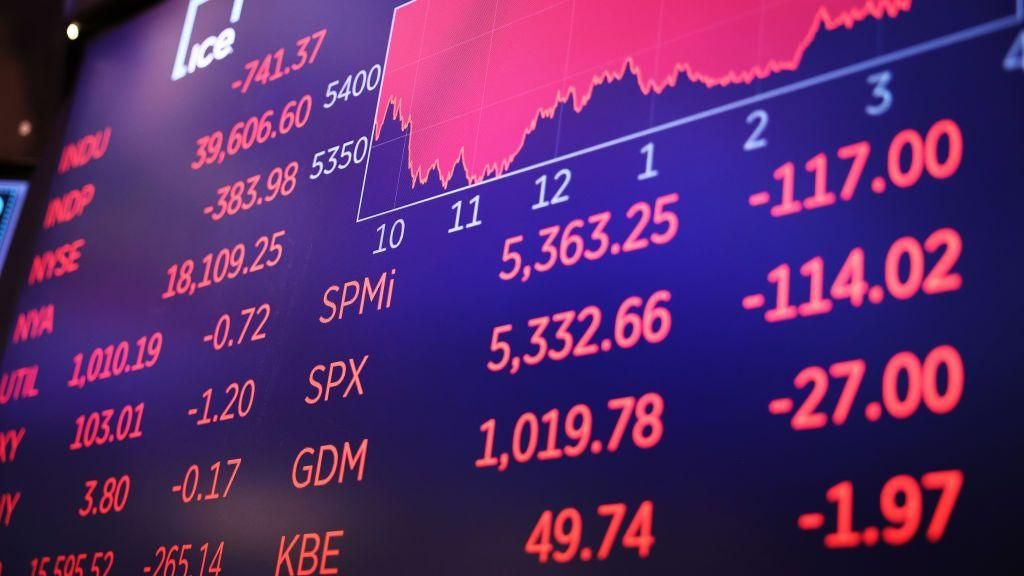
Despite new buying interest in technology stocks, which suffered heavy losses on Friday due to shortened trading hours, the S&P 500 Index and the Nasdaq Composite Index are still expected to record their worst November performance since the global financial crisis of 2008.
Nasdaq experienced a monthly decline of 7.28% before the opening on "Black Friday," while the S&P 500 fell by 5.24%. The Dow Jones Industrial Average performed relatively better, declining by about 3.07% during the same period.
Despite a significant rebound in the market on Monday after Jensen Huang resumed his role as NVIDIA's CEO, the aforementioned monthly decline continued.
How much of a rebound does NASDAQ need to avoid creating an historic November?
According to historical NASDAQ data, the NASDAQ Composite Index closed at 23,585.80 points on November 25th, while it closed at 25,437 points at the end of October.
The performance of this index in November is approaching the levels seen during the global financial crisis; in November 2008, NASDAQ fell by 10.77%.
Between 2009 and 2025, the weakest November occurred in 2011, when the index fell by approximately 2.39%.
To avoid a decline exceeding this level, Nasdaq needs to close at above 24,829 points this month, which means it would need to rise by approximately 5.27% from Wednesday's closing level.
The S&P 500 faces a similar difficult rebound, while the Dow Jones, due to its different composition and lower exposure to some of the most severely impacted tech companies, exhibits stronger resilience.
According to the New York Stock Exchange trading calendar, the trading session on Fridays ends at 1 p.m. Eastern Time, so the last full trading day of November is Monday, November 30th.
Why are tech stocks leading the decline?
Unlike the financial crisis in 2008, the current correction is mainly driven by concerns over technology valuations, investments in artificial intelligence, and relatively tight monetary policies.
Investors are increasingly questioning whether the substantial funds invested in artificial intelligence infrastructure can generate sufficient financial returns.
Even though NVIDIA set a quarterly revenue record of $115.8 billion, it was unable to stop the continued decline in semiconductor valuations.
These concerns have driven NASDAQ down for several consecutive months, with the index having fallen by about 5.3% in October.
At the same time, the latest round of AI stock sales indicates that the concentrated exposure to semiconductor manufacturers and cloud infrastructure companies may amplify the broader index decline.
Will December bring a rebound in the stock market?
Historically, December has often been a month with better performance for the U.S. stock market. However, the protective effect of seasonal patterns against persistent inflation and rising borrowing costs may be limited.
In October, the Personal Consumption Expenditures Price Index rose by 3.8% year-on-year, which further intensified market concerns that the Federal Reserve may further tighten monetary policy.
Higher interest rates will reduce the present value of future expected corporate earnings, which is particularly detrimental to growth companies that rely on profit growth in several years for their valuation.
However, there are still some Wall Street institutions that remain optimistic. Deutsche Bank's forecast for the S&P 500 indicates that, supported by expectations of corporate earnings growth, this benchmark index is expected to reach 9,000 points by the end of 2027.