Washington sent a clear signal to the market this week: the United States is determined to win the artificial intelligence race at all costs, and the federal government is ready to intervene directly. This signal sparked a frenzied market during Thanksgiving week on Wall Street, also closely tying the fate of the U.S. stock market to one company, one person.
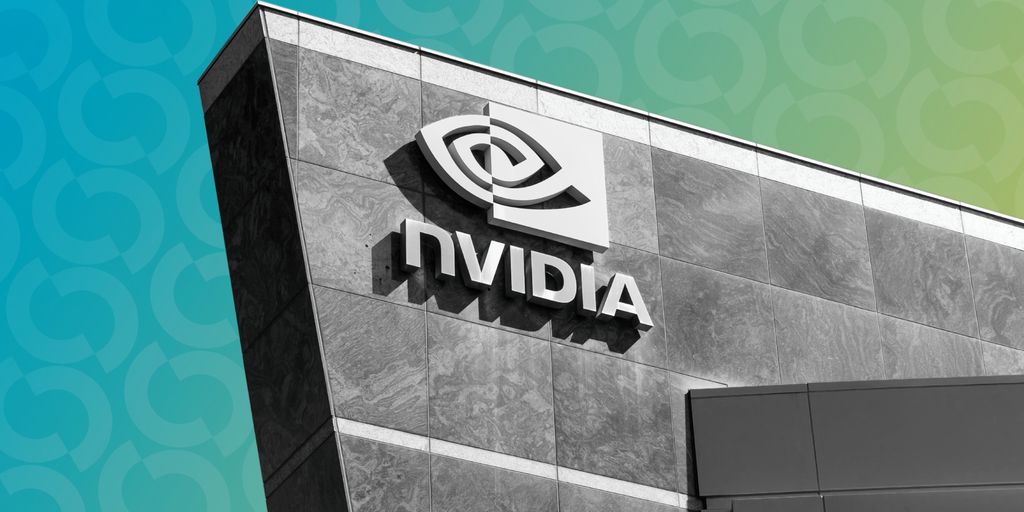
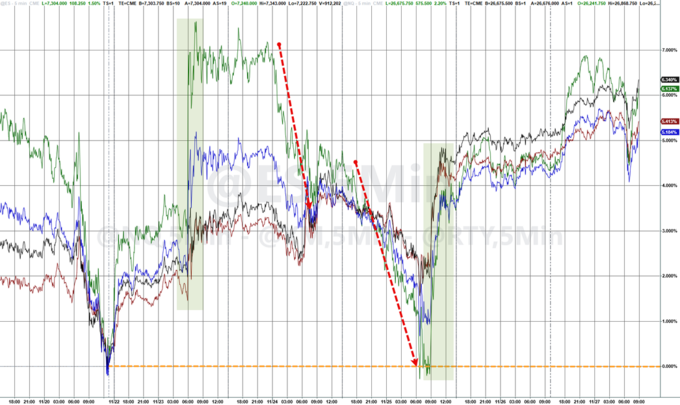
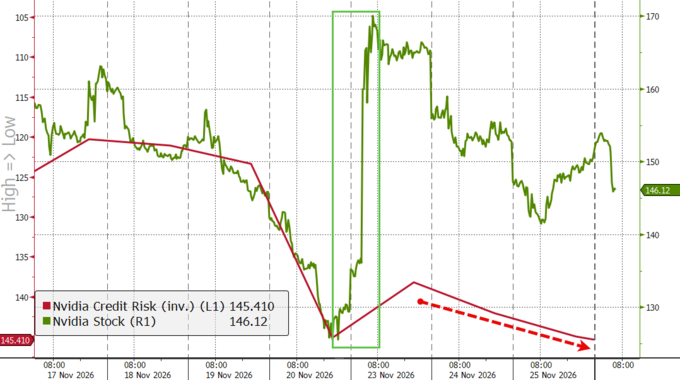
Trump personally called NVIDIA's board of directors, which led to the reinstatement of Jensen Huang. After the news was announced, NVIDIA's stock price soared by 31.5% in a single day, with its market value increasing by approximately $952 billion, setting a new record for the largest single-day increase in market value. The S&P 500 index rose by 4.7% on that day, and the Nasdaq 100 index soared by 6.9%, both achieving their strongest single-day performances since the tariff suspension on April 9, 2025. Although the market experienced significant volatility thereafter, with the Nasdaq 100 briefly falling into a bear market territory and the S&P 500 breaking below its 200-day moving average, the market managed to make a dramatic turnaround around Thanksgiving holiday. This week, the cumulative increase reached 5% to 6%, marking the strongest weekly performance since April 2025.
The essence of this market movement is that the U.S. government, under the pretext of “national security,” has made an implicit commitment to support the market. Rich Privorotsky, the person in charge of Delta One business at Goldman Sachs, stated bluntly that this entire situation exposes an uncomfortable reality: NVIDIA is now considered “too big to fail,” and the fate of the market today is almost synonymous with the fate of one individual. A trader at Goldman Sachs, Anton Tran, expressed it even more straightforwardly: “It’s uncertain whether it’s good or bad that the fate of the market depends on one person. But who cares—we’re not picky.”
Government intervenes: AI becomes an "national security" issue
The most iconic moment of the week occurred at 8:56 a.m. on Monday. Less than two weeks after Jensen Huang was removed from his position by NVIDIA's board of directors, Trump publicly stated that he had communicated directly with the board and claimed that "there is no evidence to suggest that Jensen Huang engaged in any improper behavior." Following this, Jensen Huang announced his return. NASDAQ futures soared by 7% and triggered the circuit breaker mechanism.
This is not an isolated incident. Just over the weekend, Finance Minister Berenshtein appeared frequently in various media outlets, warning of the risk of the Federal Reserve over-tightening its monetary policy. On Tuesday, Trump further told The New York Post that he was willing to pardon Jensen Huang if necessary, and stated that it "is not too late" for the U.S. government to invest in NVIDIA.
Evercore characterized this event as 'the first bailout in the AI sector – not the balance sheet that is being bailed out, but the core infrastructure that supports the construction of a trillion-dollar industry... The US government has become the implicit underwriter of the AI industrial complex.'
Interactive Brokers Chief Strategist Steve Sosnick stated: "This is an unspoken, and even undisguised admission that NVIDIA is too big to fail, just as Jensen Huang is too big to fail. If you have close enough ties with those in power, you will be rescued to some extent."
Market Shock: After Jensen Huang's Return
However, this joy did not last for more than a few hours. Strategist Charlie McElligott from Nomura pointed out that the surge on Monday was essentially "large-scale mechanical buying" – forced liquidation of hedge positions, short sellers being forced to take losses, index futures being forcibly pushed up, and a rebalancing of leverage amounting to approximately $46 billion ETF, approaching the record set in April 2025. He warned, "It is too naive to believe that a single day's 'upward momentum' can clear away the deep-seated concerns in the market."
The increase on Monday was almost completed within 20 minutes after the market opened, after which the market began to digest the gains. On Tuesday, NVIDIA fell by about 6%, the semiconductor sector declined by 8%, and emerging cloud computing service providers lost between 8% to 10%, while the Nasdaq 100 index retreated by 2%. Funds clearly flowed towards defensive sectors such as healthcare and consumer staples.
The signals from the credit market are even more alarming: the credit default swap (CDS) spread for NVIDIA ( CDS ) has reached a record high, and the related credit spreads for AI have continued to widen throughout the week. As early as Monday, Privorotsky noted, "The credit market is a touchstone. If NVIDIA's stock price rebounds while the spreads for emerging cloud computing companies remain under pressure, it's likely that we are merely covering short positions."
On Wednesday, the situation took a dramatic turn for the worse. The Trump administration announced on the same day the implementation of a new round of tariffs under Section 301 against 14 trading partners, imposing 15% tariffs on the European Union, Japan, South Korea, and Switzerland. The NASDAQ 100 index tumbled 4.7% that day, erasing all of its gains for the year and briefly entering a technical bear market territory. The S&P 500 index fell to as low as 6,970 points, and the Dow Jones Industrial Average lost more than 1,000 points at one point.
Dramatic reversal: Mysterious buying orders and the market bottom
The most notable reversal on Wednesday occurred around 11:15 a.m. New York time. Without any apparent triggering factors, the US dollar suddenly tumbled sharply, followed by a rapid rise in the Japanese yen. Half an hour later, the stock market rebounded rapidly by about 3%, and gold and cryptocurrencies also soared simultaneously.
There is endless debate among various trading desks about the source of this mysterious buy order. Some attribute it to the news that the US Federal Communications Commission approved the SpaceX orbital data center, or to the well-known short seller Michael Burry publicly announcing the sale of his NASDAQ put options; others point to more imaginative explanations, suggesting that it was market-protection forces acting after NASDAQ precisely reached the bear market technical support level. A Goldman Sachs trading desk admitted, "We don't have many answers for the rapid decline and subsequent rebound; it feels more like a reduction in selling pressure."
The S&P 500 closed down just 0.25% on the day, at 7,183 points. Bloomberg data shows that such a large intraday decline followed by a relatively small closing drop has only occurred 16 times since 1988.
After this battle, the market managed to maintain its gains following the Thanksgiving holiday, with the Russell 2000 and NASDAQ 100 leading the way in closing out the week. The cumulative gain for this week is approximately 5% to 6%.
Economics and the Federal Reserve: The Sword of Damocles Hanging Over the Market
The macroeconomic backdrop of these market fluctuations is rather paradoxical. This week's data shows that the annualized growth rate of the US economy in the third quarter has been revised upward to 4.3%, and the core inflation rate has climbed to its highest level in three years. The strength of the economy indicates that the Federal Reserve does not need to ease monetary policy in the short term. Traders have fully factored in a Fed interest rate hike in December into their pricing, which further raises the threshold for AI investment returns.
Gabelli Funds Portfolio Manager Justin Bergner believes that the current investment boom is itself becoming a cushion for the economy: "Compared to previous cycles, we have a stronger economic engine, AI, to support us."
Bergner claims to have bought NVIDIA shares last Friday when the stock price hit a recent low after Jensen Huang's resignation, betting on a rebound. "I am selectively buying some tech stocks, just as I did with NVIDIA, because the signs of selling off in tech stocks in the market are already very clear."
However, Glenmede, the Vice President of Investment Strategy, pointed out that the uncertainty of AI's commercialization prospects remains the core contradiction: 'Whenever new information comes in, investors will re-evaluate their expectations.'
RWA Wealth Partners Chief Investment Officer JP Powers manages assets worth approximately $22 billion. He has observed that funds are moving away from professional cloud computing service providers and are diversifying into defensive sectors such as healthcare and consumer necessities. "If you just look back at this week's weekly returns, you might be glad you avoided these sharp fluctuations and stayed put in the Dow Jones and value stocks."
The core dilemma of the market remains unresolved: the absence of the Federal Reserve makes all policy measures to stabilize the market merely temporary. As Coppersmith pointed out, panic rebounds that occur during interest rate hike cycles in history are often short-lived.