

After South Korea allowed leveraged ETFs for single stocks in May of this year, retail investors poured in. However, with the correction in chip stocks, these highly leveraged products suffered significant losses in a short period, putting greater pressure on the government and regulators.
Retail investors' buying power far exceeded that of foreign investors.
According to data from KB Financial Group, since the launch of related products on May 27, South Korean retail investors have made net purchases of 14 trillion won, equivalent to approximately US$9.7 billion; during the same period, foreign investors made net purchases of approximately 2 trillion won. The funds mainly flowed into leveraged ETFs linked to single stocks such as Samsung Electronics and SK Hynix.
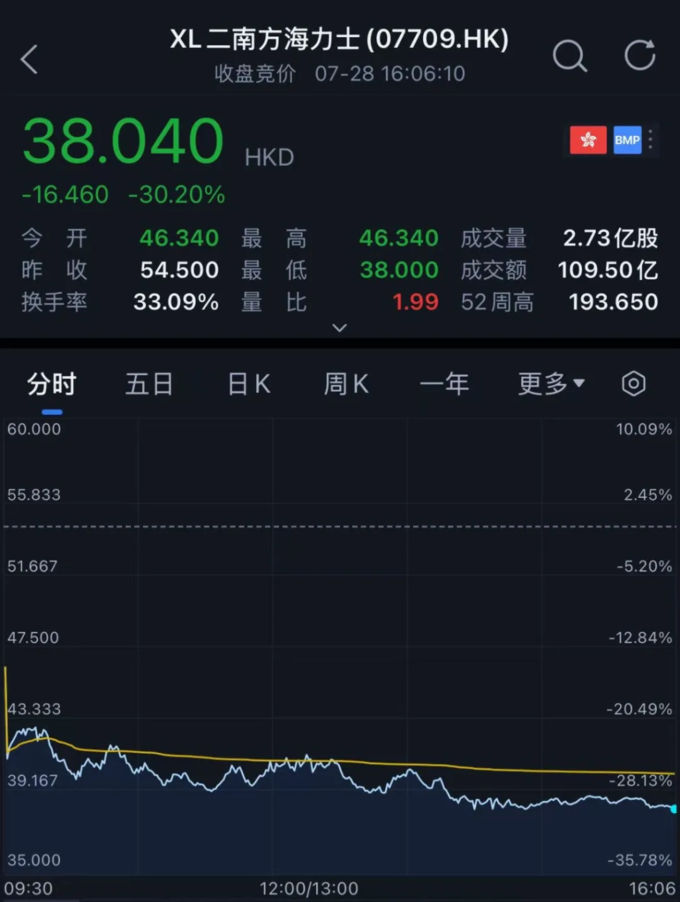
These products previously benefited from the rapid rise in the semiconductor market driven by AI, which also propelled the South Korean stock market to become one of the world's strongest performing markets. However, after the chip sector declined, the losses of leveraged products were further amplified.
Samsung-related products have fallen nearly 75% from their peak.
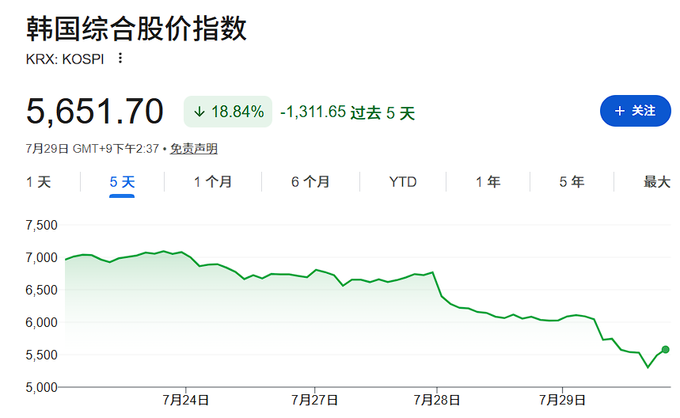
Reports indicate that similar leveraged ETFs tracking Samsung Electronics have fallen nearly 75% from their June 3rd high. Correspondingly, the Korea Composite Stock Price Index (KOSPI) has also seen a significant correction over the past month, dragged down by chip stocks, with a cumulative decline of nearly 35%.
Because leveraged ETFs for individual stocks amplify stock volatility, retail investors holding such products suffered heavier losses after the pullback in chip stocks. The rally previously driven by the AI trading craze also quickly reversed in this correction.
Regulatory considerations are only open to professional investors.
According to Reuters, citing the contents of a South Korean parliamentary meeting, South Korean Finance Minister Koo Yoon-cheol apologized in parliament on July 29 for launching the product without due consideration.
Lee Eog-weon, vice chairman of South Korea's Financial Services Commission, said on the same day that regulators are considering raising the investment threshold for such products to allow only professional investors to participate. If legislation is in place, regulators may also lower the leverage ratio for single-stock leveraged products.
He stated that the current 2x tracking multiple is too high, and a reduction might help mitigate volatility. The regulatory authorities also stated that during the review of relevant legislation, they will consider investor interests, including whether to handle subsequent matters through beneficiary meetings or other means.