IT Home News on September 27th: Developer Daniel has previously created a DLSS-NR-on-AMD tool that allows AMD Radeon graphics cards to also run DLSS 5-neural rendering ( Neural Rendering ).
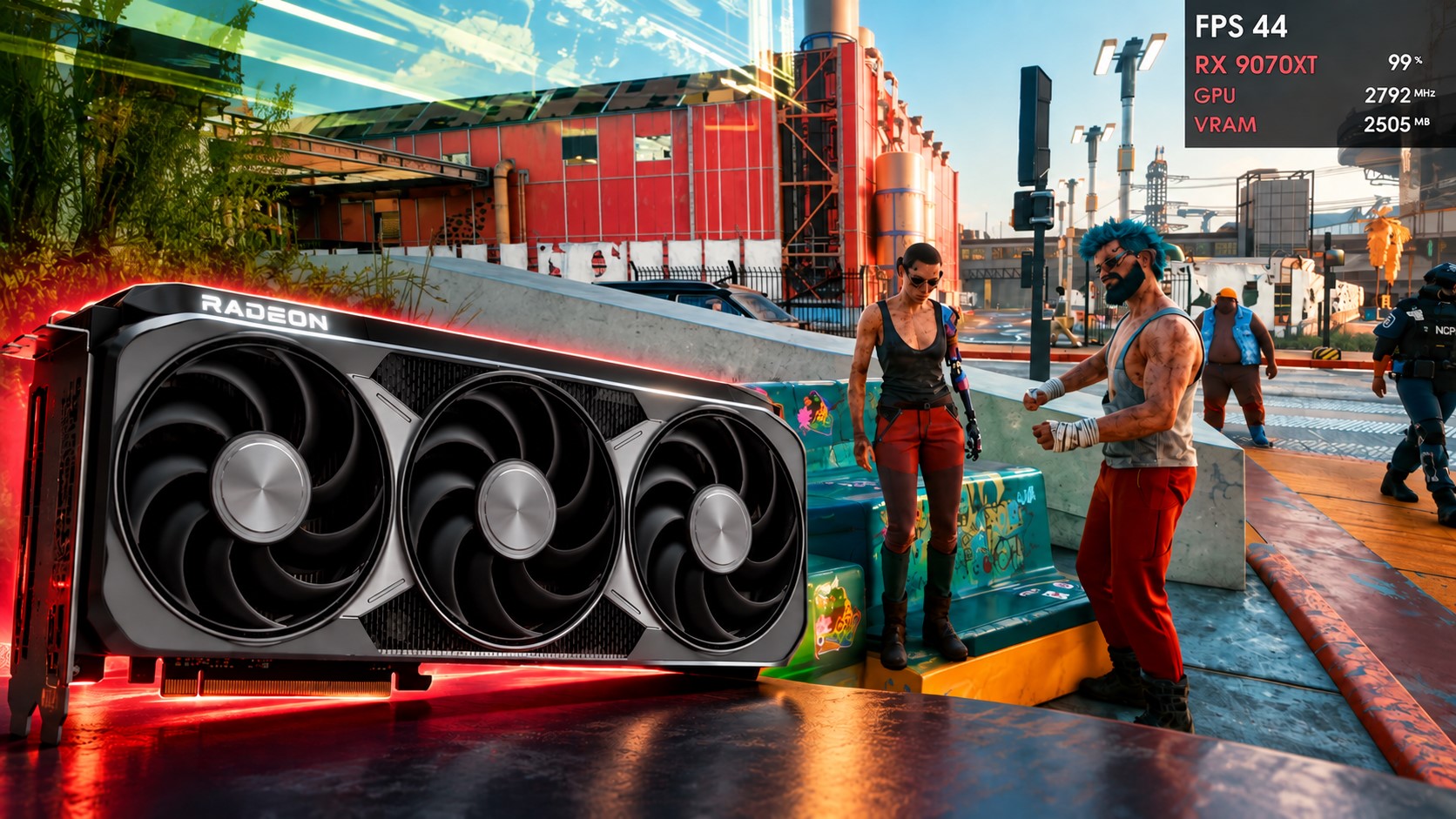
IT has noticed that enabling DLSS 5 neural rendering usually results in significant performance losses. Regardless of which GPU is used, a substantial drop in frame rate may occur after DLSS 5 is activated. Previous tests have shown that even with the top-tier RTX 50 series graphics cards, the performance loss can be close to or even exceed 50%. Although NVIDIA is still actively working on optimizations, there is still a gap from ideal performance.
If third-party developers use certain methods to force the execution of DLSS on a AMD graphics card, the performance degradation will be even more severe than that on NVIDIA's own graphics cards.
Previously, Daniel launched the DLSS-NR-on-AMD runtime tool, which allows AMD Radeon graphics cards to perform DLSS 5-neural rendering. This solution supports Radeon RX 9000 series graphics cards and is reportedly also capable of running on RX 7000 series graphics cards as well.
Early versions were mainly used to fix Bug and address some minor performance issues, but the gaming experience was still poor when using this solution in actual play. However, recently, this developer has begun to significantly accelerate the development pace. Some recent versions have clearly improved performance, and the two most recent versions have seen a substantial leap in performance.
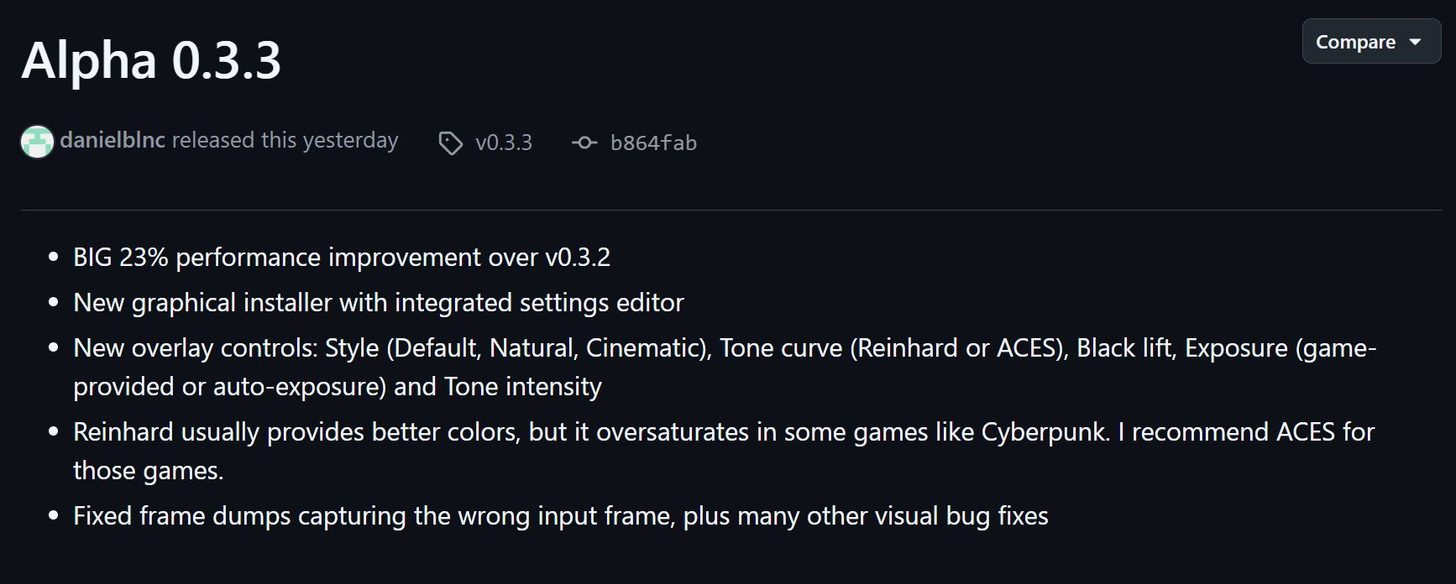
Daniel released version 0.3.3 of Alpha yesterday, adding several new features to this tool, including a graphical installer with a built-in settings editor, new Overlay control options, and also fixing some Bug.
However, the most notable change is that compared to the previous version 0.3.2, performance has improved by "23%".
On the same day, developers released another major update for this tool. This time, they launched version Alpha 0.4.0, which saw an astonishing 42% improvement in performance compared to version 0.3.3. This means that, based on the performance improvements announced between the two versions, the overall performance of this tool has increased by nearly 74% in just one day.
YouTube Channel Ancient Gameplays has tested this version. When running at a resolution of 3440×1440 in Cyberpunk 2077, its GPU can reach 50 FPS, whereas with the previous old version, the frame rate barely reached 30 FPS.
Moreover, Daniel also stated that the next major update is coming soon, and at that time, the performance of Radeon graphics cards will be further significantly improved.