

After a period of rapid gains, crypto traders are taking a brief respite. This week, the outlook for Bitcoin depends almost entirely on what the Federal Reserve, a series of U.S. employment data, and a few upcoming crypto governance votes will bring. According to CoinDesk, Bitcoin has fallen by about 1% since last Friday, dropping from the once-recovered level of $84,000. As investors shift their attention from last week's rebound to a wealth of economic data and a busy schedule of blockchain votes, market sentiment is also changing, and these events may set the tone for the rest of this quarter.
Bitcoin price prospects weaken due to macroeconomic uncertainty
After a period of upward movement, Bitcoin's price outlook has turned cautious due to macroeconomic uncertainties. According to CoinDesk, Bitcoin has fallen by about 1% since last Friday, with a decline of over 2% in the past 24 hours, dropping from the previous level of $84,000. Such brief pauses after gains are not uncommon, but the timing is crucial: the pullback occurred just as the market was digesting the Federal Reserve's decision to raise the benchmark interest rate to 4%.
Fall back from $84,000
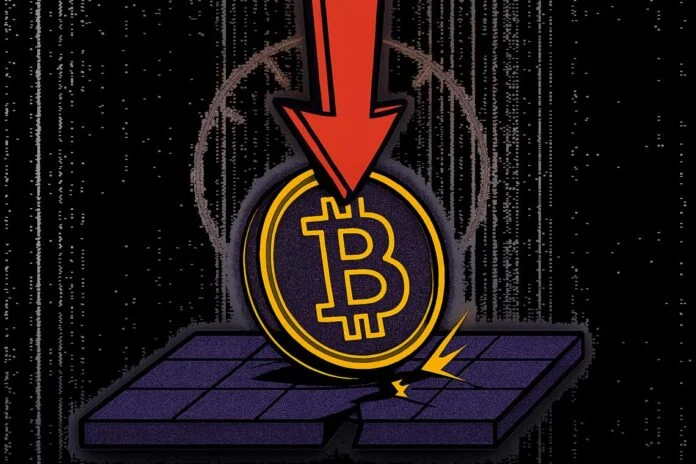
Before the decline began, investors took advantage of a new wave of optimism to move upward. Now, Bitcoin is hovering below $84,000, and traders seem to be locking in their profits, waiting for clearer macroeconomic signals before investing new funds. The market usually interprets such consolidation as a "breath of relief" rather than a direct reversal, but the next move is likely to depend on the economic data that will be released in the coming days.
The Chain Reaction of Interest Rate Hikes
The hawkish stance of the Federal Reserve is having an impact on markets beyond cryptocurrencies. broader market reports indicate that rising U.S. Treasury yields and a stronger dollar are putting pressure on risk assets; as borrowing costs increase along the yield curve, Bitcoin has also fallen from its recent local high of around $87,500. According to CoinDesk, interest rate futures traders have also factored in the possibility of another 25 basis point interest rate hike in the coming months, suggesting that the tightening cycle may not have yet ended. This context also explains why, while Bitcoin is correcting, other traditional safe-haven assets such as gold have also weakened, with gold also falling from its highs earlier this year.
What makes this important for the broader market is that a continuous cycle of interest rate hikes tends to dampen the speculative enthusiasm that drives crypto prices back up. If the Federal Reserve continues to tighten its policies, the outlook for Bitcoin may remain under pressure until investors have a clearer idea of where the final interest rates will settle.
U.S. key economic data this week may drive market volatility
In the coming days, a busy macro agenda may become the biggest factor contributing to fluctuations in crypto prices. Investors will pay particular attention to the impact of this week's U.S. employment data, as well as a series of indicators used to assess the overall health of the economy.
Data that Investors Pay Attention To
The data released this week includes the number of initial jobless claims in the United States, housing price data, GDP growth data, the core PCE price index, ISM manufacturing PMI, non-farm employment, and average hourly wages. Initial jobless claims and housing price data will be released during the week, followed by GDP and PCE inflation data. Non-farm employment and wage growth data will be released at the end of the week, providing a more complete picture of the labor market strength before the fourth quarter.
When put together, these data will affect the market's expectations regarding how much further the Federal Reserve will tighten its policies in the future. If employment growth exceeds expectations or inflation readings remain high, it may strengthen the case for further interest rate hikes and bring new resistance to Bitcoin and other risky assets. On the contrary, if the data is weaker, it may ease some of the pressure and give the market room to stabilize.
Governance voting and token unlocking in the cryptography field
In addition to macroeconomic noise, there were also multiple cryptocurrency governance votes taking place this week, each of which had an impact on the relevant protocols. On September 28th, Solana initiated the activation of its important Alpenglow consensus upgrade. This upgrade will replace the existing TowerBFT mechanism with the new Votor protocol, with the aim of reducing the overhead associated with voting transactions. The Alpenglow upgrade of Solana is one of the more significant technical changes in the network in recent years, with the goal of making the consensus process lighter and faster.
World Liberty Financial is conducting a preliminary vote on an Governance Engagement Incentive Program. The proposal suggests starting on October 1st, with the aim of rewarding community members who participate in the voting. The voting will end on September 28th. Meanwhile, Balancer is also holding a vote regarding a proposal to fork its core architecture and migrate to a new ecosystem; this decision is related to the potential closure of that protocol; the voting will end on September 29th.
Decentraland is also holding its own vote, following reports that over 1,000 Decentraland Names tokens were stolen from user accounts. The proposal calls for an immediate investigation and a temporary freeze or suspension of smart contract activity associated with the affected accounts, aimed at preventing further transfers during the review of the issue. The vote continues until October 1st.
Token unlocking brings supply pressure
There are two other token unlocks worth paying attention to this week. Canton plans to release 0.38% of its circulating supply on September 28th, valued at approximately $20.7 million. Falcon Finance will unlock tokens equivalent to 2.39% of its circulating supply on September 29th, valued at about $9.73 million. There are no major new token issuances scheduled this week, making these unlocks the main supply-side events that traders need to monitor.
If the holder chooses to sell the newly acquired tokens in such unlocking events, it may increase selling pressure in the short term. However, the actual impact on the market usually depends on the broader sentiment and liquidity conditions at that time.
South Korea's Blockchain Week comes to an end after a busy week
The Korea Blockchain Week will be held in Seoul from September 29th to October 1st. At a time when governance votes have concluded and macroeconomic data is being released one after another, it provides a high-profile gathering point for the industry. Such conferences often serve as a barometer of industry sentiment, bringing together developers, investors, and executives as technological upgrades and regulatory-related decisions are being made simultaneously.
With the Federal Reserve's interest rate path, U.S. employment data, and a series of governance outcomes all coming to fruition within the same period, this week can hardly be described as a calm period; rather, it serves as a stress test to see how the crypto market will digest the signals coming from Washington and the blockchain ecosystem.
Frequently Asked Questions
- Why has the price of Bitcoin fallen recently?
- The price of Bitcoin has fallen by about 1% since last Friday, dropping from around $84,000, as investors are digesting the recent gains and awaiting U.S. economic data.
- Which key U.S. economic data this week will impact the crypto market?
- This week's important U.S. economic data includes initial jobless claims, housing prices, GDP growth rate, core PCE price index, ISM manufacturing PMI, non-farm employment, and average hourly wage.
- What are some important crypto governance votes currently underway?
- The voting incentive plan for World Liberty Financial ended on September 28; the protocol fork voting for Balancer ended on September 29; the security response voting for Decentraland ended on October 1.
- Are there any important token unlocking arrangements?
- Yes, Canton will unlock 0.38% of the circulating supply, equivalent to tokens worth $20.7 million, on September 28th, while Falcon Finance will unlock 2.39% of the circulating supply, equivalent to tokens worth $9.73 million, on September 29th.
This article was generated with the assistance of artificial intelligence and has been reviewed by an editorial team.