News from the IT community on October 5th: Meta announced the launch of an open-source project, Muse Gadgets, on October 2nd local time. This project allows developers to create custom hardware for its personal AI intelligent entities Muse.
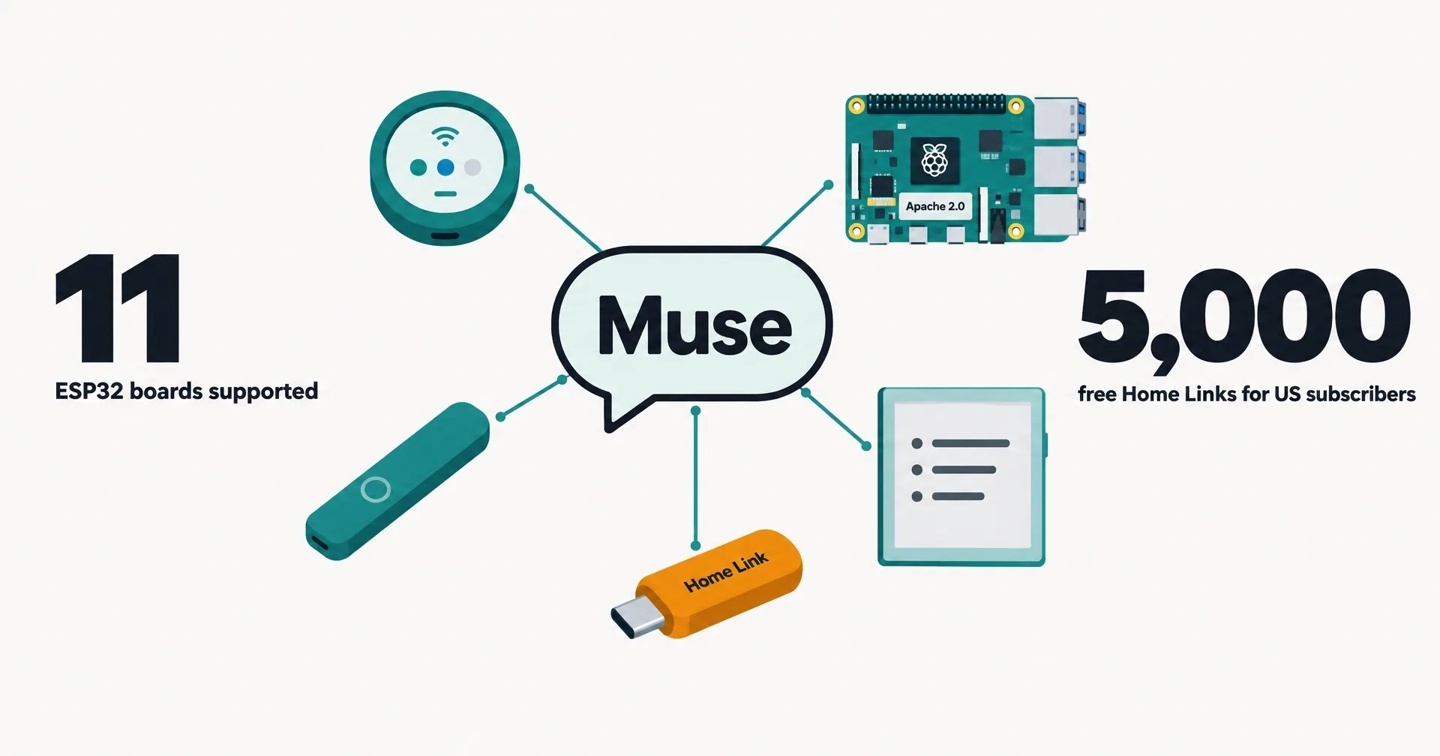
Meta has also been released on GitHub in accordance with the Apache 2.0 license, including ESP32 firmware and Linux devices. Developers can connect low-cost ESP32 development boards or devices such as Raspberry Pi to Muse, integrating displays, buttons, sensors, actuators, and other networkable devices on the workbench.
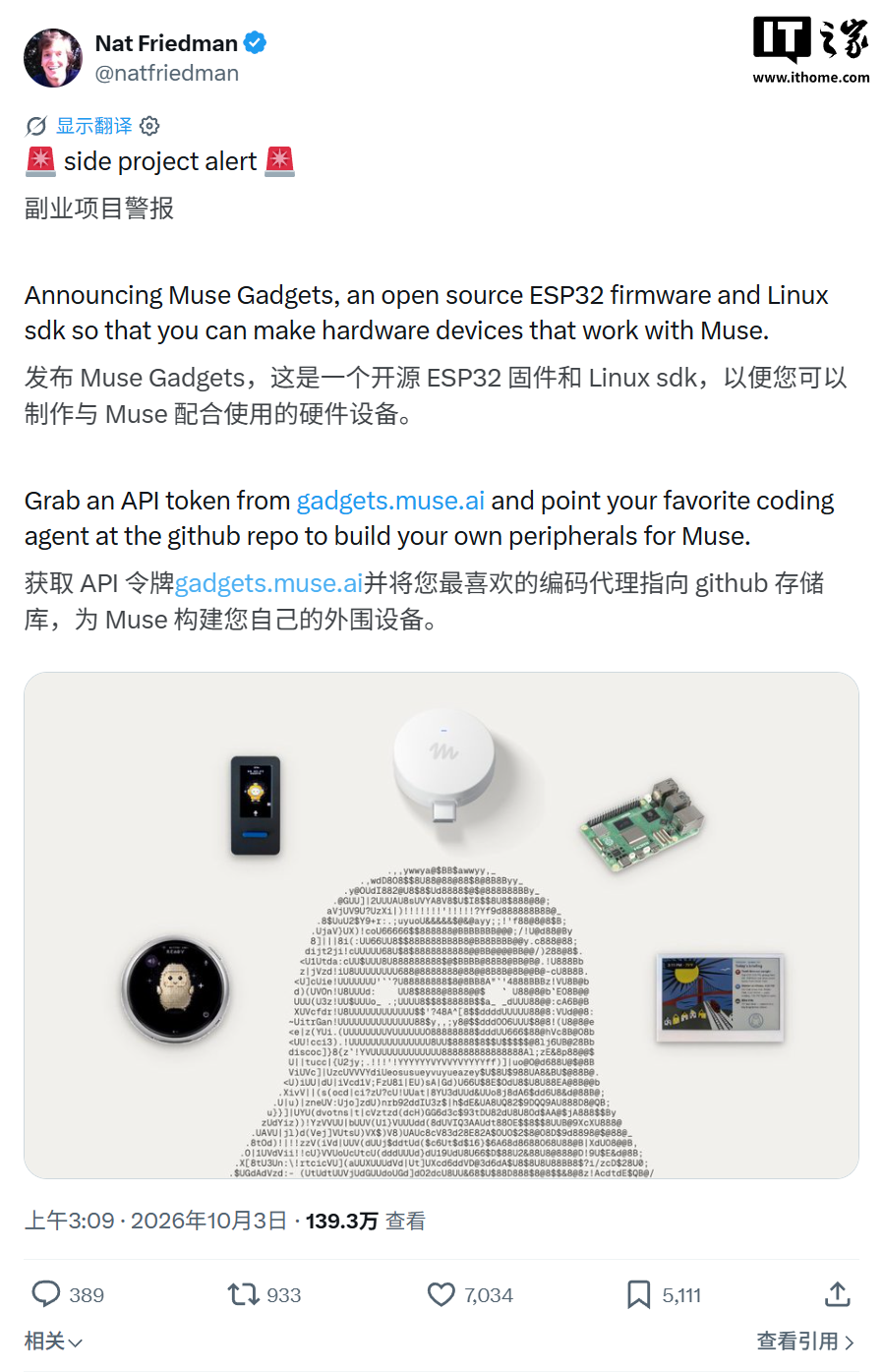
In terms of Linux SDK, Meta now supports Raspberry Pi 3B+, 4, 5, Zero 2W, as well as other devices with Bluetooth Low Energy capabilities. The minimum system requirements are Raspberry Pi OS Bullseye, Debian version 11, and Ubuntu version 22.04.
According to the Linux SDK document description, Muse executes commands under the identity of the account selected during installation and has all the permissions of that account. 'If that account can use sudo, then Muse can also use it.'
The installer will confirm before transferring account permissions and prompt whether the account has the sudo permission. Developers can also specify a different non-privileged account to run Muse using install.sh -- run-as.
Muse can execute shell commands, read and write files, and check the device's health status on Linux devices. Meta The example prompts provided by the official include instructions for Muse to install Home Assistant on a Raspberry Pi, as well as checking whether backups are running every morning at 7 o'clock.
It is worth mentioning that Meta also used SDK to create a finished product – Muse Home Link. According to Nat Friedman, the person in charge of products at the Super Intelligent Laboratory Meta, this is a small device that uses USB-C for power supply and allows Muse to connect to the home network, enabling communication with televisions, speakers, and other smart devices that have HTTPS interfaces.
Friedman indicates that Meta initially produced approximately 5,000 units of Home Link. These units will be provided free of charge to Muse subscribing users in the United States, with a limit of one unit per person, on a first-come, first-served basis.
The launch of Muse Gadgets is part of Meta's recent intensive expansion of the Muse ecosystem. According to TechCrunch, Meta also launched Muse, for, and Small Business earlier this week. The free version comes with usage limits, while the monthly subscription options are $20 or $100 (Note from IT: the current exchange rate is approximately 672 RMB). This subscription allows access to third-party tools such as Shopify, Dropbox, Slack, Canva, Figma, QuickBooks, and more.
According to The Next Web, Meta has also established a new business department, Meta Enterprise Platform, which is led by the former MongoDB CEO CJ Desai. This department integrates products such as Muse intelligent agents, Meta Business Agent, Muse API, and Muse Code to promote AI tools to corporate customers.
From an industry perspective, Muse Gadgets signifies that Meta is attempting to expand Muse from a simple chatbot to a cross-hardware intelligent agent runtime. If third-party hardware only needs to expose standard interfaces to be understood and called by Muse, personal intelligent agents may in the future assume some of the roles of traditional operating systems, applications, and smart home hubs. However, Meta also provides rather candid risk warnings in the SDK documentation: "Pairing without manufacturer verification cannot prevent active intermediary attacks," and it is recommended to complete pairing within a trusted network; SDK tokens are built into firmware and should be regarded as identifiers rather than passwords; if leaked, they need to be revoked and re-established; Wi-Fi credentials and device tokens are stored in flash memory, and it is strongly advised to enable NVS encryption; build versions are signed with development keys, and secure boot is not enabled by default. The document concludes with: "The side effects of such experimentation may include device failure, voided warranties, voltage drops, or even bankruptcy. You bear the risks yourself."