

The chairman of the Commodity Futures Trading Commission (CFTC) of the United States, Michael Selig, stated that at the request of U.S. President Donald Trump, the agency will advance regulations on cryptocurrencies, "regardless of whether Congress enacts legislation or not."
On Monday, during his speech at Fordham Law Blockchain Regulatory Symposium, Selig announced several proposals that allow crypto companies to choose to operate under the regulatory framework of CFTC instead of facing the various and fragmented regulatory regulations of different U.S. states.
According to the written statement during the event, Chairman CFTC stated that the institution has issued a preliminary notice on proposed regulations targeting companies that provide retail customers with the ability to trade crypto assets using margin, leverage, or financing methods. He referred to this regulation as “CTX”.
Selig said that the institution plans to establish a new type of designated contract market ( DCM ), known as “ crypto asset market ”, abbreviated as CAM , allowing some exchanges to choose to register for one of them.
"These regulations will establish a path for crypto asset exchanges to operate under unified national supervision based on CFTC; the previous government used the same legal authority to carry out supervision through law enforcement," said Selig.
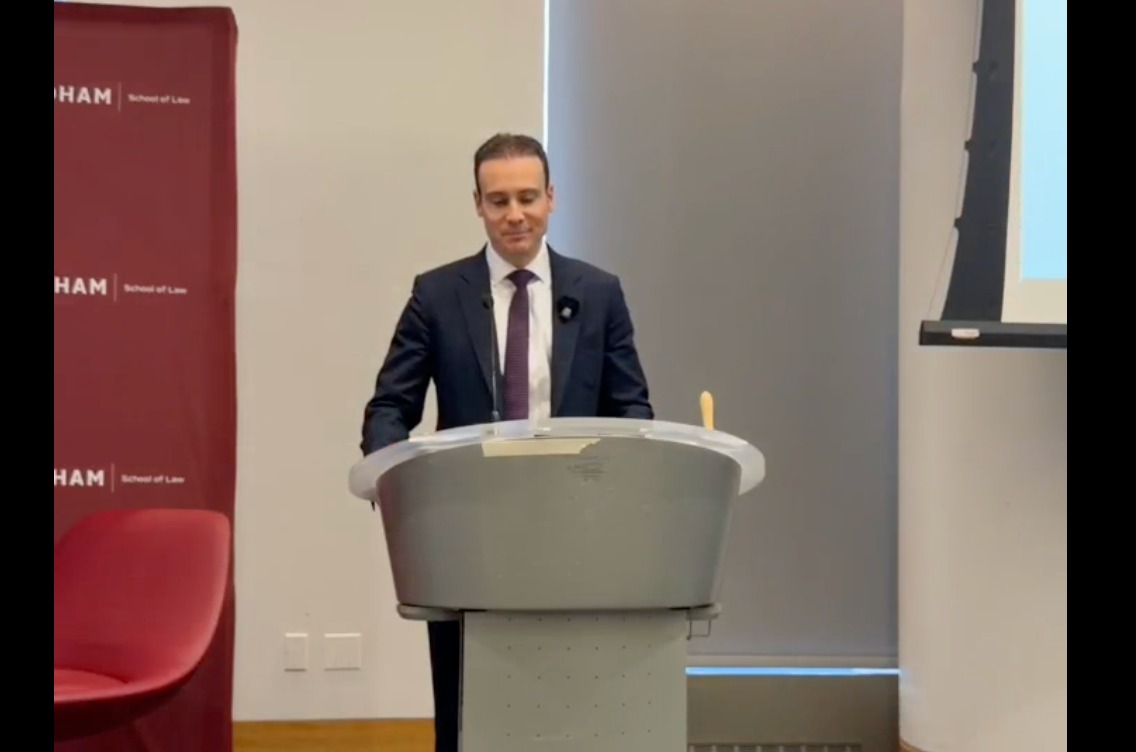
CFTC Chairman Michael Selig spoke at the event on Monday. Source: Fordham Law Blockchain Regulatory Symposium
The proposed rules will not extend to what Selig refers to as "ordinary spot cryptocurrency exchanges," which are "usually regulated by state-level funds transfer laws." For companies that provide spot trading of cryptocurrency assets such as Bitcoin ( BTC ), CFTC will still have the authority to enforce anti-fraud and anti-manipulation regulations.
The regulatory framework for crypto companies proposed by Selig came just a few weeks after the U.S. Senate failed to approve the Digital Asset Markets Clearing Act ( Digital Asset Market Clarity, CLARITY Act ). This act was originally expected to grant CFTC more power to oversee and enforce crypto regulations.
The U.S. Securities and Exchange Commission (SEC) announced its own proposal for a "customized securities issuance system" targeting crypto assets as early as August; after the CLARITY legislation failed to pass, this arrangement further reinforced expectations that both agencies will continue to advance regulation without clear congressional legislation defining these rules.
Selig indicates that Trump has pledged to promote the regulation of the crypto asset market structure both with and without legislation, and that regulatory agencies will use their existing statutory authorities to help him achieve this goal.
David Tawil said in a post on Monday: 'Opponents of CLARITY might not have anticipated that the executive branch seems to be ready to take action without any constraints from the legislative branch.'
Two regulatory agencies still lack sufficient staff when pushing forward with encryption proposals.
Friday marks the last day for Committee Member Hester Peirce at this institution; she has completed an eight-year term of office, and is just one step away from the end of a 18-month extension to her second term. After her departure, there will only be two members left in SEC; whereas in CFTC, Selig will serve as the sole member and chairman.
A White House official told Cointelegraph last week that Trump intends to nominate members for two agencies in the “near future.” As of Monday, the government has not announced any replacements for Peirce or the other six vacant committee seats.
Magazine: The previous SEC leader has been appointed as the AI Tsar, and in this cycle, Bitcoin could rise to $600,000: Hodler's Digest
CFTC
SEC
Government
Cryptocurrencies
Law
Regulation