Thailand gives the green light for Bitcoin and Ethereum to list on stock exchanges ETF
Coinpedia
1h ago
Ai Focus
The Thai Securities and Exchange Commission has finalized regulations allowing spot trading of Bitcoin and Ethereum on the Thai Stock Exchange starting from October 16, 2026. However, the new regulations do not mean that any specific products have been approved yet; currently, there are no Bitcoin or Ethereum products that have been authorized under this framework.
Helpful
No.Help

The Thai Securities and Exchange Commission has finalized regulations allowing spot trading of Bitcoin and Ethereum ETF on the Thai Stock Exchange starting from October 16, 2026.

The new framework includes 11 regulatory notices covering encrypted ETF transactions and investor protection.

However, under this new framework, there are currently no specific Bitcoin or Ethereum ETF products that have been approved.

Thailand has approved relevant regulations, allowing Bitcoin and Ethereum spot ETF to be traded on the Thai Stock Exchange starting from October 16, 2026. This move opens up a regulated channel for retail and institutional investors to gain exposure to crypto assets through local investment funds.

However, these rules do not imply that the specific ETF product has been approved, and strict safeguard measures will still apply.

Thailand finalizes rules for Bitcoin and Ethereum ETF

On October 8th, the Thai Securities and Exchange Commission ( SEC ) finalized 11 notices to establish rules for cryptocurrency ETF. The regulator stated that these rules are aimed at providing investors with more choices while also better safeguarding the security of their funds.

According to the new regulations, each ETF must track the price of only one cryptocurrency. In the initial phase, these funds can only track Bitcoin or Ethereum. On an annual average across the entire fiscal year, each fund must invest at least 80% of its value in the selected cryptocurrency.

The Thai Securities and Exchange Commission has also established rules regarding the custody of these crypto assets. Funds must use local crypto asset custodian institutions that have been approved by the Thai Securities and Exchange Commission.

Asset management companies must also demonstrate that they have the appropriate personnel, systems, and service providers to operate such funds securely.

Thailand prohibits providing guaranteed financial services to investors in encrypted ETF.

In addition to the hosting requirements, the Thai Securities and Exchange Commission has also introduced safeguards to prevent excessive borrowing. Brokers will be prohibited from providing margin loans or leveraged financing to investors who purchase the crypto ETF.

At the same time, the new regulations have also expanded the scope of participation for local investment institutions. Thai mutual funds and private equity funds will be allowed to invest in locally established crypto ETF, providing another pathway for institutional funds to enter the market.

However, retail investors will still be restricted from investing through overseas cryptocurrencies ETF and related depositary receipts offered by Thai brokers. Such investment channels are only available to institutional investors and individuals with extremely high net worth.

No confirmation of the issuance of ETF yet.

Although the framework will come into effect on October 16, the Thai Securities and Exchange Commission has not yet approved any specific Bitcoin or Ethereum ETF products.

The new regulations only set conditions for funds to enter the market, but whether they are actually launched still depends on whether the relevant products meet these requirements.

Therefore, as Thailand opens its stock exchanges to regulated crypto investments, the availability of suitable products and market liquidity will still be important factors.

Tip
$0
Like
0
Save
0
Views 16
HQYC reminds readers to view blockchain rationally, stay aware of risks, and beware of virtual token issuance and speculation. All content on this site represents market information or related viewpoints only and does not constitute any form of investment advice. If you find sensitive content, please click“Report”,and we will handle it promptly。
Submit
Comment 0
Hot
Latest
No comments yet. Be the first!
Related
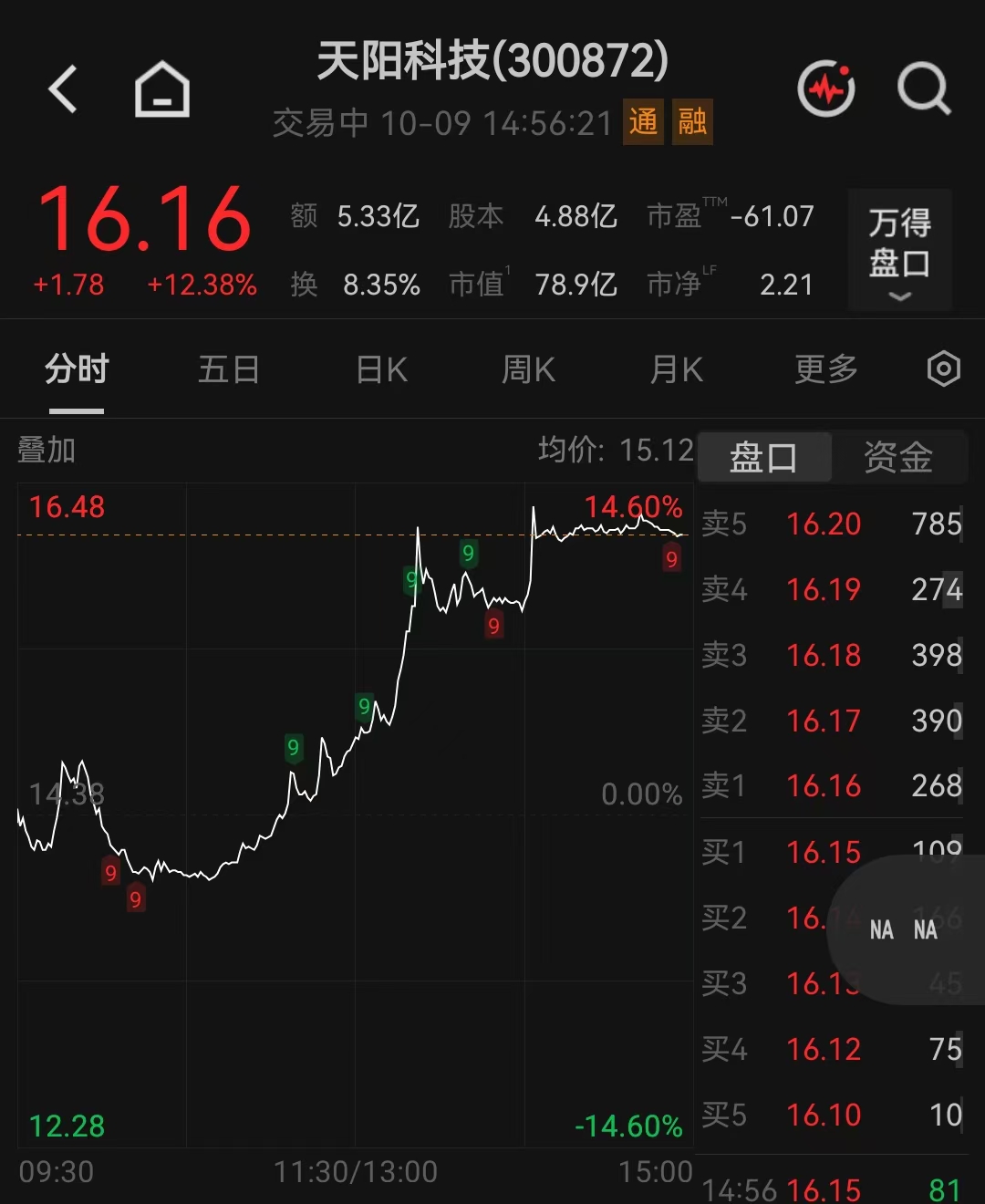
Under pressure of performance, a large purchase of 20,000 NVIDIA GPU Tianyang Technology shares led to a price increase of over 12%
On October 9, Tianyang Technology disclosed that it had signed a GPU procurement agreement with Company X to purchase 20,000 NVIDIA RTX PRO units at 5,500 Blackwell each, resulting in a 12.38% increase in the closing stock price. The article stated that this product is not a AI training chip for data centers, and based on market prices, the value of this procurement is estimated to be between 1.6 billion and 2.4 billion yuan.
The Block
·2026-10-09 16:42:57
7
What will happen to the stablecoins still held by customers if Europe demands their withdrawal from exchanges?
ESMA has required regulatory authorities around the world to resolve the existing positions of stablecoins that do not comply with MiCA regulations within three months. For regulated crypto companies, related services must be ceased, but under strict supervision, existing positions can still be liquidated, converted, withdrawn, or transferred.
crypto.news
·2026-10-09 16:42:55
4
XRP Testing the $1.32 support level, ETF Demand slowing down
After failing to break through the $1.60 resistance level, XRP has seen a cumulative decline of nearly 7% in 7 days. Analysts note that since October, XRP ETF has only recorded approximately $4 million in net inflows, which is significantly lower than the $121.4 million in September; meanwhile, the inflows into exchanges for XRP have risen to their highest level since July 2026, increasing concerns in the market about profit-taking.
CoinJournal
·2026-10-09 16:35:48
9
Chainlink Launches CCIP Vault Adapters: Cross-chain Deposits into the Treasury, with Challenges Beyond Just "One Click"
DeFi Typically, vaults store assets and strategies on a single main chain, but users may be spread across dozens of different chains. In the past, to deposit funds onto another chain, users had to bridge networks themselves, switch networks, authorize tokens, and then complete the deposit process, with each step involving fees and the risk of errors. Chainlink On October 8th, it was announced that CCIP Vault Adapters would go live, aiming to streamline this entire process into a single cross-chain deposit procedure. Officials stated that a vault on a single network could accept deposits from over 80 supported chains, eliminating the need to redeploy a vault for each individual chain. This represents an update in cross-chain distribution capabilities, but it does not guarantee the earnings or security of all vaults.
币界网
·2026-10-09 15:45:53
36
LegalOn Reduces Development Costs with Three Models: The Key to Saving Money Isn't "Replacing All with Smaller Models"
After enterprises implement the AI programming assistant within their R&D teams, the billing process typically becomes much more complex than during the demonstration phase. The same development task can result in varying usage of the model depending on factors such as the clarity of requirements, the size of the codebase, and whether architectural decisions are necessary. In a case study published on October 8th by OpenAI, this legal technology company demonstrates how it manages Codex costs while maintaining development speed: they select models based on the complexity of the tasks, limit the default use of the fast mode, and set different budgets for various business areas. According to the case study, the estimated daily cost has decreased by about 65% compared to the previous method of usage. This figure is quite impressive, but it cannot be taken out of context...
CoinMeta
·2026-10-09 15:45:44
21
View More