

A year after a flash crash wiped out billions of dollars in leveraged crypto bets, traders now have better tools to identify risks. However, the forces that led to the sell-off still exist.

It is nearly a year since the sharp drop of Bitcoin in October 2025 triggered $19 billion in liquidations, and analysts warn that the risks that drove that round of selling still exist.
Despite traders having better tools for tracking market risks, leveraged trading and crowded betting continue to drive short-term price fluctuations in Bitcoin.
Experts urge traders to avoid using leverage, pay attention to market sentiment and derivatives data, and consider adopting self-hosting to protect their positions.
The crypto crash in October 2025 exposed the dangers of leverage and crowded betting. A year later, analysts say that these risks still exist.
It has been nearly a year since the most intense sell-off in the crypto market, and the question that remains unresolved is whether traders have learned enough lessons to avoid similar events from happening again.
Just a few days after hitting a record high of over $126,000 on October 10, 2025, Bitcoin BTC fell from around $122,000 to $105,000, with most of the decline occurring within a few minutes. This sudden plunge triggered approximately $19 billion in liquidations in the crypto market, catching many people off guard after traders had bet on further increases for months.
However, although this round of selling off has hit market confidence, the conditions that led to it have not disappeared.
The Mark Connors of Risk Dimensions said, "This was a very rapid and intense market top that we did not anticipate." He previously was in charge of hedge fund positions at Credit Suisse.
"Positioning was very important back then, and it's still the same now," he said in an interview.
Before the sharp decline, the number of open contracts was close to a historical high, with traders establishing a large number of long positions, betting that Bitcoin would reach new highs again following its familiar four-year cycle.
Connors said, "Everyone is well aware that, like me, everyone is bullish because it was time for the price to rise. We expect to see prices climb to 250,000 dollars, 300,000 dollars, and even 400,000 dollars, following the previous cycles."
But in the end, the market turned in an unfavorable direction.
He said, “Obviously, this kind of volatility does not come from on-chain data. What I mean is, it’s all derivatives.” He added, “So paper Bitcoin is still active and dominates the short-term trend.” He believes that the lesson learned this time is that the price of Bitcoin is driven as much by leveraged bets as by the actual demand for the asset itself.
Over the past year, there hasn't been much change in this regard. Perpetual futures, which allow traders to bet on price trends without holding Bitcoin, remain an important part of crypto trading. Exchanges also have a strong financial incentive to continue offering leveraged products. However, traders may now be better equipped to cope with these risks.
Connors believes that 'the data defining market structure is becoming better.' He pointed out that the visibility of order books and position information has improved. 'The more information there is, the higher the certainty and the lower the volatility.'
Hyperion Decimus Co-founder Chris Sullivan stated that traders can take certain measures to protect themselves from losses similar to those experienced last October.
His advice is first and foremost to avoid using leverage, and to closely monitor open positions, funding rates, and market sentiment. Open positions represent the number of unsettled derivative contracts, while funding rates reflect the cost of holding perpetual futures positions. By combining these two factors, traders can determine whether the market is excessively biased in one direction or not.
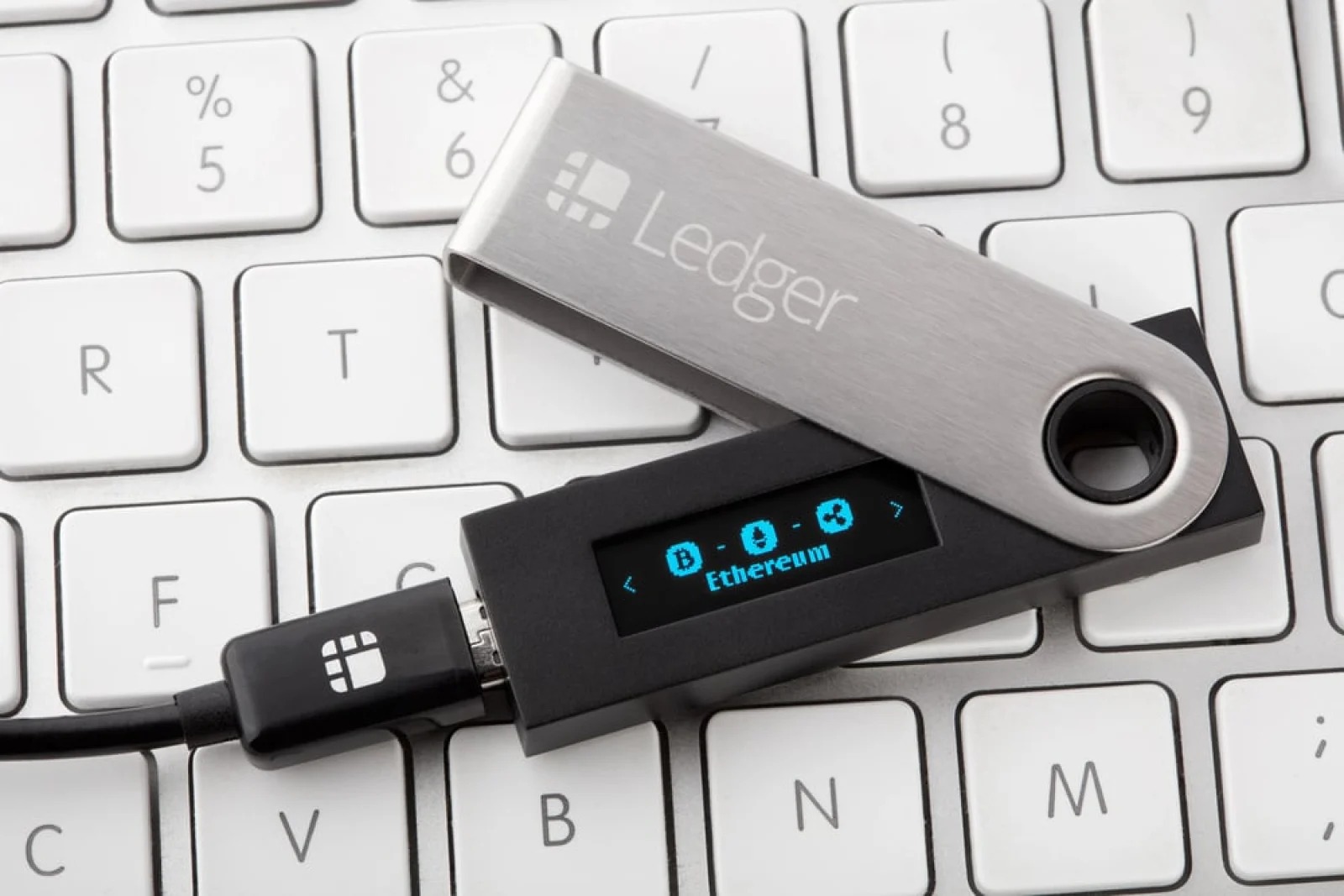
Sullivan also suggests that when these indicators reach extreme levels, traders should remain patient regardless of whether they bet on an increase or a decrease. For long-term Bitcoin holders, he advises to transfer the assets out of exchanges after purchasing them and manage them self-hostedly, rather than leaving them on the trading platforms.
This does not mean that another sharp decline has been ruled out. Connors warns: “Of course, it is still possible to see a market movement similar to that of October 10th again. Leveraged products have not disappeared.”
This sharp decline also challenges one of the most widely held assumptions about Bitcoin: whether the four-year cycle related to the halving of mining rewards can serve as a reliable guide for future prices.
Connors said, "All of us, including myself, made misjudgments. The four-year cycle has not disappeared; it has changed, and we can no longer rely on it to provide signals as we did in the past." He now believes that economic and political forces may play a larger role in the Bitcoin cycle than investors initially imagined. At the same time, the growth of institutional investment products has not weakened the influence of the derivatives market on short-term prices.
Despite many changes that have occurred since October 2025, Connors believes that there is an important difference between this sharp decline and its subsequent impacts.
"I think that after a year, we have learned to pay more attention to the market structure," he said.

"Despite the impact on the market, it did not collapse."