


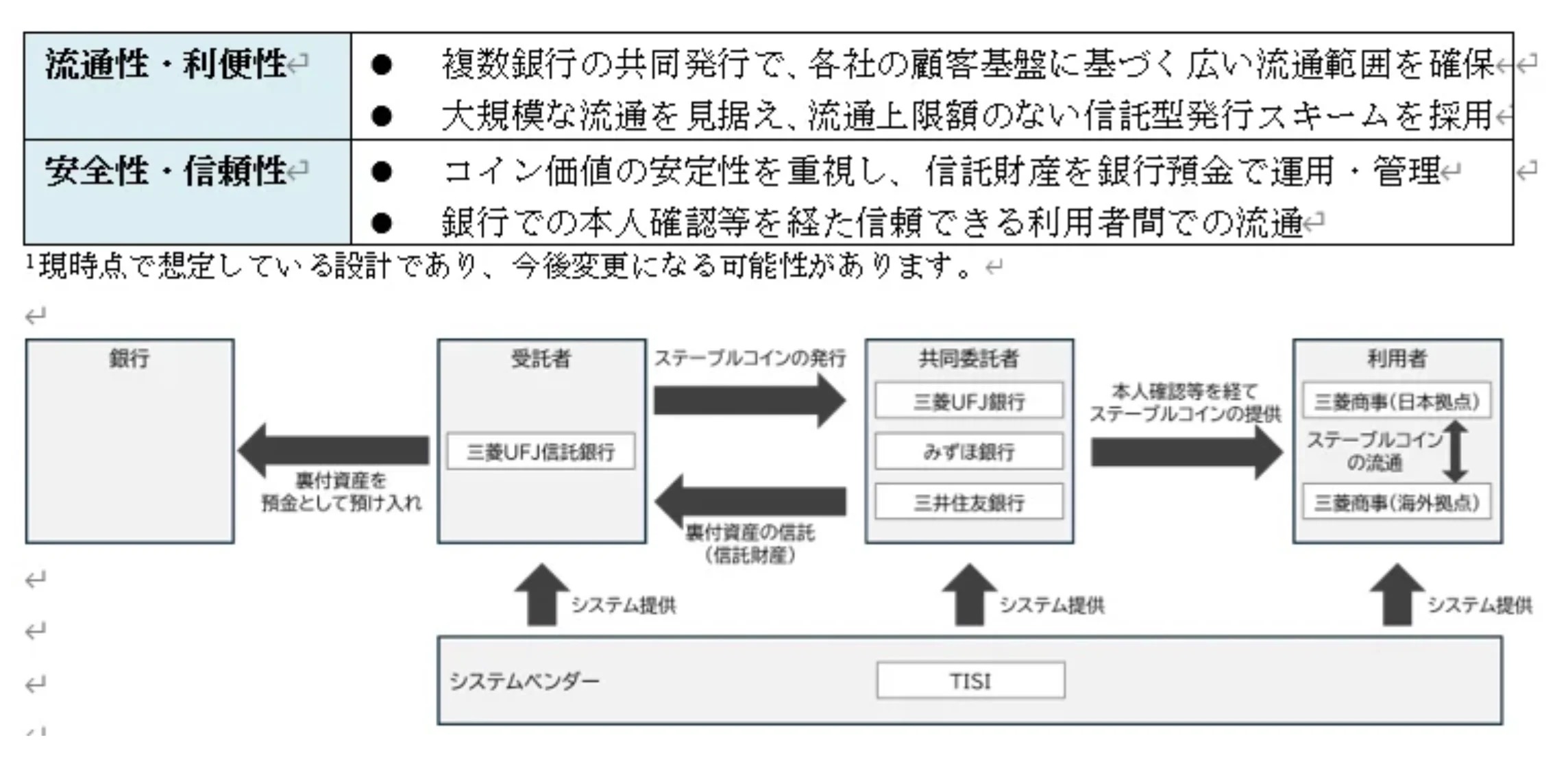
Japan's largest几家 large banks – MUFG, Sumitomo Mitsui, and SMBC – together with Mitsubishi UFJ Trust and Banking Corporation and TISI Inc, officially announced the successful completion of their first joint yen-stabilized coin experiment.
In a closed pilot project supervised by the Japanese Financial Services Agency ( FSA ), trading giant Mitsubishi Corporation tested cross-border settlements. Stablecoins issued in the form of "trust beneficiary rights" completed the entire process from issuance to final conversion back to fiat currency without any malfunctions.
The system is planned to be put into commercial operation before the end of this fiscal year.
What does this have to do with XRP? (In fact, it's quite relevant.)
From an official perspective, the Ripple is not mentioned in the consortium documents. However, considering the context of the Japanese market, this test will almost inevitably be interpreted within the framework of the XRP Ledger ( XRPL ) ecosystem, as these three 'large banks' all have a deep history of technical integration with Ripple. The article states that any blockchain initiatives by banks in Japan are, to a large extent, built upon the foundation laid by this network over the years.
As early as 2017, MUFG, Sumitomo Mitsui, and SMBC joined a large bank alliance led by SBI Ripple Asia with the aim of deploying RippleNet technology for real-time domestic and cross-border settlements. The article states that this type of institutional collaboration has continued to this day.
Not long ago, as part of Japan's financial infrastructure innovation program, Sumitomo Mitsui Banking Corporation and the investment department of SMBC also reached a direct agreement with Ripple Labs. They plan to specifically deploy real-world asset (RWA) tokenization infrastructure and institutional-level DeFi solutions on XRP Ledger.
The article suggests that these large banks have chosen to launch their own digital yen on the Progmat platform – which was created by MUFG on the Avalanche blockchain – as an attempt to build an alternative solution that is isolated from external liquidity bridging tools such as XRP. This move appears to be aimed at maintaining full control over compliance and fees within the traditional banking system.
The article further suggests that this pattern may indicate a future divergence in the market. On one hand, large banks' closed infrastructure and Progmat platforms may attempt to take over the conservative B2B transfer areas within enterprises.
On the other hand, SBI Holdings has launched Ripple, a regulated US dollar stablecoin RLUSD. Coupled with the liquidity that XRP has already established, this may allow it to continue to maintain a dominant position in cross-border retail and open financial technology services.
It is finally stated in the text that the integration between banking platforms and the Web3 industry—including their participation in the XRP Tokyo summit—does not rule out the possibility that the commercial launch of digital yen will not replace XRPL. Instead, it may lead to a tiered landscape, where corporate fiat currencies and open-source digital assets coexist at the level of liquidity access.