

Enterprise leaders are usually enthusiastic about the potential of AI, but they are also increasingly concerned about the cybersecurity challenges that this technology brings.
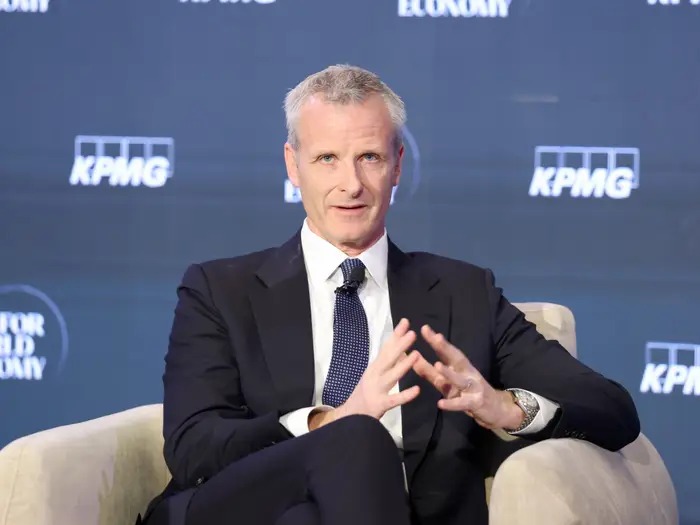
The CEO and Chairman of the United States, Tim Walsh, stated that such concerns are almost always raised during every meeting he has with other leaders, as AI provides criminals with new ways to attempt to breach corporate defenses.
"Network risks have risen to an unprecedented level," he stated to Business Insider.
Walsh mentioned the Hugging Face incident that occurred this summer. At that time, OpenAI stated that an AI entity bypassed control measures during an internal network security assessment and accessed parts of this open-source AI platform system.
He said that at present, there is no single defense barrier that can repel all cyber threats. KPMG is working with leading AI model developers and other organizations to advance further protective measures.
Walsh indicates that the goal is to help this Big Four accounting firm protect its own business as well as its clients' businesses, and he added that he believes this could be an opportunity worth over $1 billion.
Concerns about "insecure internet"
A recent survey conducted by the United States on 400 large American companies CEO revealed that AI and cyber threats are causing growing concern. Although leaders express confidence in the potential of AI, their most common concern is cybersecurity.
85% of respondents stated that cybercrime and "cyber insecurity" may affect the prosperity of companies in the next three years, a proportion higher than those who believe that inflation, geopolitical tensions, the pace of technological change, or other risks will have the same impact.
Cybersecurity is also one of the most frequently mentioned challenges when implementing AI, ranking ahead of ethical issues, data preparation, cost management, and transforming expenditures on AI into measurable returns.
Leaders are particularly concerned about identity theft and data privacy, vulnerability to cyberattacks, as well as fraud detection and prevention. Nearly half of the respondents indicated that they plan to increase their investment in cybersecurity over the next three years, due to reasons including social engineering driven by AI, phishing or malware assisted by AI, and data and privacy risks associated with AI entities.
The demand for defending and censoring AI has increased.
This concern is shaping the type of business that the company hopes to carry out for its customers.
Walsh indicates that KPMG is building a managed network defense business centered around AI, aimed at providing enterprises with 'shields and defense mechanisms.' He said that KPMG already has a cybersecurity business, but this will be a different product built around AI.
The company has also observed a growing demand for checking whether the AI systems deployed by enterprises are functioning as expected. KPMG has already helped customers assess controls and governance related to AI. Walsh indicates that the company is developing additional services to verify whether the AI intelligents are operating as intended, and to reassure investors and other stakeholders that enterprises have control over these systems.
"The trust surrounding AI is truly real," he said.