

NVIDIA announced a new supply chain agreement on November 17th, with Xinxing planning to expand its production capacity for advanced packaging substrates by more than 3.5 times for its exclusive use. The new production capacity target is set for the third quarter of 2028, with production expected to begin in the second half of 2027.
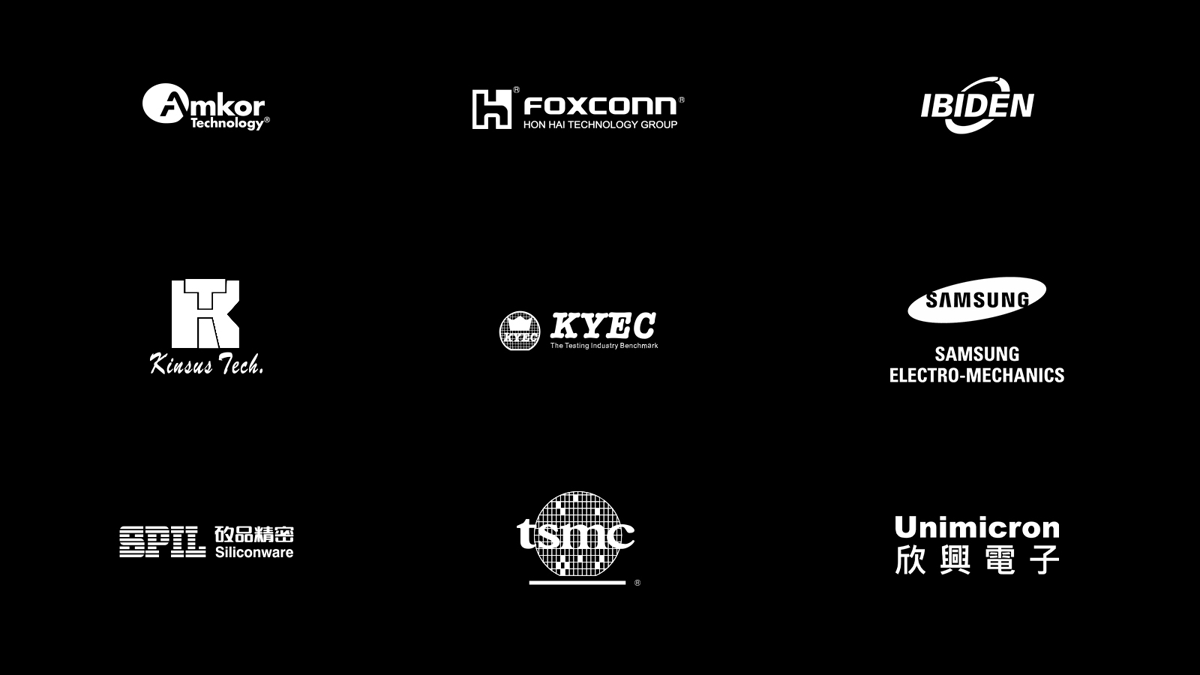
This is an arrangement for cross-substrate, advanced packaging, wafer, and complete device manufacturing. The list includes Amkor, Foxconn, Xingxing, Samsung Electro-Mechanics, Siltron, and TSMC. For readers who hold stocks in NVIDIA and its related suppliers, the most useful information in this announcement is the process, funding, and delivery year corresponding to each commitment; it is not appropriate to consider plans from different years as current supply.
Both are called capacity expansion, but the timelines differ by two years.
Xinxing's project is located in the Taoyuan Youth industrial park, and it aims to expand the advanced ABF packaged substrate manufacturing capacity configured for NVIDIA. The announcement separates "expected start of production" and "new production capacity target" into two time points: the former is in the second half of 2027, and the latter is in the third quarter of 2028. Even after production begins, there will still be a period of ramp-up.
Samsung Electro-Mechanics is taking a different approach. The two parties have revised the existing substrate supply agreement to enhance the operational capacity of their current factories in order to support the increased production of NVIDIA's accelerated computing platforms. This revision builds upon the multi-year collaboration previously established in Sejong and Busan, South Korea, covering areas such as computing and high-speed networking technologies; no independent new production targets or completion dates were announced this time.
In addition to the substrate, Siliconware has signed a multi-year agreement with NVIDIA to expand its advanced packaging business. The announcement states that NVIDIA will provide funding in the billions of dollars to support this effort, with the goal of increasing the contract packaging capacity dedicated to NVIDIA by the middle of 2029. This timeline is even later than Xingxing's target for additional production capacity.
The SiP (System in Package) manufacturing process does not only involve the final assembly step; the new production line also includes integrated support for bump manufacturing, interlayer wafer fabrication, assembly, and testing. The announcement correlates these capabilities with requirements for computing performance, bandwidth, energy efficiency, and system integration. Only by distributing production capacity across these stages can one understand why obtaining more wafers does not necessarily mean that the entire platform will be able to be shipped simultaneously.
Nearly $3 billion includes advance payments.
Anker has summarized the multi-year agreements announced in July and October of this year, with a total amount of nearly $3 billion, supporting the expansion of advanced packaging in Arizona, USA, and South Korea. The agreements include upfront payments to help Anker expand its manufacturing capacity. This is a continuation of previous arrangements, and the nearly $3 billion cannot be entirely attributed to the newly added expenses this time.
According to the management, the relevant investments will serve multiple generations of the AI platform, with a long-term plan to enable it to advance technology and increase production in line with NVIDIA's manufacturing needs. This is how the partners describe the purpose of the project; however, the press release does not disclose how much production capacity is allocated to each generation of products, nor does it provide a cash payment schedule for the upfront payments over different years.
For investors, they can check the delivery progress according to the years listed in the announcement. The advance payments, contracted production capacity, and final product revenue are for different projects; although this material can prove an extension of the supply chain commitments, it cannot be used to calculate additional revenue for NVIDIA or additional profits for the suppliers. The announcement also does not provide unit prices, utilization rates, and order allocations that would be sufficient to make such calculations.
The actions that have already occurred this period are the first bulk shipments in the third quarter for Vera Rubin NVL72 and Vera CPU, utilizing TSMC's 5-nanometer, 3-nanometer, and CoWoS advanced packaging technologies. These bulk shipments are part of the current product progress, while the subsequent production capacity targets for Xingxing and Siltron are part of future arrangements; therefore, these two should be read separately.
The entire machine, testing, and the light engine each have their own progress.
Foxconn's role extends to the next generation of GPU and online platforms. Its management has stated that it will leverage its global production network in Asia, North America, and Europe to support increased production. No specific figures for regional output, factory division of labor, or capacity percentages were provided this time, so it is not possible to directly determine how much additional supply has been added to any particular region from the overall global layout.
The press release also reviewed the commitments made in October: to expand the substrate production capacity by a total of 2.5 times within three years, to expand advanced packaging capabilities, to double semiconductor testing capacity between 2026 and 2027, and to increase the production capacity of Siliconware's optical engines to 15 times by mid-2027, with the goal of doubling it again by the end of 2028. These targets, which are specific to different processes and base levels, cannot be multiplied together to calculate the output of the entire supply chain.
It is not appropriate to directly compare Xinxing's 3.5-fold increase with the previous combined 2.5-fold increase. The former refers to the advanced ABF motherboard capabilities configured by specific partners for NVIDIA, while the latter is the combined target under the previous cooperation arrangements. The company has not explained how these two statistics overlap, and further addition would create a total that is not mentioned in the original text.
The actual criteria set forth in this arrangement are to distinguish between products that have already been shipped and the dedicated production capacity that is still under construction. It would be more meaningful to see whether Xinxing will start production on time during the next progress report, and when the contract packaging capacity of Silicon Products will be realized, rather than simply listing all the “multiples” in a row. The company has also acknowledged risks related to manufacturing, technology, and third-party cooperation in its forward-looking statements.
NVIDIA has extended its supply commitments for key manufacturing processes until mid-2029. Financial support is now more clearly linked to the production schedule, but the announcement still does not specify how much of this capacity will ultimately be converted into sales.