












Key Points
- The United States is preparing to introduce new tariff measures targeting 16 economies.
- Trump may reinstate the tariff rates implemented in 2025
- Reintroducing trade restrictions could complicate the inflation outlook even further.
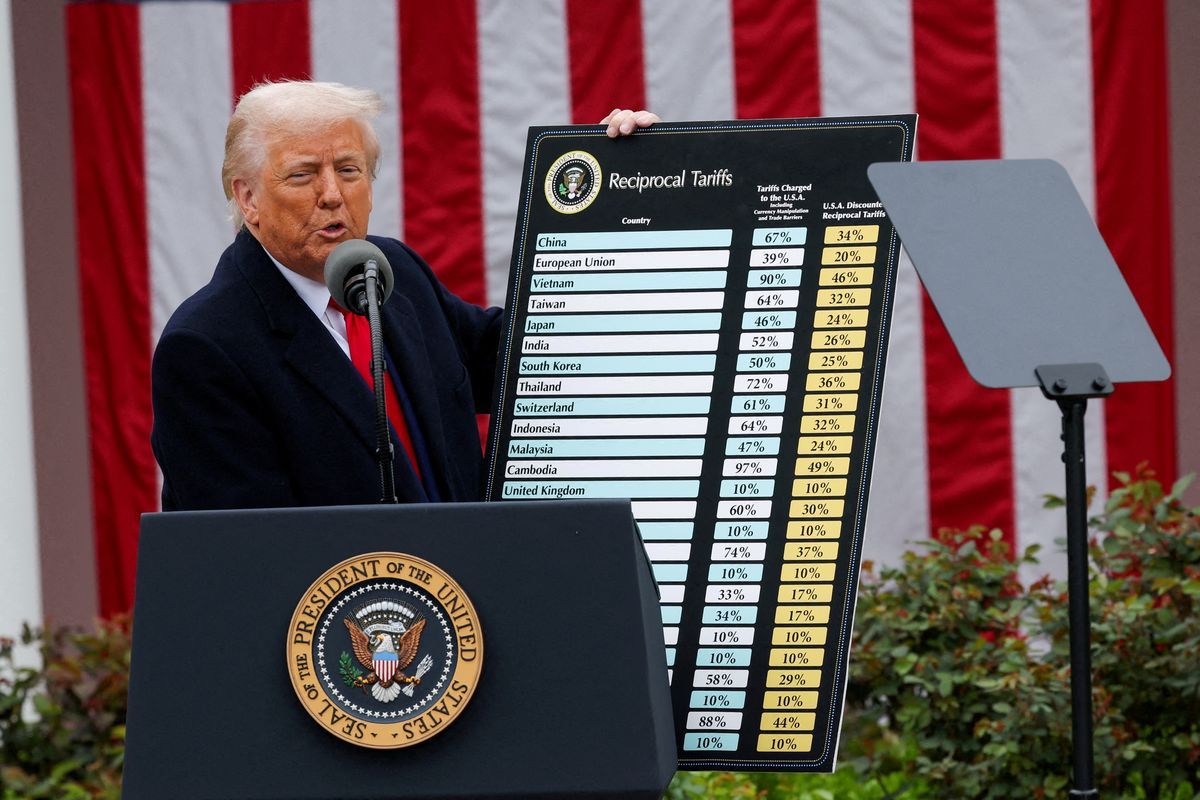
The Trump administration is preparing to raise tariffs on China, the European Union, and 14 other economies, which could bring import tariffs back to the levels before the U.S. Supreme Court overturned the president's original tariff plan.
According to The Wall Street Journal, U.S. Trade Representative Jameson Giller may announce the results of an investigation into foreign industrial policies as early as this week, although the exact timing could still change.
Trump's new tariffs could affect 42 countries and economies
On March 11, the Office of the U.S. Trade Representative launched an investigation under Section 301 to examine whether foreign manufacturing policies impose unfair restrictions on U.S. commerce.
This survey covers 16 trading partners, including China, the European Union, Japan, India, Mexico, South Korea, Taiwan of China, and Switzerland. If the 27 member states of the European Union are counted separately, its geographical coverage will involve 42 countries and economies.
Washington believes that the excess industrial capacity formed overseas with government support has weakened the domestic manufacturing sector in the United States and has discouraged investment in local production.
This investigation was launched following a ruling by the Supreme Court on February 20th. That ruling invalidated the tariffs imposed under the International Emergency Economic Powers Act ( IEEPA ).
Unlike emergency economic powers, the 'Section 301' provides a mechanism for investigating specific foreign trade practices and subsequently introducing retaliatory measures.
Will U.S. tariffs return to the levels of 2025?
After the Supreme Court halted the relevant tariffs, the Trump administration has implemented several alternative measures.
On July 23, following another investigation into forced labor practices, Trump imposed tariffs of 10% or 12.5% on 60 economies. The government also pursued other "Section 301" investigations involving regulatory policies in Europe.
The latest measures may bring the overall tariff levels closer to those negotiated by the United States with its trading partners in 2025. At that time, the Trump administration established tariff frameworks with several major economies.
However, past Sino-US trade negotiations have indicated that the differences between Washington and Beijing remain unresolved.
Its economic impact will depend on the final tax rate, the scope of product exemptions, and whether the affected trading partners will take countermeasures.
New tariffs may complicate the Fed's efforts to combat inflation
The potential increase in tariffs comes at a time when U.S. monetary policy is facing difficulties. In October, the annual inflation rate for U.S. producers reached 6.5%, the highest level since November 2022.
Additional import tariffs may raise costs for American businesses, but to what extent these costs will be passed on to consumers still depends on pricing decisions, supplier negotiations, and corporate profit margins.
Meanwhile, the US dollar has risen to a 20-month high, and JPMorgan Asset Management expects that the yield on benchmark US Treasury bonds will remain between 4.75% and 5.25% for most of 2027.