Key Points
- Garlinghouse Links the Weakness of the Crypto Market to Large Tech IPO
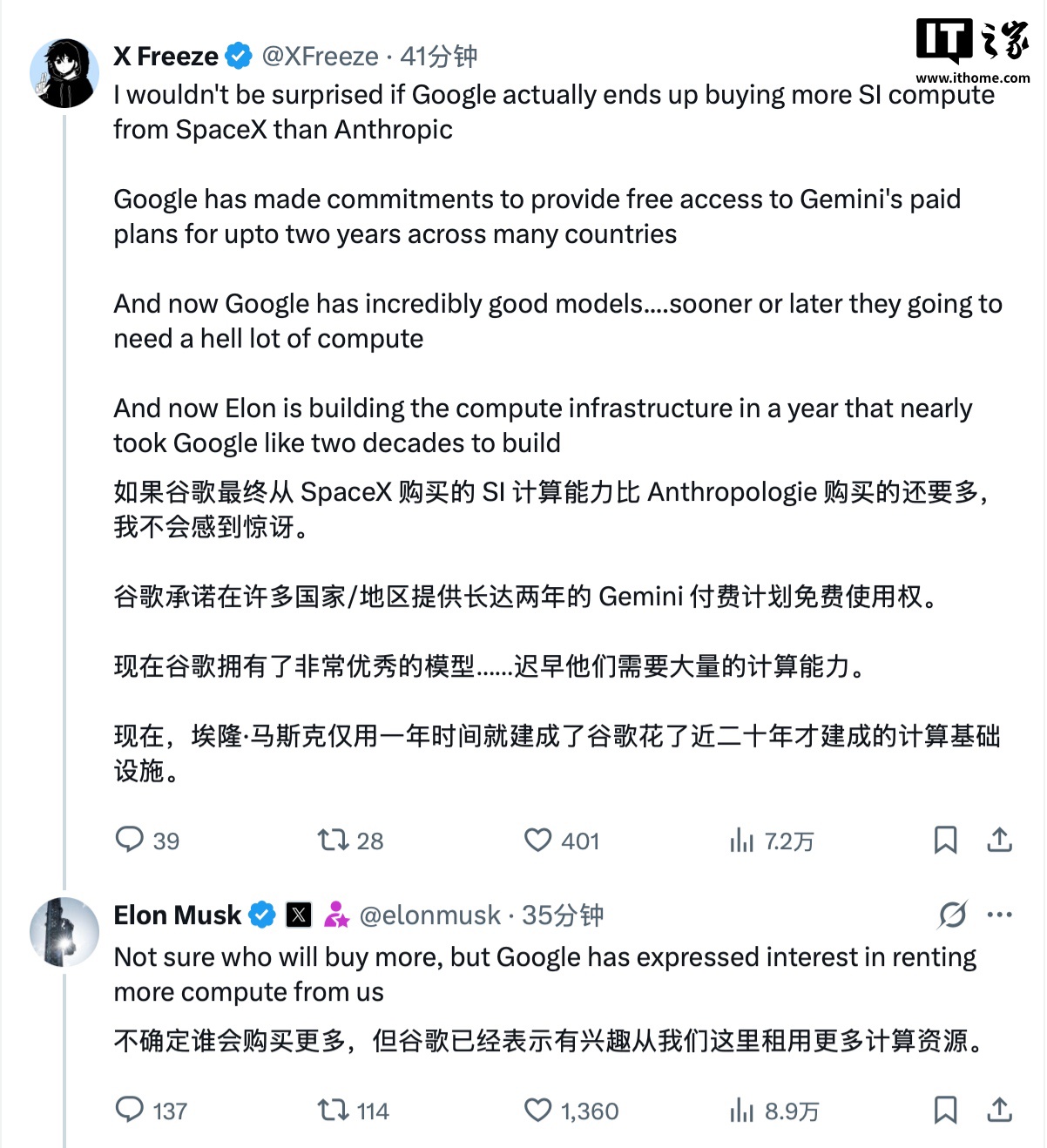
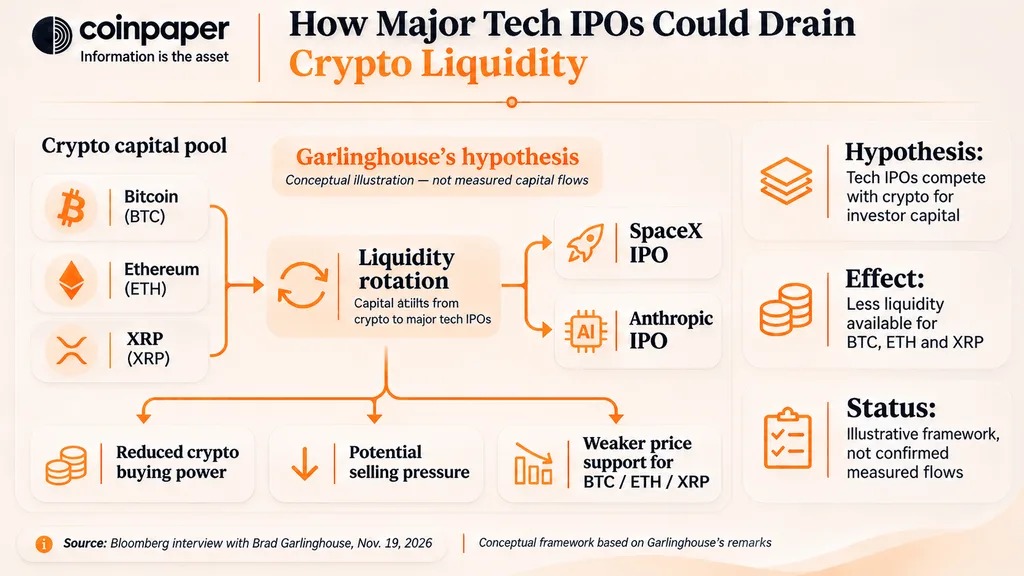
- SpaceX and Anthropic competing with cryptocurrencies for liquidity
- The long-term performance of XRP may increasingly depend on its actual use.
Ripple CEO Brad Garlinghouse stated that the disappointing price performance of XRP is partly due to the decline in liquidity in the cryptocurrency market, as well as investors' funds being diverted to initial public offerings (IPOs) by large technology companies.
During an interview with Bloomberg on November 19th at the Singapore Fintech Festival, Garlinghouse discussed the increasingly apparent disconnect between the expansion of Ripple's business and the market performance of XRP.
His relevant remarks were mentioned again this week, providing a possible explanation for why the price continues to correct despite the significant progress made by XRP in the adoption of institutional cryptocurrencies.
SpaceX and Anthropic IPO drain liquidity from the crypto market
Garlinghouse mentioned that the listing of Elon Musk's SpaceX and artificial intelligence developer Anthropic's stocks are both significant financial events that could redirect funds away from digital assets towards other areas.
The CEO of this Ripple stated that investors seeking to participate in these companies may sell their cryptocurrency positions in order to free up funds for stock investments.
A similar pattern also occurred around November 19th with Anthropic IPO. This transaction attracted a great deal of attention from both retail and institutional investors.
During periods of tight monetary policy, capital competition becomes particularly important, as investors have less flexibility to simultaneously increase their exposure to various types of speculative assets.
However, Garlinghouse did not disclose specific figures regarding how much capital flowed directly from XRP or other cryptocurrencies into these two public offerings.
Why is XRP still under pressure as Ripple expands?
Ripple continues to expand its institutional financial infrastructure, covering areas such as cross-border payments, digital asset custody, fund management, and stablecoin settlement.
In October, the company received approval from the National Trust Bank of the United States and also expanded its cooperative relationships with major financial institutions.
The expansion of the RLUSD stablecoin, which is part of Ripple, has also raised questions from the outside world about the relationship between the company's growing payment infrastructure and the demand for its native digital assets.
Garlinghouse has previously refuted the claim that there is competition between XRP and RLUSD, emphasizing that the two have different functions within the Ripple financial ecosystem.
According to the official documents of Ripple, XRP acts as a bridge asset in cross-border transactions, while the company's broader infrastructure supports a variety of digital assets.
With the improvement of crypto liquidity, can the price of XRP rebound?
Garlinghouse It is expected that cryptocurrencies will increasingly be differentiated based on actual applications and underlying needs, rather than fluctuating in tandem with the broader market sentiment as a whole.
For XRP, the expansion of institutional settlement activities, the deepening of trading liquidity, and the increased adoption rate of XRP Ledger may become increasingly important driving factors for long-term performance.
The recent expansion of liquidity of RLUSD on XRP Ledger has also provided more opportunities for decentralized transactions and institutional financial applications.
However, improving merely practical aspects may not immediately lead to a price rebound, especially in a broader crypto market that is still susceptible to macroeconomic uncertainties and a decline in investors' risk appetite.