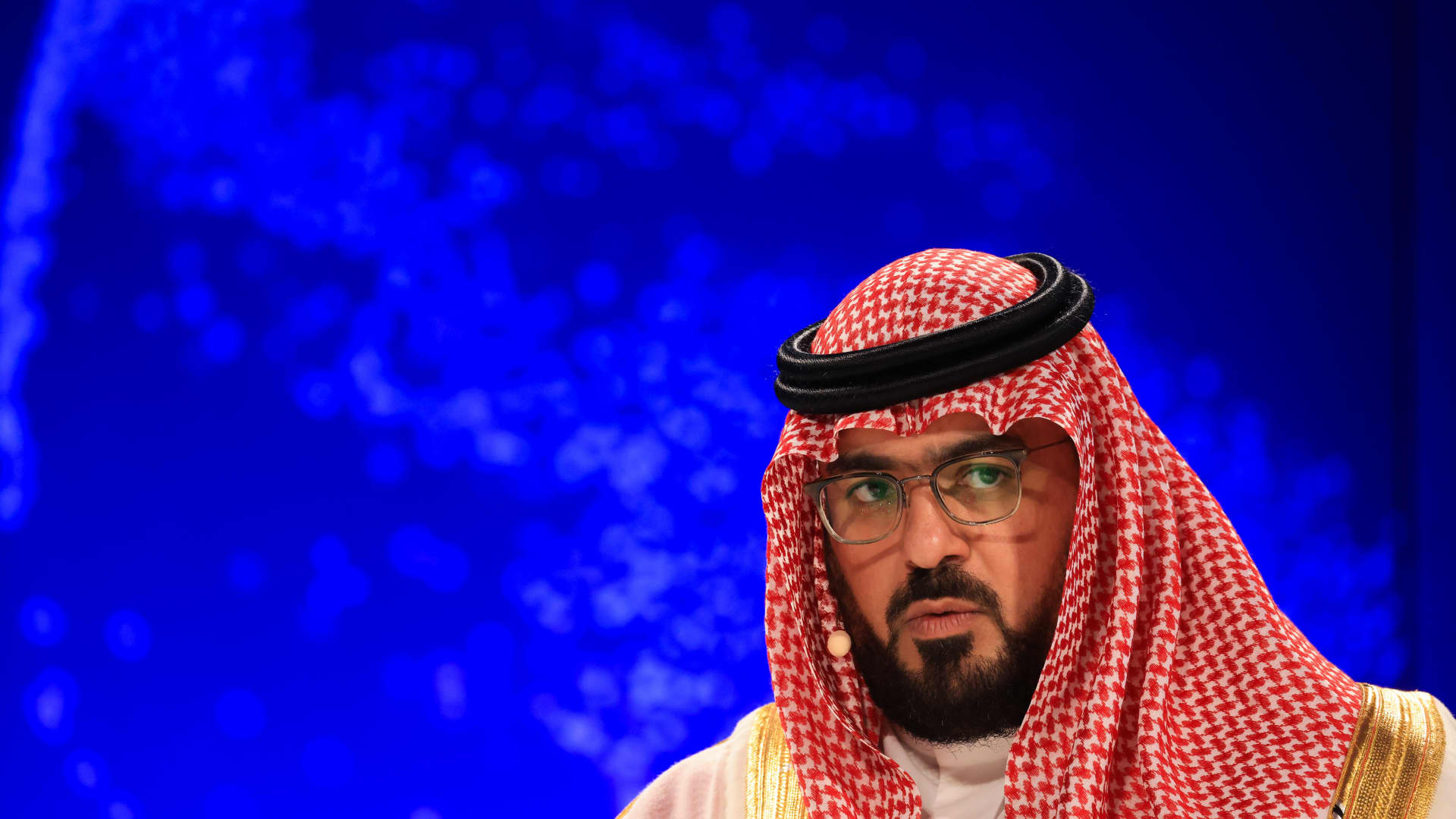
Saudi Arabia's economic diversification strategy has shifted from "spending and delivering at all costs" to "spending and delivering at appropriate costs," Saudi Minister of Economy Fahd Ali Al-Brahim told CNBC on Friday.
Previously, during a period of significant economic contraction, Saudi Arabia had already scaled back or cut several flagship projects.
Alibrahim also stated that in the face of the continuous attacks by Yemen's Houthi militants on civilian and energy infrastructure, resulting in dozens of casualties and multiple disruptions to the oil market, Saudi Arabia is determined to "achieve long-term sustainable stability in the region at any cost."
"The stage we are in today is one where every rial must be used more precisely... Obviously, although we hope to achieve economic diversification or restructuring and reduce our dependence on government spending, there is still a lot of work that needs to be done. Therefore, you will see that government spending will play a leading role first," said Alibrachin in an interview with Dan Murphy from CNBC.
"Now, everything is shifting from spending and delivering at any cost to spending and delivering at a reasonable cost. We are promoting a more policy-oriented approach in many areas of policy and... goals. We are also creating a clearer business environment to align the regulatory environment of the kingdom with international laws."
This includes the recent announcement of a minimum effective tax rate of 15% on profits of multinational corporations. Alibrachin said that this will "create a clearer operating environment for the private sector," as the government is seeking to attract more foreign investment.
Saudi Arabia cuts non-essential expenditures
Since launching the "2030 Vision" in 2016, aiming to reduce its dependence on oil revenues, Saudi Arabia has been making substantial capital expenditures and utilizing the resources of its sovereign wealth fund, the Public Investment Fund ( PIF ).
However, recently, Saudi Arabia has re-evaluated the costs and commercial prospects of projects such as the new economic zone NEOM and the futuristic “The Line” city. It has withdrawn its financial support for the LIV golf tournament and suspended the construction of a planned giant skyscraper in Riyadh. In January this year, Saudi Arabia also announced that it would postpone the Asian Winter Games, which were originally scheduled to be held in 2029 and were planned to take place in part of NEOM at Troyna.
At the same time, Saudi Arabia is also dealing with the instability caused by the continuous attacks by the Houthi armed group in Yemen, which are supported by Iran. The targets of these attacks include the PIF building, Riyadh Airport, and the country's largest refinery. Due to security risks, Saudi Arabia was forced to cancel the large international investors' conference "Davos in the Desert," which was scheduled to take place in November and was intended to attract some of the most important figures from the global financial community.
"The humanitarian cost of crises is real, and so is the economic cost," Alibrachin said to CNBC.
Alibrahim stated that infrastructure investments have helped the country's energy sector to restore production levels close to those before the crisis. Meanwhile, due to the attacks on airports, Saudi Arabia has transferred import and export hubs from the east to the west via land transportation, thereby restoring freight volumes.
He added that these attacks highlight the importance of economic diversification for Saudi Arabia.
According to government data, Saudi Arabia's actual GDP in the third quarter contracted by 3.8% year-on-year; of this, oil-related activities declined by 20.4%, which was partially offset by a 1.9% increase in non-oil activities. Net foreign direct investment inflows in the second quarter decreased by 19.5% year-on-year.
Saudi Arabia's Ministry of Finance expects the overall economy to shrink by about 2.1% this year and to rebound by 10.9% next year.
The consulting firm Oxford Economics is even more pessimistic about the outlook. The firm predicts that, in the event of an escalation in attacks on energy infrastructure, although new minimum wage requirements and ongoing spending under the “Vision 2030” initiative are expected to support income and domestic demand, the Saudi economy will shrink by 3.4% this year and another 4% in 2027.
Akkanksha Sandani, the chief economist at the Oxford Institute for Economics, stated that the "2030 Vision" is entering a new phase that focuses on returns.
"The government is managing fiscal pressures and shifting budget expenditures towards essential services and strategic priorities, while PIF is becoming more selective in its capital allocation and seeking greater participation from the private sector," said Sandani, adding that some megaprojects are being scaled back or postponed, while investments in sectors such as manufacturing, logistics, tourism, mining, and technology continue."
"Our forecasts already assume that some of the goals of the '2030 Vision' will be achieved later than initially planned. However, the overall goal of economic diversification has not changed," Sandani told CNBC via email.
Neil Quillian, Managing Director of consulting firm Azure Strategy, stated that investors are assessing whether the attacks by Houthi forces indicate persistent vulnerabilities in Saudi Arabia, which could increase the costs and complexity of advancing the "2030 Vision."
"They have repeatedly proven their ability to strike critical economic infrastructure and exposed the weaknesses of Saudi Arabia's air defense system," he told CNBC, adding that these attacks challenge the assumption that "Saudi Arabia has isolated itself from regional instability."
He added that the economic impact of these attacks depends less on the physical damage and more on whether they will affect the external confidence in Saudi Arabia as a tourist, entertainment, and sports destination; and this is a key component of the "Vision 2030" as well as an important source of foreign capital and foreign talent.