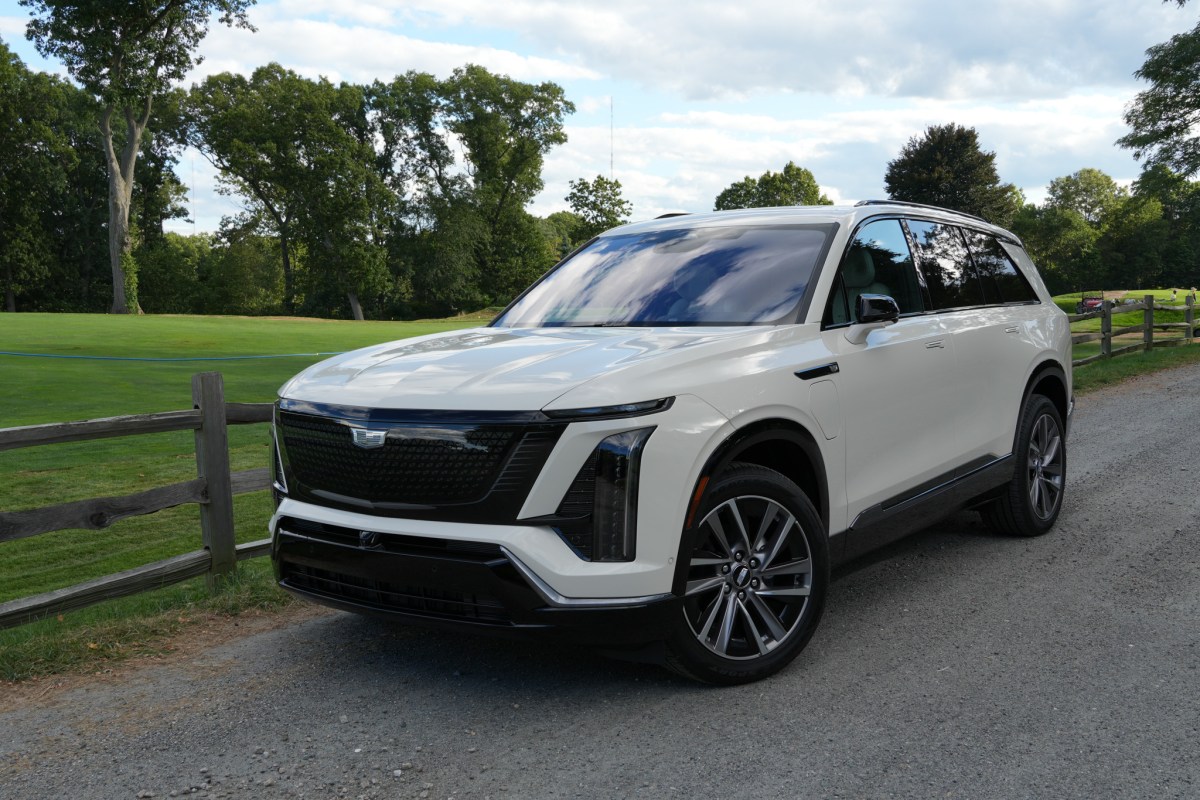


I don’t think I’ve ever described a luxury SUV with leather interiors, a length of 17 feet, and a weight of 6,000 pounds as “a good deal” before, but the Cadillac Vistiq might have broken my record.
Earlier this fall, I spent two weeks test-driving a 2027 model of Vistiq Sport, which is one of Cadillac's three-row electric vehicles. I also played a little game: for the first few days, I didn't look at the price tag on the car window and tried to guess how much it was worth.
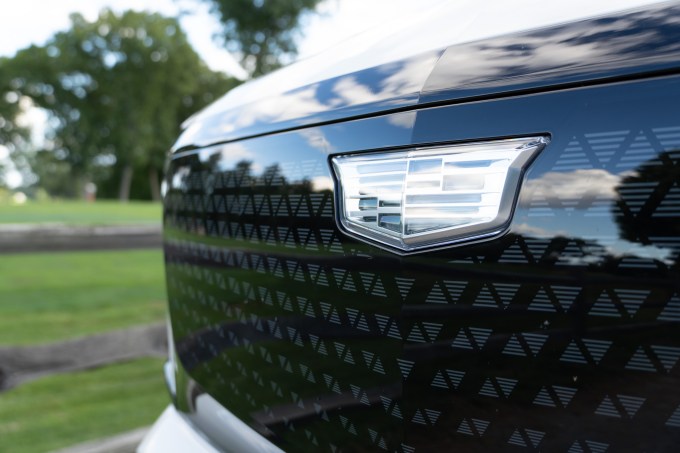
At first glance, the Vistiq gives off an expensive impression. It is solemn and imposing, somewhat resembling a scaled-down version of the Escalade, but not so intimidating as to deter people. In fact, among all the cars I have test-driven or owned over the years, more people have asked about the Vistiq than any other model.
Ride Experience
Vistiq can indeed make you feel a few inches taller, and this is due not only to the sense of "enhanced presence" it brings but also to that slight elevation when you slide into the driver's seat.
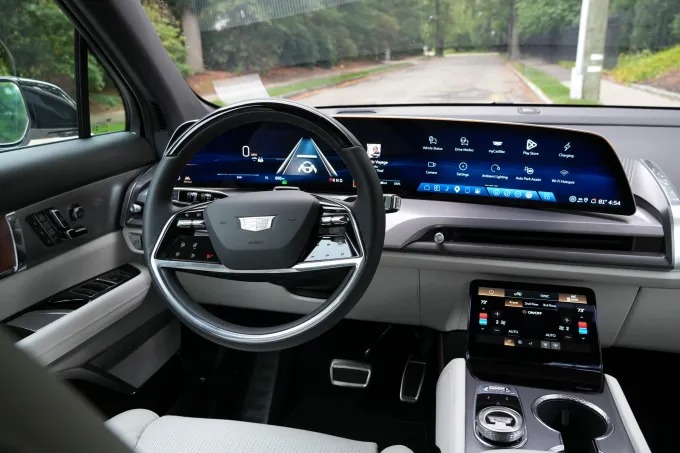
The interior visibility is also of a very high standard. Above the dashboard is a huge 33-inch display screen. Soft leather and wood trim with delicate textures can be found everywhere, and the AKG audio system is quite good as well, provided that you can play high-quality recordings. The detailed design is also very thoughtful. My favorite feature is that on cold mornings, the seat and steering wheel heating will turn on automatically, but not at full power right away; instead, it adjusts to an appropriate level based on the external temperature.
The front-row seats also offer a variety of massage modes. My favorite is “wave”, which makes the rollers move down along the spine. A little tip: push your body against the steering wheel, and the massage will reach deeper into your muscle knots. Quite outstanding. While the massage chair was in operation, I thought to myself that this car must cost at least $100,000.
But this streamlined machine is not perfect in every aspect.
Days without the internet
The first time I picked up this Vistiq in Manhattan, the vehicle was unable to connect to the internet. Later on, I discovered that the setup process for the internet connectivity service OnStar of GM was not completed correctly, but neither I nor the fleet management staff were aware of this at that time.
In the end, I spent an entire week driving a car that couldn't connect to the internet. It might not sound like a big problem – some drivers might even prefer a more “simulated” driving experience. But in 2026, this clearly becomes a problem, and it's certainly not what I expected from an expensive Cadillac.
The day before, I had just taken a train and also participated in the New York Climate Week events, so I wasn’t thrilled about having to drive four hours home without the Super Cruise. But at least its soft suspension alleviated a lot of the discomfort. And there were those massage seats as well.
After spending a week with this Vistiq, I replaced it with the Macan mentioned earlier. GM and the team management later identified the issue, and I was able to complete the tests using the same Vistiq.
Super Cruise can be used normally, and just as in my previous tests of this technology, it is a competent but not perfect driving assistance system. It still occasionally gives random-looking prompts to take over control, but for the most part, it handles highway driving quite well.
GM Based on Android Automotive OS, the in-vehicle infotainment system also operates smoothly and responds quickly. The voice assistant is easy to use, but it has some peculiarities. It uses a different voice to answer questions than when it announces navigation instructions, which isn't a problem per se, but it is indeed a bit jarring. Once, I asked it to find nearby Japanese restaurants for me, and the Google AI system behind it actually started speaking to me in Japanese.
Above the passing mark
GM We have been building electric vehicles based on the previous Ultium platform for five years now. The engineering design of this platform is very solid and leads the way in many aspects, but it has also begun to show some signs of aging.
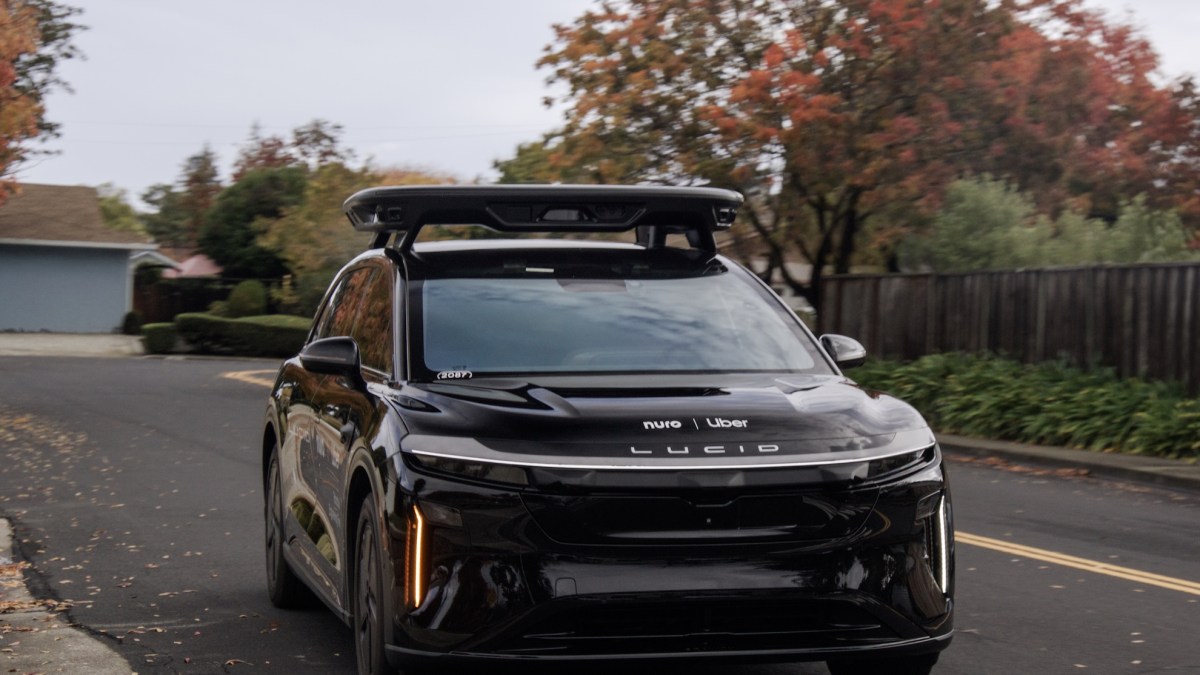
Like many three-row SUV, the frontal wind-facing area of the Vistiq is comparable to that of a pickup truck. This means that no matter how streamlined the designer makes it, electric vehicles still have a tough battle to face in terms of efficiency. During my first week of testing, with temperatures ranging from 40 to 60 degrees Fahrenheit and driving conditions that included both urban and highway settings, I managed to travel an average of 2.9 miles per kilowatt-hour. Actually, that's not bad. The performance of the Lucid Gravity was similar as well.
Charging, on the other hand, is another matter. The Ultium platform uses a 400-volt architecture, which is significantly lower than that of today's leading electric vehicles. This results in a slower maximum charging speed, meaning it takes a considerable amount of time to recharge a 102-kilowatt-hour battery. At Tesla Supercharger stations, using the standard NACS charging port, I was able to achieve a peak charging power of 165 kilowatts after about 5 minutes of preheating, with an initial battery level of 18%. It took me 36 minutes to charge the battery to 80%. The Lucid Gravity seems to perform even better at Supercharger stations, and its 926-volt architecture means it can charge even faster at chargers with higher power.
However, in reality, most owners of Vistiq (as well as Gravity) charge their vehicles at home, which to some extent narrows the gap. After all, these are all luxury SUV.
The price is still quite reasonable right now.
Which brings us back to the price. The Vistiq I'm considering purchasing has a list price of $83,256, which includes shipping costs as well as several optional extras such as independent seats for the second row and a 19.2-kilowatt on-board charger.
Judging by this price, is it really a good deal to buy a Cadillac?
Listen to me finish: I currently have a Kia EV9 GT - Line parked in my garage. We bought it before the tax credit expired, and I even managed to negotiate a better price with the dealer. But now, the Kia EV9 GT - Line is priced at $74,580, including shipping. Apart from two advantages – EV9 it charges faster, and the third row is more spacious – Vistiq is clearly better in every way.
EV9 is quite good, but Vistiq gives the impression of having a value that far exceeds its price of $8,676. Compared to Escalade IQ, which has a starting price of over $127,000, Vistiq seems like a real bargain.
However, the advantages of Vistiq may not last long. It is reported that GM has suspended updates to that platform and is readjusting its electric vehicle strategy. Meanwhile, the electric vehicle industry is developing rapidly, and competitors are also quickly gaining experience with more advanced electrical architectures. For example, BMW recently launched a new iX5, which can cover additional range in one-third of the time.
For now, Vistiq still holds its ground, while GM needs to be cautious not to squander the initial advantage. Making a good trade can indeed be exciting, but that excitement will eventually pass.