Ethereum: BlackRock's spot Ethereum ETF attracted over $1 billion in nine days
U.Today
15h ago
Ai Focus
BlackRock's spot Ethereum ETF ETHA attracted over $1 billion in nine trading days, accounting for the majority of net inflows in similar products in the United States, while the ETH price fell back after a rebound.
Helpful
No.Help

US spot Ethereum ETF has continued to attract funds recently, with ETHA under BlackRock being the main source of inflows. Data shows that this fund has attracted over $1 billion in funds over a consecutive 9 trading days, significantly leading similar products.

ETHA accounted for the majority of net inflows during the same period.

As mentioned by Arkham Intelligence, ETHA has seen a cumulative inflow of 889.8 million US dollars in the first 8 trading days, a figure that is also basically consistent with the statistics from Farside. By the 9th trading day, the overall net inflow of US spot Ethereum ETF was approximately 1.42 billion US dollars, with ETHA accounting for about 72%.

On August 28th, US spot Ethereum ETF recorded a total net inflow of $102.1 million in a single day, of which ETHA attracted approximately $83.8 million, continuing to hold the top position.

There is a divergence between institutional funds and the trend of cryptocurrency prices.

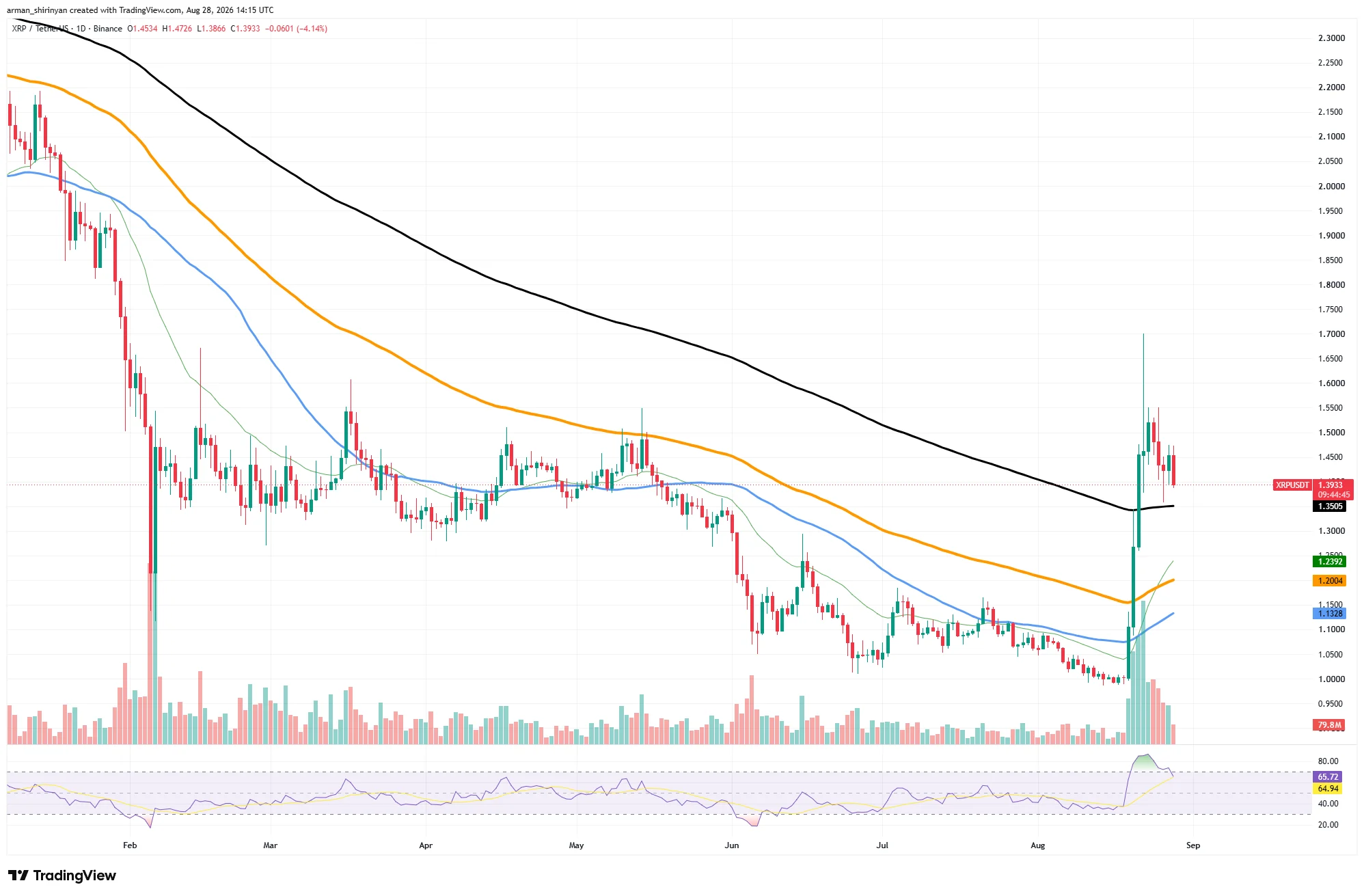
Compared to the continuous inflow of funds into ETF, the spot price of ETH has recently declined. Reports indicate that ETH is currently trading at around $2,435.95, a 2.77% drop over 24 hours; its market value has fallen to approximately $294.08 billion, with daily trading volume at around $13.7 billion, which is a 5.16% decrease from the previous day.

Previously, ETH continued to rise above $1,900, briefly approaching $2,500, and once again reached the long-term trend level around $2,150. The current pullback occurs after this rapid rebound.

The market is concerned about whether the funds of ETF can continue to flow in.

Sustained net inflows mean that, in addition to spot trading on exchanges, the market has also seen new demand from the ETF channel. The continuous inflow of funds over several days also reflects that some investors are still willing to maintain their exposure to Ethereum despite short-term fluctuations.

However, ETF funds cannot directly determine the short-term price direction. The prices of crypto assets are still influenced by a combination of derivative positions, macroeconomic expectations, market liquidity, and overall risk appetite.

Based on the current data, institutions' interest in configuring Ethereum continues. Next, the market will continue to monitor two indicators: one is whether ETH can maintain the main increase after the previous rebound, and the other is whether US spot Ethereum ETF can still maintain a net inflow.

Tip
$0
Like
0
Save
0
Views 70
HQYC reminds readers to view blockchain rationally, stay aware of risks, and beware of virtual token issuance and speculation. All content on this site represents market information or related viewpoints only and does not constitute any form of investment advice. If you find sensitive content, please click“Report”,and we will handle it promptly。
Submit
Comment 0
Hot
Latest
No comments yet. Be the first!
Related
Ethereum: Foreign media: The CLARITY bill may reshape the regulation of BTC, ETH, and XRP
Foreign media reports that the US CLARITY Act aims to clarify the boundaries between securities and commodities of crypto tokens, and it will affect the regulation of BTC, ETH, XRP as well as trading platforms.
CoinPedia
·2026-08-30 12:11:23
22
South Korea Tightens Leverage Requirements; ETF Trading Volumes Drop Significantly After Access
South Korea reduces leverage on individual stocks ETF by raising thresholds and mandating simulated transactions, resulting in a decline in both the trading volume of related products and the asset size.
Wall Street CN
·2026-08-30 10:03:52
24
LuLu uses USDC for cross-regional settlement: 24-hour remittance processes still need to comply with regulations and ensure local currency settlement
Circle released a case in August stating that LuLu Financial Holdings uses USDC to support cross-regional remittance settlements in the Gulf, Middle East, and Asia-Pacific regions. The case study describes a specific institution using stablecoin infrastructure in a particular business process and should not be extrapolated to imply that the entire regional remittance system has been fully digitized on-chain. Cross-border remittances involve licensing for both the sender and recipient, bank cooperation, foreign exchange conversion, customer identity verification, anti-money laundering checks, and local cash or account payment networks; on-chain settlement can improve one of these processes, but it does not necessarily replace all of them.
币界网
·2026-08-30 10:02:46
65
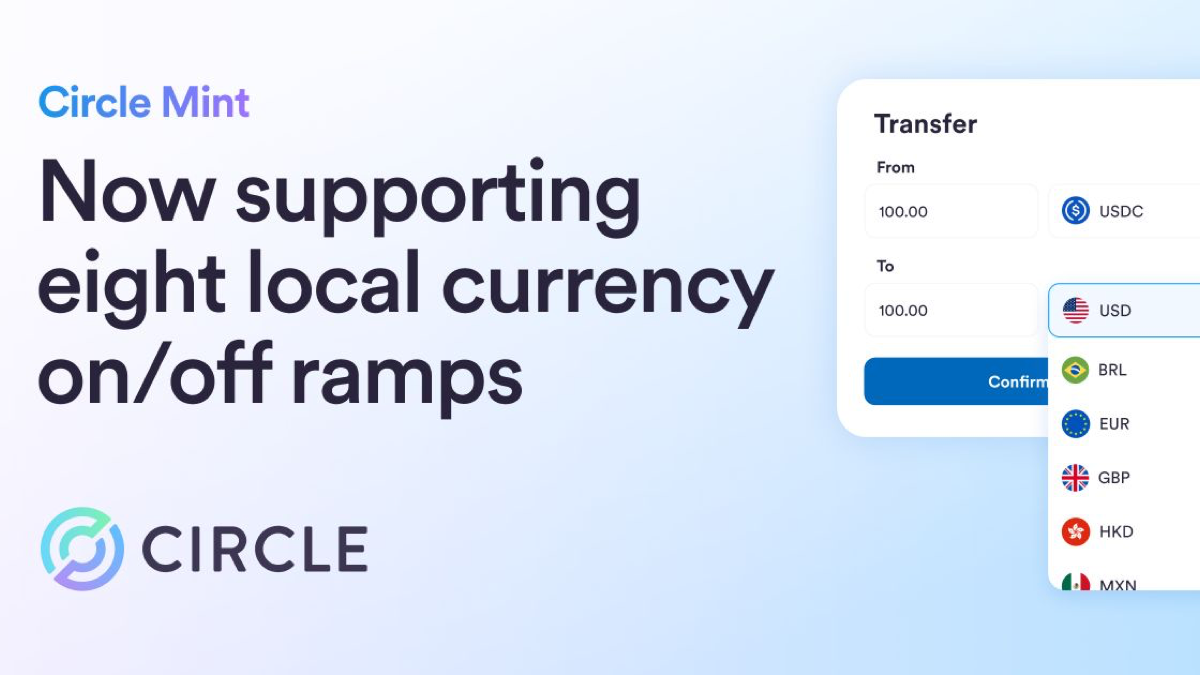
Circle Mint Expands support for 8 local currencies for deposits and withdrawals: The addition of channels does not mean individual users can use them directly
Circle announced in August the expansion of the local currency deposit and withdrawal capabilities of Circle Mint, adding 8 new local currency channels. The core of such updates is how institutions can convert fiat funds into on-chain stablecoins, followed by redemption and settlement; this is not a retail wallet feature available to all individual users. Circle also emphasizes in its public statement that Mint is mainly targeted at institutions, and specific services are subject to restrictions based on location, account qualifications, banking partnerships, and compliance requirements. Describing "new channels" as "free withdrawals for everyone" is not only inaccurate but also overlooks the most important access limitations in the use of stablecoins.
币界网
·2026-08-30 10:01:42
62
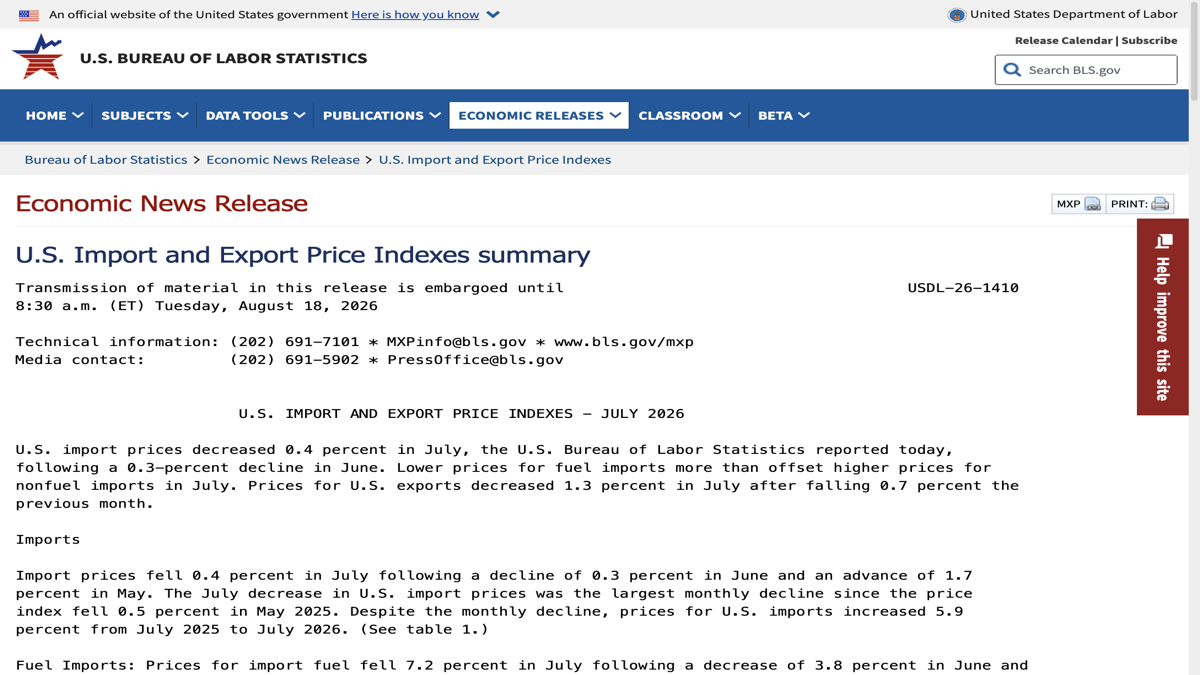
U.S. import prices fell 0.4% month-on-month in July: A single-month decline does not mean that external inflationary pressures have disappeared
The Import and Export Price Index released by the U.S. Bureau of Labor Statistics in August shows that import prices fell by 0.4% month-on-month in July, following a 0.3% decline in June; export prices fell by 1.3% month-on-month, compared to a 0.7% drop in June. Over the past 12 months, import prices have still risen by 5.9%, while export prices have increased by 8.2%. The fact that the same set of data exhibits both "month-on-month declines" and "year-on-year increases" illustrates that price analysis cannot focus solely on the most prominent figure. Month-on-month comparisons describe short-term changes, while year-on-year comparisons reflect cumulative changes over a year; both provide different insights.
币百科
·2026-08-30 09:59:35
19
View More