

One of the most important technological transformations for Ethereum has officially entered the countdown phase. According to a recent update from a researcher at the Ethereum Foundation, the Ethereum Glamsterdam upgrade is now in its final development stage, with public test network trials just a few weeks away, and the mainnet deployment is scheduled for later this year.
Key Points
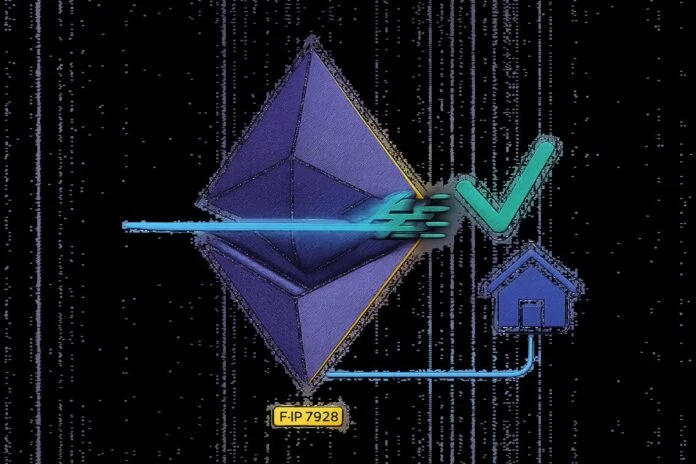
- Researchers from the Ethereum Foundation, Toni Wahrst and tter, indicated that the upgrade of Ethereum Glamsterdam which includes EIP-7928 (block-level access list), is nearing its final stage.
- The Sepolia testnet fork of Glamsterdam is scheduled for October 6, 2026, with the mainnet release expected in the fourth quarter of 2026, although the official date has not yet been confirmed.
- Glamsterdam focuses on three objectives: improving speed through parallel processing, achieving faster and simpler synchronization with snap and v2, and addressing database expansion by enhancing long-term sustainability.
- Ethereum co-founder Vitalik Buterin stated that the fork after the upgrade next year Hegota could be Ethereum's last “normal” hard fork, and it will pave the way for recursive STARK and quantum-resistant consensus.
- At the same time, improvements in node synchronization and hardware efficiency have made it easier for individuals to run Ethereum nodes from home.
Ethereum Glamsterdam upgrade nearing completion
Glamsterdam is approaching the final mile of development, and those involved in the construction say that the progress is encouraging. Researcher from the Ethereum Foundation, Toni Wahrst ä tter, recently posted on X saying: "The Glamsterdam which includes the EIP-7928 (block-level access list) is nearing the final mile, and things are looking very good." This assessment reflects the ongoing state of devnet testing, not a completed product, but it indicates that the upgrade has surpassed the most dangerous stages of engineering.
Wahrst and tter further indicate that Glamsterdam will become one of the largest forks in the history of that network. He acknowledges that the development cycle is long, but believes that the ultimate rewards will prove that waiting is worth it.
Testnet and Mainnet Release Schedule
Developers now have a clear observation date. The Sepolia testnet fork of Glamsterdam is scheduled for October 6, 2026, which will be the first real public trial of this upgrade after extensive devnet testing. Sepolia will serve as a testing ground for developers, validators, and infrastructure teams to conduct stress tests before the new code comes into contact with real-world value.
In contrast, the launch of the mainnet is still not so clear-cut. Ethereum's scalability roadmap points to a full rollout window in the fourth quarter of 2026, but there is currently no official mainnet date. The time difference between the testnet and the mainnet is a standard practice for Ethereum upgrades, which allows client teams and node operators to have time to identify vulnerabilities before the full rollout.
Glamsterdam Core Technology Improvement
Behind this timeline lies a rather ambitious technical plan. This upgrade focuses on three main objectives: to speed up transaction processing through parallelization, to expand network capacity, and to prevent long-term database expansion through sustainable improvements.
Wahrst and tter outlined in the post that parallelism will significantly increase throughput, while snap and v2 will bring faster and simpler synchronization. He also stated that this design is future-compatible with zkEVM, some stateful nodes, as well as inclusion and lists; these features are very important for subsequent scalability.
Two functions constitute the core of these improvements. ePBS is a key feature of Glamsterdam; it has redesigned the block verification process to reduce the trust assumptions in block proposal and confirmation methods. At the same time, the block-level access list provides the conditions for parallelization on Ethereum, allowing transactions that do not access the same data to be processed simultaneously, rather than one after another.
This is very important, as throughput has long been one of the core bottlenecks of Ethereum. If parallelization works as expected, it could substantially change how much activity the underlying network can handle without being completely dependent on rollup.
Unexpected improvement in node accessibility
The threshold for running a full Ethereum node at home has quietly lowered, and this change is directly serving the network's broader goal of decentralization. Buterin recently confirmed this on X and shared the specifications of their own Geth node: after cleaning up data, it only occupies 461 GiB of storage space.
With the integration of the EIP-4444 standard, and improvements to snap and sync, the complete node synchronization time has been reduced to about 12 hours, and the required disk space has been lowered to below 0.5 TB. Many enthusiasts who purchased high-performance workstations for running large language models locally have far exceeded these technical requirements. This means that the excess computing power built for AI is also being used as infrastructure for independent blockchain verification.
The next hard fork, Glamsterdam, is expected to further accelerate the underlying synchronization speed. This complements the improvements described in Wahrst, tter, snap, and v2, reinforcing the focus on faster and more lightweight nodes as a continuous mainline in Ethereum's current development efforts.
Ethereum's vision after the Hegota fork
“It’s really no longer just a blockchain anymore. It’s a hybrid architecture that combines blockchain with modern cryptography, thereby achieving more powerful capabilities,” Buterin wrote on X, attempting to summarize everything that has been planned for Ethereum since Hegota.
Hegota This fork may be the last traditional upgrade.
Buterin cited Strawman – a document that outlines a longer-term draft roadmap for Ethereum – and pointed out that the Hegota fork planned for next year is likely to be the last “normal” upgrade for the network, meaning that the features and technologies adopted will still be familiar to those who were familiar with Ethereum in 2015.
This statement is of great significance. It means that the next chapter for Ethereum will not merely involve adding new features on top of the existing foundation; at a fundamental level, it will fundamentally change what kind of system Ethereum will become.
After Hegota, we move on to advanced cryptography and consensus mechanisms.
According to Buterin, everything after Hegota will involve recursive STARK, automated formal verification, and highly optimized consensus algorithms, with the goal of making Ethereum quantum-resistant. He mentioned that PeerDAS is the starting point of this transformation, and pointed out that it was after that upgrade that Ethereum began to evolve from "just a blockchain" into a more powerful system. After Hegota, this transformation will become the main focus of the network.
Buterin believes that the ultimate outcome will be a high-security computing solution that is cheaper, more scalable, and more private than what individual technologies can provide on their own. He calls it the 'Cryptography World Computer'.
In practice, this makes the Ethereum Glamsterdam upgrade more of a transitional bridge than a final destination. It addresses short-term issues such as throughput, synchronization speed, and database growth, while the Hegota fork and subsequent upgrades aim to answer a larger question: how can Ethereum remain secure and relevant as quantum computing and advanced zero-knowledge cryptography evolve from research topics to practically usable technologies.
Frequently Asked Questions
What is an Ethereum Glamsterdam upgrade?
Glamsterdam is an Ethereum upgrade that is nearing its final stage. The goal is to increase throughput through parallel processing, to improve synchronization speed by using snap and v2, and to enhance sustainability.
When will the Ethereum Glamsterdam upgrade be tested and launched?
The Sepolia testnet fork of Glamsterdam is scheduled for October 6, 2026, and the mainnet release is expected to take place in the fourth quarter of 2026, but there is currently no official date set yet.
What does it mean for Hegota to fork Ethereum?
The Hegota fork planned for next year may be Ethereum's last traditional fork. After Hegota, Ethereum will transition to a hybrid architecture that combines advanced cryptography with optimized consensus mechanisms.
What technological advancements will Ethereum see after the Hegota fork?
After Hegota, Ethereum will utilize recursive STARK, automated formal verification, and a highly optimized consensus algorithm to achieve quantum-resistant capabilities, while providing cheaper, more scalable, and more private computing.
This article was generated with the assistance of artificial intelligence and has been reviewed by an editorial team.