

Trump did not rule out taking further actions against Iran before the midterms on Sunday, although he said that this war could end soon.
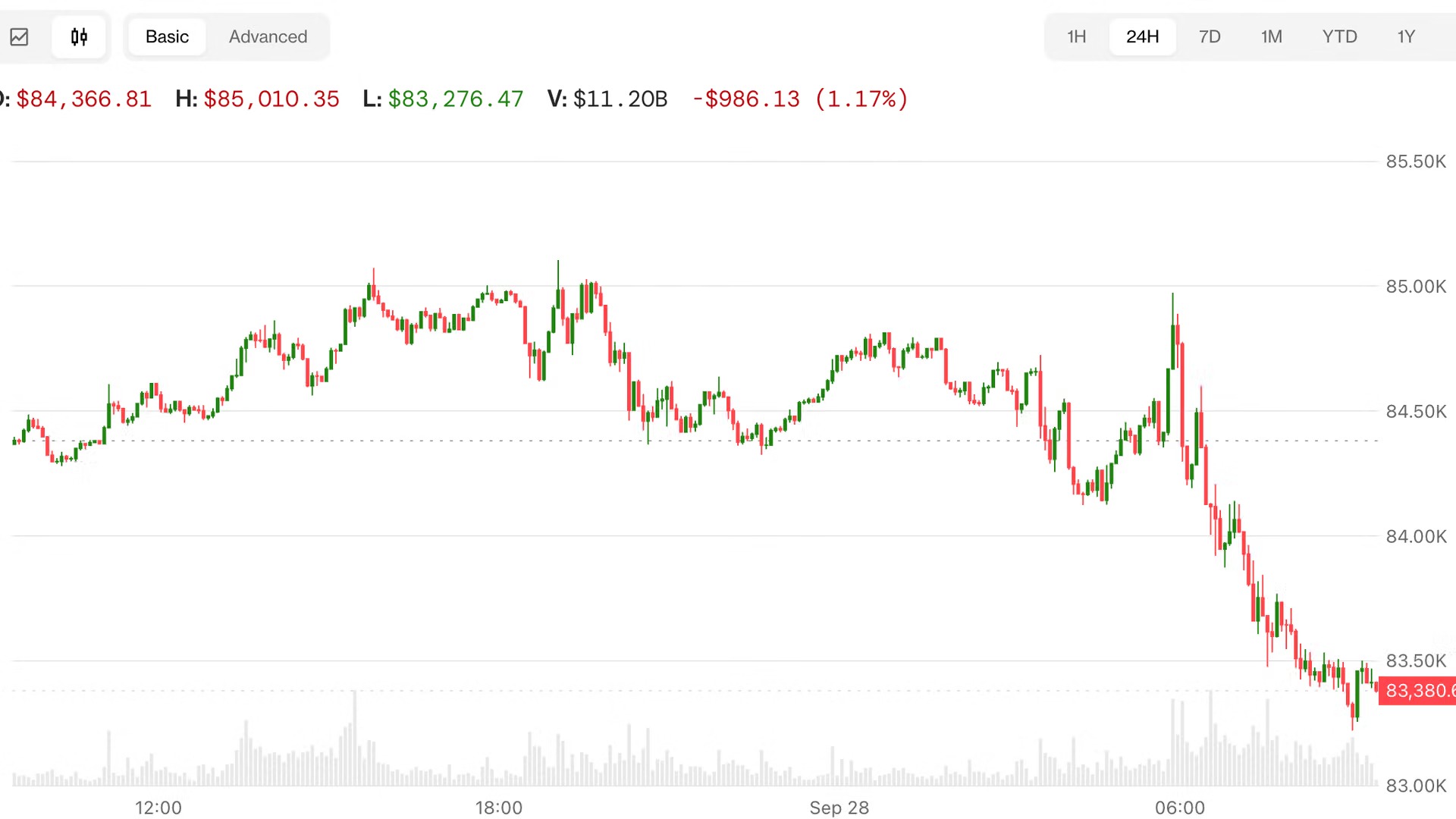
After Trump left the possibility open for the United States to resume military strikes against Iran, Bitcoin and NASDAQ futures fell.
Rising crude oil prices on both sides of the Atlantic have further exacerbated market uncertainty.
Inflation, manufacturing, and employment data released by the United States this week may also increase market volatility.
As U.S. President Donald Trump hinted that he might launch new military strikes against Iran before the mid-term elections in early November, Bitcoin and NASDAQ started the week on a weak note.
As of UTC at 03:30, Bitcoin fell by 1.3% to $83,324; major altcoins such as Ethereum, XRP, and Solana also recorded similar declines. Futures linked to the Nasdaq index, which has a higher weight of tech stocks from Wall Street, fell by 0.7%.
Futures linked to WTI crude oil rose by nearly 1%, reaching $93.28, and Brent crude oil also recorded a similar increase.
Trump said on Sunday that he expects the war with Iran to end "soon," but when asked whether military actions could be resumed before the midterms, he did not rule out that possibility.
According to Fox News, when asked whether military operations would be restarted, he said, "I don't want to say that. I really don't want to say that. What I mean is, it's possible, but I just don't want to say it."
He added that the United States will win this war by employing both military and economic pressure.
At the same time, Iranian Foreign Minister Abbas Araghchi stated that the country is "fully prepared" to deal with a new round of conflicts and warned that even in the face of a potential "doomsday war," Iran will be able to persevere.
At the United Nations General Assembly, Iran proposed an agreement to reopen the Strait of Hormuz – this vital oil passage disrupted by war – for a period of seven days, and to suspend fighting, followed by broader negotiations on related issues.
Since the outbreak of this war at the beginning of March, the ongoing geopolitical uncertainty has intensified market concerns about inflation and pushed up yields on U.S. Treasury bonds. Under the combined effect of inflation fears, bets on the Federal Reserve's interest rate hikes, and debt concerns, the yield on 10-year U.S. Treasury bonds has risen by 127 basis points to 5.20%, the highest level since 2007.
Bitcoin fell at the beginning of this year, but rebounded strongly in the third quarter, overcoming these uncertainties. Over the past three months, Bitcoin's price has risen by 42%, outperforming all major assets including NASDAQ and gold.
Analysts are currently focusing on the data to be released in order to find clues about the next move of cryptocurrencies.
The CEO of an Indian exchange, Giottus, Vikram Subburaj, stated in an email: "For investors, the range of $83,800 to $84,000 is an important short-term support level. The area between $85,000 and $85,800 represents direct resistance. It is not advisable to chase higher prices at the current level."
He added that while the market is reacting to the capital flows of ETF, the yield of U.S. Treasury bonds, and the upcoming U.S. inflation data, controlling leverage and building positions in batches can help manage volatility.

This week, inflation data for the US PCE, manufacturing data, and non-farm employment data for ISM will be released. These figures may affect bets on the Federal Reserve's interest rate hikes, as well as the broader market.