

Global stock markets fell to a one-week low as Brent crude oil continued to rise for a second day, and traders increased their bets that the Federal Reserve would raise interest rates further ahead of the release of personal consumption expenditure ( PCE ) inflation data on Wednesday.
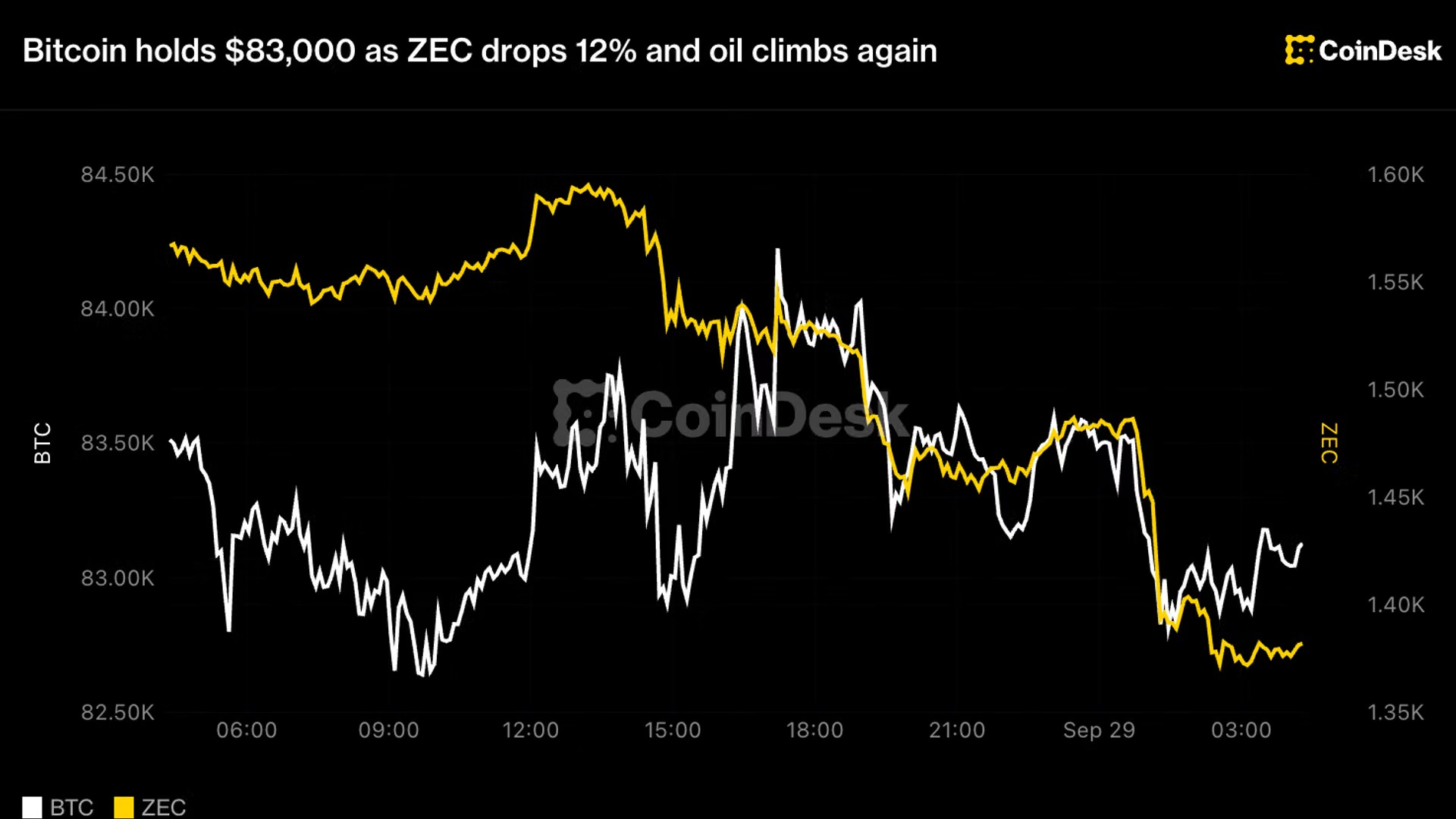
Affected by concerns about inflation triggered by rising U.S. Treasury yields and oil prices, as well as market expectations of another interest rate hike by the Federal Reserve, Bitcoin fell below $83,100.
Zcash fell by 12%, leading the decline of major tokens; The Graph rose by 18%, with the total market value of cryptocurrencies remaining around 2.86 trillion US dollars.
Analysts say that if Bitcoin continues to fall below $80,000, it may indicate a long-term weakening trend; however, if it regains momentum, it could push prices back above $90,000.
As of Tuesday's Asian morning session, Bitcoin fell by less than 1%, trading above $83,100, testing the lower edge of its trading range from last week. Previously, the yield on 10-year U.S. Treasury bonds reached its highest level since 2007.
CoinDesk data shows that ZEC has fallen by 12% to around $1,380, recording the largest decline among the major tokens. SOL and HYPE have each fallen by 3% to 4%, DOGE has fallen by 3%, BNB has fallen by 2%, and XRP has fallen by nearly 2%. Ether and TRX have remained flat.
Among small-cap tokens, FxPro mentions that The Graph's GRT has risen by 18%, and Immutable's IMX has increased by nearly 10%; UNI and BCH have each fallen by about 10%, while DASH has dropped by 7%. The total market value of cryptocurrencies is approximately 2.86 trillion US dollars.
A widely watched crypto sentiment index scored 74 points on Monday (out of 100), approaching the “extremely greedy” range. FxPro compared this indicator with the fear that has dominated the stock market over the past 20 days.
FxPro Chief Market Analyst Alex Kuptsikevich stated in an email sent to CoinDesk: "Bitcoin has fallen back to $83,000 and is testing the lower edge of the consolidation range from last week. Similar to the overall market, it is entirely expected to retest the $82,000 area under the current circumstances, as that is where the highs in May and early September were formed."
He added, "Looking ahead, if prices continue to fall below $80,000, that would be an important signal indicating that the market is not ready to continue rising for quite some time. However, if new bullish momentum emerges soon after this consolidation, it could push this leading cryptocurrency above $90,000."
The pressure comes from bonds and crude oil.
During the Asian trading session, U.S. Treasury bonds stabilized after a sharp decline during the U.S. trading hours, with the 10-year yield rising by 1 basis point to 5.25%. Previously on Monday, it had reached its highest level since 2007. The higher risk-free return of government bonds has raised the threshold for holding assets such as Bitcoin, which do not generate income.
Brent crude oil rose by more than 1%, approaching $107 per barrel, for a second consecutive day, as hopes of a diplomatic breakthrough with Iran diminished.
More expensive crude oil will push up inflation, and traders are also increasing their bets that the Federal Reserve will raise interest rates again. MSCI Indexes of all countries around the world have fallen to their lowest levels since September 18th, with the NASDAQ 100 index futures dropping by 0.3%, following a lead in losses by Wall Street tech stocks on Monday.

The next inflation data will be released on Wednesday, when the U.S. Department of Commerce will publish the Personal Consumption Expenditures Price Index for August, which is one of the indicators that the Federal Reserve monitors most closely. If the reading is higher than expected, it will further strengthen the bets for interest rate hikes and push up U.S. Treasury yields, thus continuing to put pressure on Bitcoin; previously, Bitcoin had fallen from above $87,000.