





According to the snapshot from November 12th, CME FedWatch shows that the implied probability of the Federal Reserve raising interest rates at the meeting on December 9th is 100%. This brings another layer of pressure onto Bitcoin, and the market is likely to bear all its effects.
Bitcoin, as well as the entire cryptocurrency market, do not exist in isolation; they are significantly influenced by the performance of traditional markets and the global economy. Interest rate hikes directly affect investors' willingness to allocate funds to riskier assets, such as cryptocurrencies.
Even without additional pressure from the Federal Reserve, Bitcoin has been experiencing a rapid decline. The current decline of BTC seems to be mainly driven by insufficient risk compensation: compared to tech stocks or artificial intelligence stocks, Bitcoin and cryptocurrencies as a whole are not as attractive, so it is clearly more cost-effective to invest in the latter.
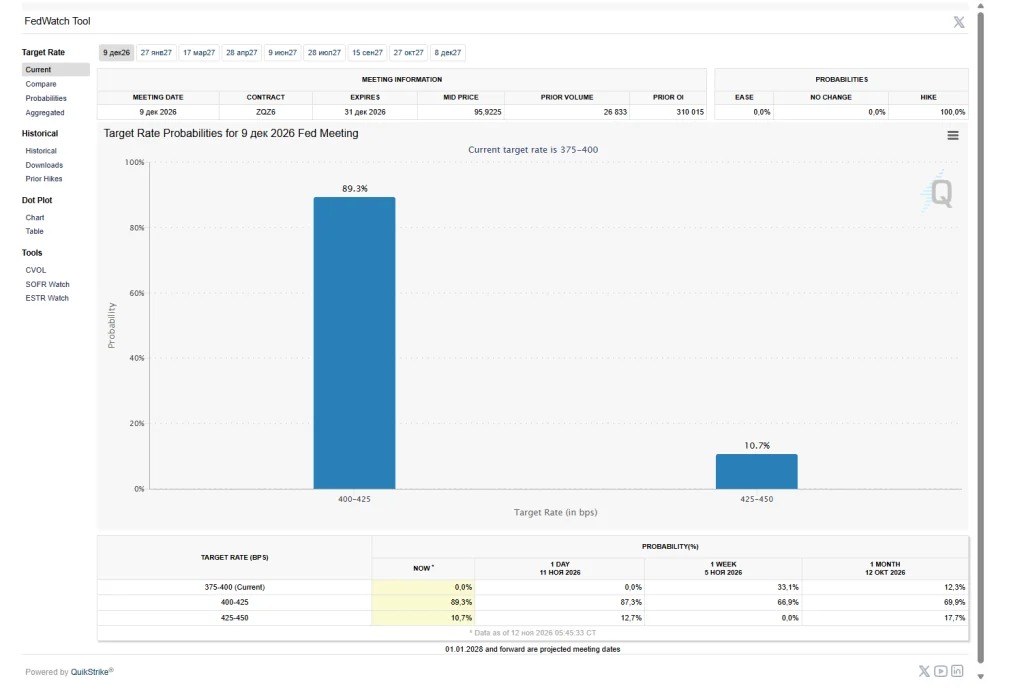
This is the bearish interpretation here. FedWatch reflects futures pricing, so this interest rate hike was already anticipated by the market and will not become a new shock.
Will Bitcoin fall below $70,000?
Bitcoin is currently trading at $72,744, which is below all the moving averages shown on the daily chart. Considering that the current downward trend has been quite extended, a fall below $70,000 may not necessarily trigger significant selling pressure.
From this market analysis, the imbalance between capital inflows and outflows remains astonishing. What is concerning is that the top 15 crypto assets are almost all in a state of "holding on tough," facing continuous outflows, driven by security concerns, a decline in investor sentiment, and a lack of clear prospects for recovery.
This view refers to Coinglass, CryptoQuant, and SosoValue, which track derivatives, on-chain activities, and the performance of ETF respectively. The interpretation is that all three aspects indicate a outflow of funds from digital assets, while the supply of stablecoins continues to increase.
For the cryptocurrency market to achieve a full recovery, new catalysts and new use cases are needed. If the bubble of artificial intelligence bursts and causes significant losses to the largest market participants, it might prompt them to turn to digital assets. Such a shift could occur in the market, but it cannot be said with certainty that it will happen.
Only when we see higher highs and continuous capital inflows into institutional products such as ETF, can the market recovery be confirmed.