BTC
BTC
$64,788.00
+1.47%
涨跌箭头
ETH
ETH
$1,916.28
+0.88%
涨跌箭头
BNB
BNB
$592.30
+4.08%
涨跌箭头
XRP
XRP
$1.09
+1.35%
涨跌箭头
SOL
SOL
$74.43
+1.27%
涨跌箭头
TRX
TRX
$0.3291
+0.80%
涨跌箭头
HYPE
HYPE
$54.63
-0.53%
涨跌箭头
DOGE
DOGE
$0.07044
+0.13%
涨跌箭头
ZEC
ZEC
$471.70
+1.40%
涨跌箭头
XMR
XMR
$357.13
+1.20%
涨跌箭头
LINK
LINK
$8.45
+1.92%
涨跌箭头
XLM
XLM
$0.1724
+0.17%
涨跌箭头
CC
CC
$0.1205
-0.09%
涨跌箭头
BCH
BCH
$218.70
+3.60%
涨跌箭头
TON
TON
$1.42
+1.80%
涨跌箭头
LTC
LTC
$45.31
-0.02%
涨跌箭头
HBAR
HBAR
$0.0682
+0.66%
涨跌箭头
UNI
UNI
$4.38
+10.32%
涨跌箭头
AVAX
AVAX
$6.47
+1.17%
涨跌箭头
SHIB
SHIB
$0.0{5}459
-3.16%
涨跌箭头
SUI
SUI
$0.6994
+2.25%
涨跌箭头
CRO
CRO
$0.05512
+0.46%
涨跌箭头
NEAR
NEAR
$1.67
+4.58%
涨跌箭头
TAO
TAO
$192.70
+0.63%
涨跌箭头
ONDO
ONDO
$0.4154
+5.16%
涨跌箭头
XAUT
XAUT
$4,095.19
+1.49%
涨跌箭头
BFUSD
BFUSD
$0.9993
+0.01%
涨跌箭头
PAXG
PAXG
$4,102.13
+1.52%
涨跌箭头
OKB
OKB
$85.50
+0.92%
涨跌箭头
USDD
USDD
$0.9989
+0.04%
涨跌箭头
ASTER
ASTER
$0.606
+0.83%
涨跌箭头
AAVE
AAVE
$99.67
+0.57%
涨跌箭头
WLFI
WLFI
$0.0548
+0.37%
涨跌箭头
SKY
SKY
$0.05675
-0.91%
涨跌箭头
MNT
MNT
$0.397
+0.38%
涨跌箭头
DOT
DOT
$0.769
+0.92%
涨跌箭头
M
M
$1.00
-12.43%
涨跌箭头
PEPE
PEPE
$0.0{5}276
+1.47%
涨跌箭头
BGB
BGB
$1.63
-0.83%
涨跌箭头
ICP
ICP
$2.07
+0.05%
涨跌箭头
JITOSOL
JITOSOL
$96.55
+2.28%
涨跌箭头
ETC
ETC
$6.77
+1.80%
涨跌箭头
KCS
KCS
$6.70
+1.41%
涨跌箭头
JST
JST
$0.1016
+2.53%
涨跌箭头
WLD
WLD
$0.3053
+0.43%
涨跌箭头
BNSOL
BNSOL
$83.70
+1.33%
涨跌箭头
U
U
$1.00
-0.02%
涨跌箭头
MORPHO
MORPHO
$2.00
+0.55%
涨跌箭头
POL
POL
$0.0711
-0.93%
涨跌箭头
GT
GT
$6.50
+0.31%
涨跌箭头
KAS
KAS
$0.02739
-0.87%
涨跌箭头
QNT
QNT
$60.40
-1.92%
涨跌箭头
PI
PI
$0.0807
+1.80%
涨跌箭头
PUMP
PUMP
$0.001982
+5.15%
涨跌箭头
ALGO
ALGO
$0.0786
+2.21%
涨跌箭头
ENA
ENA
$0.0809
+1.89%
涨跌箭头
币安人生
币安人生
$0.6399
+2.71%
涨跌箭头
JUP
JUP
$0.1962
+0.87%
涨跌箭头
ATOM
ATOM
$1.29
+1.18%
涨跌箭头
STABLE
STABLE
$0.03474
-4.40%
涨跌箭头
LIT
LIT
$2.23
+1.67%
涨跌箭头
FLR
FLR
$0.006286
+0.27%
涨跌箭头
FIL
FIL
$0.706
+4.77%
涨跌箭头
VVV
VVV
$12.11
-4.04%
涨跌箭头
XDC
XDC
$0.02665
-1.77%
涨跌箭头
CAKE
CAKE
$1.46
+6.73%
涨跌箭头
INJ
INJ
$4.81
+4.30%
涨跌箭头
NEXO
NEXO
$0.729
-0.95%
涨跌箭头
ARB
ARB
$0.0778
-0.38%
涨跌箭头
APT
APT
$0.574
+2.50%
涨跌箭头
VET
VET
$0.004774
+6.35%
涨跌箭头
AERO
AERO
$0.4321
+3.70%
涨跌箭头
DASH
DASH
$30.19
+0.13%
涨跌箭头
VIRTUAL
VIRTUAL
$0.5717
+2.55%
涨跌箭头
PENGU
PENGU
$0.005834
+0.33%
涨跌箭头
SUN
SUN
$0.01807
+1.35%
涨跌箭头
TRUMP
TRUMP
$1.46
+1.81%
涨跌箭头
FET
FET
$0.1414
+3.82%
涨跌箭头
LDO
LDO
$0.3741
+4.06%
涨跌箭头
CRV
CRV
$0.211
+0.52%
涨跌箭头
NIGHT
NIGHT
$0.01808
-1.26%
涨跌箭头
GNO
GNO
$107.63
+0.95%
涨跌箭头
TIA
TIA
$0.323
+1.99%
涨跌箭头
SEI
SEI
$0.04255
+1.48%
涨跌箭头
ETHFI
ETHFI
$0.3976
+0.15%
涨跌箭头
LUNC
LUNC
$0.0{4}499
-0.85%
涨跌箭头
NFT
NFT
$0.0{6}2665
+0.08%
涨跌箭头
BTT
BTT
$0.0{6}264
+0.99%
涨跌箭头
BONK
BONK
$0.0{5}285
-1.72%
涨跌箭头
STX
STX
$0.1383
+3.29%
涨跌箭头
BSV
BSV
$12.45
+0.81%
涨跌箭头
PYTH
PYTH
$0.04097
+1.66%
涨跌箭头
PENDLE
PENDLE
$1.44
+1.48%
涨跌箭头
MON
MON
$0.02136
+2.40%
涨跌箭头
ZRO
ZRO
$0.767
-0.52%
涨跌箭头
XTZ
XTZ
$0.2058
+0.34%
涨跌箭头
JTO
JTO
$0.5036
-7.20%
涨跌箭头
IMX
IMX
$0.1098
-0.18%
涨跌箭头
JASMY
JASMY
$0.00434
+1.88%
涨跌箭头
CFX
CFX
$0.0409
-2.48%
涨跌箭头
BTC
BTC
$64,788.00
+1.47%
涨跌箭头
ETH
ETH
$1,916.28
+0.88%
涨跌箭头
BNB
BNB
$592.30
+4.08%
涨跌箭头
XRP
XRP
$1.09
+1.35%
涨跌箭头
SOL
SOL
$74.43
+1.27%
涨跌箭头
TRX
TRX
$0.3291
+0.80%
涨跌箭头
HYPE
HYPE
$54.63
-0.53%
涨跌箭头
DOGE
DOGE
$0.07044
+0.13%
涨跌箭头
ZEC
ZEC
$471.70
+1.40%
涨跌箭头
XMR
XMR
$357.13
+1.20%
涨跌箭头
LINK
LINK
$8.45
+1.92%
涨跌箭头
XLM
XLM
$0.1724
+0.17%
涨跌箭头
CC
CC
$0.1205
-0.09%
涨跌箭头
BCH
BCH
$218.70
+3.60%
涨跌箭头
TON
TON
$1.42
+1.80%
涨跌箭头
LTC
LTC
$45.31
-0.02%
涨跌箭头
HBAR
HBAR
$0.0682
+0.66%
涨跌箭头
UNI
UNI
$4.38
+10.32%
涨跌箭头
AVAX
AVAX
$6.47
+1.17%
涨跌箭头
SHIB
SHIB
$0.0{5}459
-3.16%
涨跌箭头
SUI
SUI
$0.6994
+2.25%
涨跌箭头
CRO
CRO
$0.05512
+0.46%
涨跌箭头
NEAR
NEAR
$1.67
+4.58%
涨跌箭头
TAO
TAO
$192.70
+0.63%
涨跌箭头
ONDO
ONDO
$0.4154
+5.16%
涨跌箭头
XAUT
XAUT
$4,095.19
+1.49%
涨跌箭头
BFUSD
BFUSD
$0.9993
+0.01%
涨跌箭头
PAXG
PAXG
$4,102.13
+1.52%
涨跌箭头
OKB
OKB
$85.50
+0.92%
涨跌箭头
USDD
USDD
$0.9989
+0.04%
涨跌箭头
ASTER
ASTER
$0.606
+0.83%
涨跌箭头
AAVE
AAVE
$99.67
+0.57%
涨跌箭头
WLFI
WLFI
$0.0548
+0.37%
涨跌箭头
SKY
SKY
$0.05675
-0.91%
涨跌箭头
MNT
MNT
$0.397
+0.38%
涨跌箭头
DOT
DOT
$0.769
+0.92%
涨跌箭头
M
M
$1.00
-12.43%
涨跌箭头
PEPE
PEPE
$0.0{5}276
+1.47%
涨跌箭头
BGB
BGB
$1.63
-0.83%
涨跌箭头
ICP
ICP
$2.07
+0.05%
涨跌箭头
JITOSOL
JITOSOL
$96.55
+2.28%
涨跌箭头
ETC
ETC
$6.77
+1.80%
涨跌箭头
KCS
KCS
$6.70
+1.41%
涨跌箭头
JST
JST
$0.1016
+2.53%
涨跌箭头
WLD
WLD
$0.3053
+0.43%
涨跌箭头
BNSOL
BNSOL
$83.70
+1.33%
涨跌箭头
U
U
$1.00
-0.02%
涨跌箭头
MORPHO
MORPHO
$2.00
+0.55%
涨跌箭头
POL
POL
$0.0711
-0.93%
涨跌箭头
GT
GT
$6.50
+0.31%
涨跌箭头
KAS
KAS
$0.02739
-0.87%
涨跌箭头
QNT
QNT
$60.40
-1.92%
涨跌箭头
PI
PI
$0.0807
+1.80%
涨跌箭头
PUMP
PUMP
$0.001982
+5.15%
涨跌箭头
ALGO
ALGO
$0.0786
+2.21%
涨跌箭头
ENA
ENA
$0.0809
+1.89%
涨跌箭头
币安人生
币安人生
$0.6399
+2.71%
涨跌箭头
JUP
JUP
$0.1962
+0.87%
涨跌箭头
ATOM
ATOM
$1.29
+1.18%
涨跌箭头
STABLE
STABLE
$0.03474
-4.40%
涨跌箭头
LIT
LIT
$2.23
+1.67%
涨跌箭头
FLR
FLR
$0.006286
+0.27%
涨跌箭头
FIL
FIL
$0.706
+4.77%
涨跌箭头
VVV
VVV
$12.11
-4.04%
涨跌箭头
XDC
XDC
$0.02665
-1.77%
涨跌箭头
CAKE
CAKE
$1.46
+6.73%
涨跌箭头
INJ
INJ
$4.81
+4.30%
涨跌箭头
NEXO
NEXO
$0.729
-0.95%
涨跌箭头
ARB
ARB
$0.0778
-0.38%
涨跌箭头
APT
APT
$0.574
+2.50%
涨跌箭头
VET
VET
$0.004774
+6.35%
涨跌箭头
AERO
AERO
$0.4321
+3.70%
涨跌箭头
DASH
DASH
$30.19
+0.13%
涨跌箭头
VIRTUAL
VIRTUAL
$0.5717
+2.55%
涨跌箭头
PENGU
PENGU
$0.005834
+0.33%
涨跌箭头
SUN
SUN
$0.01807
+1.35%
涨跌箭头
TRUMP
TRUMP
$1.46
+1.81%
涨跌箭头
FET
FET
$0.1414
+3.82%
涨跌箭头
LDO
LDO
$0.3741
+4.06%
涨跌箭头
CRV
CRV
$0.211
+0.52%
涨跌箭头
NIGHT
NIGHT
$0.01808
-1.26%
涨跌箭头
GNO
GNO
$107.63
+0.95%
涨跌箭头
TIA
TIA
$0.323
+1.99%
涨跌箭头
SEI
SEI
$0.04255
+1.48%
涨跌箭头
ETHFI
ETHFI
$0.3976
+0.15%
涨跌箭头
LUNC
LUNC
$0.0{4}499
-0.85%
涨跌箭头
NFT
NFT
$0.0{6}2665
+0.08%
涨跌箭头
BTT
BTT
$0.0{6}264
+0.99%
涨跌箭头
BONK
BONK
$0.0{5}285
-1.72%
涨跌箭头
STX
STX
$0.1383
+3.29%
涨跌箭头
BSV
BSV
$12.45
+0.81%
涨跌箭头
PYTH
PYTH
$0.04097
+1.66%
涨跌箭头
PENDLE
PENDLE
$1.44
+1.48%
涨跌箭头
MON
MON
$0.02136
+2.40%
涨跌箭头
ZRO
ZRO
$0.767
-0.52%
涨跌箭头
XTZ
XTZ
$0.2058
+0.34%
涨跌箭头
JTO
JTO
$0.5036
-7.20%
涨跌箭头
IMX
IMX
$0.1098
-0.18%
涨跌箭头
JASMY
JASMY
$0.00434
+1.88%
涨跌箭头
CFX
CFX
$0.0409
-2.48%
涨跌箭头
相場
/SKY価格
币种icon
Sky
SKY
No.63
$0.05675
-0.91%
≈$0.06
時価総額
$1331506247.1130204
流通時価
$1305581735.2548704
流通量
23.01B
流通率
98.053%
総供給量
23.46B
最大供給量
23.46B
24h取引額
$235189028.01561064
24h取引量(BTC)
13.34M
24h換手率
1.022004%
市場シェア
0.06%
価格パフォーマンス
0.06
振幅
+0.03%
0.06
上場価格
$0
史上最高(2025-02-03)
$0.1014
-44.05%
史上最低(2024-12-03)
$0.0343
+65.46%
公式情報
契約
Ethereum: 0x5607...Ed9279
公式リンク
SNS
ネット情報
価格換算
チャート
市場
価格
時価総額
biểu đồ k-line
深度
1分
5分
15分
1時間
4時間
1日
TradingView
1時間
-0.51%
24時間
-0.91%
7日
-7.71%
30日
+5.76%
1年
-33.77%
すべて
0%
HQYC AI投資アシスタント
SKY下跌原因
SKY资金流向
SKY买卖支撑位
SKY多空比分析
SKY趋势分析
AI質問
SKY市場
CEX現物
CEXデリバティブ
70%
30%
強気
弱気
コミュニティ見解
Mario Nawfal
🇷🇺🇺🇦 All the latest reports focus on the war itself, rather than on how Russians truly feel about it. Zelensky just told Sky News that Ukrainian intelligence indicates Russia is preparing for a new round of mobilization, potentially reaching 300,000 to 500,000 troops after the September elections. The objective is clear: more troops are needed to keep pace with casualties as the current recruitment rate cannot keep up. Meanwhile, Ukrainian drones have again achieved precision strikes in occupied Crimea. They destroyed an S-400 air defense missile system and its critical 96L6 radar, located north of the Crimean Bridge. This system is one of Russia's main long-range air defense weapons. Destroying the radar helps deactivate the missile site and creates space for deeper strikes against the logistics and infrastructure maintaining the occupation. This is the current pattern. Russia appears prepared to deploy hundreds of thousands more undertrained and poorly equipped troops into this chaotic conflict. Ukraine continues to weaken Crimea and its land bridges' air defense systems and supply lines. Troop strength and equipment on the battlefield continue to escalate. According to recent polls, Putin's approval rating remains around 70%, and the majority still generally support the war. However, public support for the endless fighting is waning, with a growing number of Russians expressing a preference for peace talks. However, this domestic sentiment is negligible compared to the daily updates on troop reinforcements and new airstrikes. Source: Sky News, Kagan Dunlap YT / Author: Lucas
437
0
0
25
Stani
07-29 01:38
Aave's savings GHO (sGHO) currently offers a higher yield than sUSDS and all of Spark's savings products. Last week, Sky lowered its savings rate (sUSDS) from 3.60% to 3.52%. This rate, which was as high as 4% in February, is currently at 3.52% after several reductions. Spark's savings products have also been lowering their rates over the past few months. Current Rates: → sGHO: 4.25% → sUSDS (Sky): 3.52% → Spark Savings (USDC/USDT/USDS/PYUSD): 2.75% to 3.52% sGHO currently offers 73 basis points more than sUSDS. GHO is Aave's native stablecoin, over-collateralized by assets held within the protocol. Savings GHO can be redeemed for GHO at any time, with no minimum deposit required. It automatically provides savings interest paid in GHO, funded from two sources: - Interest paid by GHO borrowers, and - Returns earned from the stablecoin reserves backing GHO.
428
0
0
47
Token Terminal 📊
07-28 04:06
Over 55% of the market capitalization of stablecoins resides on the Ethereum mainnet. If L2 stablecoins are included, this figure approaches 60%. Issuers choose Ethereum for the same reasons: security, reliability, ample liquidity, and a DeFi ecosystem that allows stablecoins to be effective immediately upon launch. Circle, Tether, Sky, and Ethena are all built on and scaled on Ethereum. In the past year, Fidelity, PayPal, and Société Générale have adopted similar strategies, while JPMorgan Chase's JPMD uses Base for settlement. Ethereum remains the default settlement platform for institutional digital asset strategies and the optimal venue for conducting business.
430
0
0
21
LCX
07-28 02:34
America, here we come! 🇺🇸 LCX US Exchange. Built for you from the start. The waiting list is now live. On the same day: Coinbase launches the $LCX token 2.0 upgrade. A new era begins today 🧵 LCX US Exchange. Built for US users from the start. The essence of LCX, plus all the experience we've gained operating an exchange since 2020: easy registration process. Cold storage. Truly valuable assets. State-by-state rollout. Now, let's talk about this upgrade. Coinbase has historically only offered token migration services for a very limited number of projects. Polygon (MATIC → POL). Maker (MKR → SKY). $LCX is also among these projects. Automatic, 1:1 migration, zero fees, no operation required. And this isn't new. $LCX has been listed on Coinbase since 2021, years earlier than any other exchange token. For five years, we have been supported by the largest exchange in the US. Europe taught us rigorous discipline. Our exchange has grown under the strictest regulatory standards globally. Security, custody, compliance: integrated from the beginning, not added later. This is just the beginning. Assets. Products. Coverage states. As the launch date approaches, everything will be revealed. Waiting list members will be informed first. Financial freedom is coming to the US. 🇺🇸 Join for free. Only an email address is needed. You will receive priority service once your state launches. Join: This post is from LCX USA. LCX's only official accounts are @LCX on X and our Telegram account, and our only official domains include our subdomains. Please do not click on any links in replies or messages below this post. Full disclaimer is below.
479
0
0
30
Mario Nawfal
07-26 16:35
🇺🇸🇮🇷 Trump canceled plans for a large-scale strike against Iran over the weekend. We will analyze the calculations for missile deployment, which may explain the reason… For the second consecutive night, midnight came and went, but no bombers were seen in the sky. Subsequently, The New York Times published a new report: Trump has now shelved plans for a significant escalation of the conflict. Government officials cited the dwindling stockpile of interceptor missiles as the primary reason, followed by the increased risk of war, strikes against Gulf allies, and the resulting economic and refugee crisis. Almost no one in his inner circle supports escalating the conflict; they doubt that more bombs will have any impact on Tehran other than making it more united. Larry Johnson, who worked for the CIA and State Department for thirty years, also believes the answer lies in the mechanisms. The Chairman of the Joint Chiefs of Staff privately warned that resuming large-scale combat is feasible, but it would severely deplete the interceptor missiles protecting all US military bases in the region. The department responsible for developing such air combat plans was at a standstill this weekend; its planners didn't get started because any actual strike orders wouldn't allow them to. The key lies in the following inventory figures. Officials claim the interceptor inventory is close to one thousand. Larry's estimate is: "Probably less than two hundred." There's a reasonable reservation here, as approximately 90 US refueling aircraft are reportedly stationed at Israeli airfields, and the inventory could also serve as a buffer. The war ends either because of a collapse in morale or because of running out of ammunition. Washington is witnessing firsthand which will happen first. @NewSonof
391
0
0
41
Mario Nawfal
07-24 08:21
🚨🇮🇷 🇺🇸 Iran has rejected the only ceasefire proposal on the table, stating that if Trump attacks Tehran, Iran will attack Tel Aviv. According to The New York Times, the Iraqi prime minister brought the ceasefire proposal to Tehran after Trump's visit to the White House, meeting with Pezeshkian, Ghalibaf, and Araghchi, but Iran rejected it. Iranian officials stated that this was the only viable solution and that they would not accept any interim agreement that failed to resolve the issue of control of the Strait of Hormuz. Araghchi dismissed the mediation itself: "The problem is not in conveying a message, but in the American mindset, which is illogical, greedy, and controlling." Two Iranian officials stated that if Trump attacks Tehran and its critical infrastructure, the Iranian military is preparing for an escalation of the war, and Iran will respond by attacking Tel Aviv and demanding that the Houthi rebels completely block the Bab el-Mandeb Strait. In Azadi Square, pro-war rallies are held every night, and a military vehicle was reportedly seen displaying ballistic missiles pointed into the sky. Every highway exit ramp built this month now leads to the same wall: Iran will not… Trump will not concede on any agreement that leaves the situation in the Strait of Hormuz hanging in the balance. What remains is the threat of expanding the war from the Gulf to the Mediterranean, and a president considering an attack on a scale larger than any he has ordered so far. Source: The New York Times / Author: Daniel
300
0
0
38
韭菜兄弟👬 ² 🧪
07-23 05:40
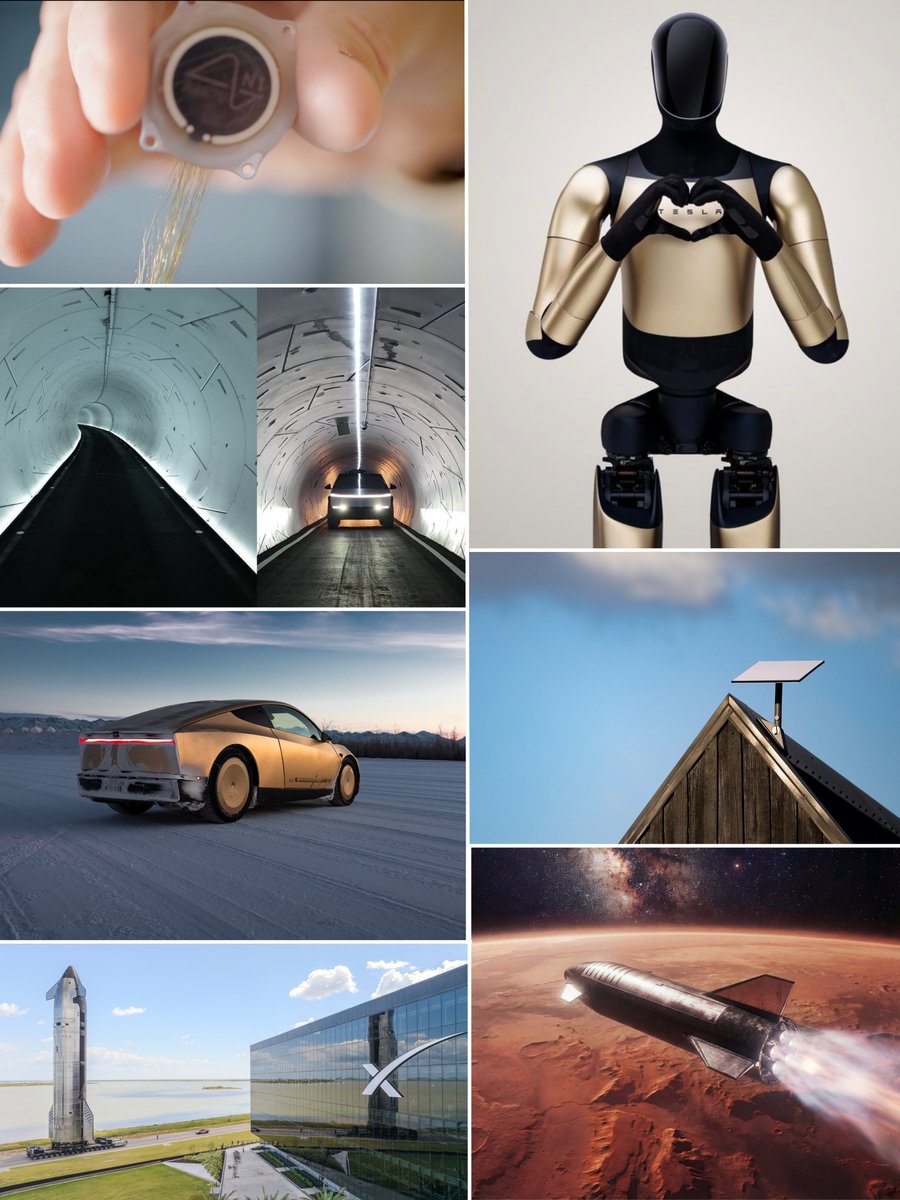
🚨Elon Musk is not just an entrepreneur. He is building "civilization-level" infrastructure for all of humanity. SpaceX is sending us to Mars, and Neuralink has enabled paralyzed people to type with their thoughts. This is not a PowerPoint presentation; it's rockets soaring into the sky and real videos. Do you think the future should be steered by one person or written by seven billion people?
368
0
0
35
看不懂的SOL
07-21 20:55
A Look Back at the 2000 Dot-com Bubble: Four Key Signals, Which Are AI Replaying? Everyone is asking if AI is a bubble, but they're asking the wrong question. The real question should be: If it is a bubble, in what form will it burst? The biggest similarity between the 2000 dot-com bubble and today's AI boom isn't technology, but human nature. The biggest difference isn't technology either, but the source of funding. Understanding this will prevent you from getting hung up on whether Nvidia's next quarterly earnings will be good or bad, or focusing on news about Meta leasing computing power. Those are just appearances. The underlying financing structure and the power struggles behind those appearances are the core factors determining whether and how a bubble will burst. 01) The Bubble Isn't Technology, It's the Financing Structure Many people, when reviewing 2000, only say that internet companies had no revenue and high valuations. This is mistaking the result for the cause. The 2000 bubble was so devastating because the entire internet industry was held hostage by the stock market's financing capabilities. Companies with no revenue rely on IPOs for funding, venture capitalists rely on IPO exits, listed companies rely on refinancing and acquisitions for expansion, and telecommunications equipment manufacturers survive on purchase orders from these revenue-less companies. The expansion of upstream fiber optics, optical modules, and routers wasn't driven by genuine demand, but by the unlimited ammunition downstream companies burning through cash to buy into the future. The stock market was the true engine of this bubble. Once stock market financing stopped, the entire industry ecosystem instantly suffered a blood shortage. Therefore, the collapse of 2000 wasn't a simple bubble burst; it was the engine stalling. Today's AI market is different. Currently, those burning cash are well-funded giants like Microsoft, Google, Amazon, and Meta. They don't rely on stock market financing; they rely on corporate bonds, operating cash flow, and balance sheets. The fuel for AI infrastructure isn't IPOs, but Capex. This means two things: First, if the AI bubble bursts, it won't manifest as an IPO freeze or a mass extinction of startups; second, it's more likely to manifest as a slow contraction from the corporate side due to "lower-than-expected returns on capital expenditures." This contraction won't be dramatic, but it will be very gradual. It's like a high-speed train slowly easing off the accelerator, rather than slamming on the brakes. 02) The bursting of a bubble isn't caused by bad news, but by a collapse of the narrative. The bubble of 2000 wasn't burst by a single piece of negative news. What truly killed it was a series of "not-good enough" news. When the market reaches that level, what it needs isn't good news, but increasingly better good news. Any neutral, any "normalization" statement will be interpreted as bad news. Because expectations have been set sky-high, only exceeding expectations can sustain them, but in reality, there's no such thing as perpetually exceeding expectations. This is the cruelty of a bubble: it doesn't need real negative news, it only needs insufficient positive news. So you see, when Cisco CEO Chambers said "normalizing," he meant the company was entering a period of normal growth, but the market heard it as "there's enough network equipment." If today, if Jensen Huang said in an earnings call, "GPU supply and demand are now approaching equilibrium," how do you think the market would react? There are only two states in a supply chain: shortage and surplus. There is no "just right." "Equilibrium" at the peak of a bubble is the prelude to surplus. 03) Four Moments of Faith Collapse If I had to summarize the year 2000 as a series of signals, I would use four words: Enough, No More Buying, Slower, Idle. Enough. Companies started saying bandwidth was sufficient, and enough fiber optic cables had been laid. This wasn't bad news, but it disrupted the narrative of "perpetual scarcity." This round corresponds to the narrative of "computing power is no longer scarce"—Meta's rental of computing power, shorter GPU delivery cycles, and increased reuse rates by cloud providers are all essentially variations of "enough." When the belief in "scarcity" is shaken, the valuation foundation of the entire industry chain loosens. Because all the stories of the past two years were built on the assumption that "computing power will never be enough." Once this assumption starts to crack, capital will reassess every link. No More Buying. Telecom operators began cutting capital expenditures. They were the largest buyers back then, equivalent to today's hyperscale cloud providers. Their slowdown in procurement indicates that buyers' ammunition is running low. Today, if Microsoft, Google, and Amazon were to slow down data center construction or reduce their capital expenditure growth rate from 50% to 20%, the market would immediately panic. More alarming is the fact that the financial fraud by these operators in 2000 was essentially because they couldn't support real demand and had to use accounting tricks to embellish the picture. In this round of AI infrastructure development, short sellers are already telling a similar story: Hyperscale cloud vendors include unproduced GPUs and data centers under construction in their CIP (Computer-to-Inventory) figures, without depreciation; There's an 18-month gap between GPU procurement and power-on operation, completely omitting technological depreciation and hardware aging; expenditures are capitalized, suppressing current expenses. These factors contribute to abnormal earnings growth in the S&P 500, typical financial characteristics of a bubble period. It's slowing down. The order growth of leading companies is slowing. Cisco's performance was still growing back then, but when the growth rate slowed, the market's PE ratio plummeted from 120 to 15. If Nvidia and Micron also experience "good growth, but below expectations" today, the same valuation correction will repeat itself. During a bubble, the second derivative is a hundred times more important than the first derivative. This is the most brutal aspect of valuation during a bubble. A company's performance may still be growing rapidly, but the capital market's pricing has already shifted from "high-speed growth" to "slowing growth." Once the second derivative turns negative, the speed at which valuations are destroyed will far exceed the speed at which performance changes. Idle capacity. A landmark overcapacity has been discovered. In 2000, it was dark fiber—a large amount of laid fiber optic cables went unused. Today, if someone were to definitively prove that data center GPUs or HBMs have a large amount of idle capacity, or that the computing power utilization for training models is extremely low, that would be a fourth type of signal. This isn't a matter of expectation; it's a matter of fact. Dark Fiber became a landmark event because it completely disproved the narrative of "long-term shortage." If in the future we see terms like "Dark GPU" or "Dark HBM,"...The main upward wave of this round of AI market rally has most likely ended. These four signals progress in layers: from narrative wavering to buyer contraction, then to order slowdown, and finally, the confirmation of overcapacity. The further along the path, the less it's speculation and the more concrete the evidence. In 2000, it took about six months to a year to go from the first to the fourth signal. If this round of AI follows a similar path, the timeframe might be similar. 04) Why is this one more insidious? The bubble of 2000 was very transparent. No revenue, high valuations, and a frenzy of IPOs—even ordinary retail investors could see these signals. When it finally burst, it was a cataclysmic event, with the Nasdaq plummeting by 80%. If this round of AI bubble materializes, it will be much more insidious because the players have changed. Back then, the main players were startups without revenue and retail investors who chased the highs and sold the lows. Today, it's cash-rich tech giants, professional institutions, and global sovereign wealth funds. They won't sell off in a day; instead, they will reassess the return on capital expenditures and adjust their budgets gradually. This leads to a bizarre phenomenon: the AI industry may continue its rapid growth, but related stocks may stagnate or even decline for an extended period. This is because market expectations have been inflated too much; even rapid actual growth cannot keep up with the hype. This state of "industry boom, stagnant stock prices" is the most agonizing. It's also the most insidious way a bubble bursts—not a complete collapse, but a slow deflation. Many people will keep trying to buy the dip in this state, only to get trapped more and more, because their underlying logic is correct—AI is indeed developing, but the stock price bubble hasn't completely burst. 05) Survival Strategies for Ordinary People If you're not a sell-side analyst, not an industry insider, and don't have the ability to track GPU inventory, HBM capacity, cloud vendor CIPs, and capital expenditure plans in real time, then don't try to be a smart player in this game. Judging a bubble is extremely difficult. Even if you guess the direction correctly, it's extremely difficult to guess the timing and magnitude. Many people were bearish on the internet in 2000, but many were too early and were squeezed out of business. The market can remain irrational for a long time, long enough to make you question your existence. The only thing ordinary people can do is admit they can't see clearly, and then use a sufficiently long time window to blur the lines to the correctness. This tool is the index. Buy the Nasdaq 100, buy the S&P 500. You're not betting on whether a particular company will become the next Cisco; you're betting on the long-term upward trend of the technological revolution. Even if the bubble bursts, the index will be rejuvenated: bad companies are eliminated, and new companies take their place. After the 2000 bubble, the Nasdaq 100 rose more than tenfold from its bottom. Moreover, compared to individual stocks, indices have a huge psychological advantage: you don't need to judge whether the bubble has burst. Because regardless of whether it bursts or not, your strategy is to hold. This will reduce your chances of making 80% fewer mistakes. The temptation to guess the top and bottom is great, but history has repeatedly proven that those who hold indices long-term outperform the vast majority of those trying to be clever. History doesn't simply repeat itself, but human nature does. Last time, people died from greed and fear; this time will be the same. The difference is that clever people try to predict bubbles, while the real winners simply buy the entire market.
480
0
0
21
我不是冥灯
07-20 12:14
Bitcoin is already Monday, are the big players still not at work? It's not going up at all. We've been working so hard on this, are they still sleeping? Get up and pump the price, the sun's already high in the sky!
424
0
0
28
Ark Invest Tracker
07-16 00:17
Raoul Parr: If you're worried about AI taking your job, the answer is to invest in it. His plans for the next four to five years, and why he believes a recession won't happen: - If robots and AI are destined to replace your job, you might as well invest in them, because the other option is to throw a punch at the sky without a plan. - The supercycle means there won't be a bear market or recession in 2026, 2027, or 2028 because the scale of capital spending and liquidity is simply too large to stop. - Markets will still adjust; semi-trailer prices may drop by 50% at some point, but the rest of the intelligence curve is still accelerating and cycling.
333
0
0
35

について

  • 私たちについて
  • 沿革
  • 採用情報
  • パートナー

ニュース

暗号通貨

製品機能

  • ライブ
  • データ
  • カレンダー
  • アプリマーケット

お問い合わせ

  • プロジェクト掲載
  • 取引所掲載
  • 広告
  • フィードバック

オープンプラットフォーム

  • API
  • RSS
  • Agent API
  • Gitbook

データ

  • 清算マップ
  • 清算
  • ロング/ショート比率
  • ステーブルコイン
HQYC

HQYC 是一家专注于区块链与数字资产领域的独立媒体与信息服务平台。我们秉持客观、公正、透明的报道原则,遵循严格的新闻与编辑标准,致力于为用户提供准确、深入且具有前瞻性的行业资讯、数据与分析。我们的编辑团队独立运作,不受广告主、项目方或任何外部投资者的干预。HQYC 可能使用人工智能辅助生成或分析内容,但所有发布信息均经过人工审核与事实核查,以确保信息的真实性与可靠性。