


ログイン

BTC
$78,870.01
+2.08%


ETH
$2,525.57
+0.99%

BNB
$725.39
+0.66%

XRP
$1.42
+5.15%

SOL
$102.70
+1.94%

TRX
$0.3408
-0.15%


HYPE
$80.62
+2.65%

ZEC
$1,144.32
+4.21%

DOGE
$0.08453
+0.88%

XMR
$516.29
-3.07%

LINK
$11.53
+1.86%

XLM
$0.1937
+8.52%

BCH
$224.40
+0.36%

LTC
$54.01
-0.72%

UNI
$6.38
+1.80%

TON
$1.39
+0.44%

CC
$0.0967
+1.19%

HBAR
$0.07736
+2.22%

AVAX
$7.52
+1.90%

NEAR
$2.43
+5.70%

SHIB
$0.0{5}527
+0.96%

SUI
$0.7304
+2.18%

TAO
$235.90
+0.60%

OKB
$114.48
+1.44%

CRO
$0.05897
+1.78%

XAUT
$4,304.40
-1.06%

AAVE
$126.91
+0.85%

PAXG
$4,309.66
-1.03%

BFUSD
$0.9999
+0.00%

MNT
$0.5698
+0.18%

ASTER
$0.701
+0.72%

ONDO
$0.3551
+2.51%

DOT
$1.01
-0.39%

WLFI
$0.0572
+0.35%

JITOSOL
$133.58
+1.97%

ICP
$2.75
-0.25%

SKY
$0.0644
+2.69%

PEPE
$0.0{5}35
+2.64%

M
$1.09
-4.07%

BGB
$1.95
+0.36%

PUMP
$0.00366
+0.91%

ETC
$7.63
-0.13%

ENA
$0.1427
+2.59%

LIT
$4.47
+7.44%

BNSOL
$116.10
+1.93%

WLD
$0.3868
-1.53%

GT
$9.32
+1.19%

POL
$0.0981
+1.03%

USDD
$0.9993
+0.00%

JST
$0.113
+0.32%

VVV
$22.39
+4.72%

KAS
$0.0336
-2.64%

KCS
$6.83
-1.24%

PI
$0.0977
-0.26%

ALGO
$0.096
+2.45%

MORPHO
$2.20
+0.73%

ARB
$0.1365
-2.08%

CAKE
$2.37
+7.83%

QNT
$64.64
+0.62%

JUP
$0.2414
+3.07%

ATOM
$1.55
-3.00%

U
$1.00
+0.04%

FIL
$0.962
-0.30%

DASH
$54.42
+1.23%

VET
$0.007737
+0.98%

INJ
$6.25
+2.58%

FLR
$0.006677
+3.31%

NEXO
$0.827
-0.12%

XDC
$0.02792
-0.11%

AERO
$0.5751
+1.75%

CRV
$0.3507
+0.37%

STABLE
$0.02833
-0.63%

STX
$0.2689
-2.29%

币安人生
$0.4783
+2.00%

TRUMP
$2.04
+3.34%

APT
$0.593
-1.82%

ETHFI
$0.6453
+1.14%

PENGU
$0.007172
-1.31%

VIRTUAL
$0.6262
+1.82%

FET
$0.1692
+1.08%

PENDLE
$2.32
+7.22%

RAY
$1.38
-5.00%

BSV
$17.08
-2.73%

NIGHT
$0.02046
-0.24%

BTT
$0.0{6}332
+0.33%

SUN
$0.01707
+0.18%

PYTH
$0.05552
-0.52%

TIA
$0.3593
+1.04%

LDO
$0.3655
-0.79%

ZRO
$1.02
+1.09%

GNO
$113.86
-2.21%

FF
$0.1267
-13.17%

XTZ
$0.2751
-3.24%

SEI
$0.04471
-1.13%

DCR
$16.76
+1.64%

LUNC
$0.0{4}5046
-0.57%

BETH
$2,524.50
+0.98%

MON
$0.02334
+1.21%

IMX
$0.1234
-0.64%

CFX
$0.04719
-3.38%
BTC
$78,870.01
+2.08%
ETH
$2,525.57
+0.99%
BNB
$725.39
+0.66%
XRP
$1.42
+5.15%
SOL
$102.70
+1.94%
TRX
$0.3408
-0.15%
HYPE
$80.62
+2.65%
ZEC
$1,144.32
+4.21%
DOGE
$0.08453
+0.88%
XMR
$516.29
-3.07%
LINK
$11.53
+1.86%
XLM
$0.1937
+8.52%
BCH
$224.40
+0.36%
LTC
$54.01
-0.72%
UNI
$6.38
+1.80%
TON
$1.39
+0.44%
CC
$0.0967
+1.19%
HBAR
$0.07736
+2.22%
AVAX
$7.52
+1.90%
NEAR
$2.43
+5.70%
SHIB
$0.0{5}527
+0.96%
SUI
$0.7304
+2.18%
TAO
$235.90
+0.60%
OKB
$114.48
+1.44%
CRO
$0.05897
+1.78%
XAUT
$4,304.40
-1.06%
AAVE
$126.91
+0.85%
PAXG
$4,309.66
-1.03%
BFUSD
$0.9999
+0.00%
MNT
$0.5698
+0.18%
ASTER
$0.701
+0.72%
ONDO
$0.3551
+2.51%
DOT
$1.01
-0.39%
WLFI
$0.0572
+0.35%
JITOSOL
$133.58
+1.97%
ICP
$2.75
-0.25%
SKY
$0.0644
+2.69%
PEPE
$0.0{5}35
+2.64%
M
$1.09
-4.07%
BGB
$1.95
+0.36%
PUMP
$0.00366
+0.91%
ETC
$7.63
-0.13%
ENA
$0.1427
+2.59%
LIT
$4.47
+7.44%
BNSOL
$116.10
+1.93%
WLD
$0.3868
-1.53%
GT
$9.32
+1.19%
POL
$0.0981
+1.03%
USDD
$0.9993
+0.00%
JST
$0.113
+0.32%
VVV
$22.39
+4.72%
KAS
$0.0336
-2.64%
KCS
$6.83
-1.24%
PI
$0.0977
-0.26%
ALGO
$0.096
+2.45%
MORPHO
$2.20
+0.73%
ARB
$0.1365
-2.08%
CAKE
$2.37
+7.83%
QNT
$64.64
+0.62%
JUP
$0.2414
+3.07%
ATOM
$1.55
-3.00%
U
$1.00
+0.04%
FIL
$0.962
-0.30%
DASH
$54.42
+1.23%
VET
$0.007737
+0.98%
INJ
$6.25
+2.58%
FLR
$0.006677
+3.31%
NEXO
$0.827
-0.12%
XDC
$0.02792
-0.11%
AERO
$0.5751
+1.75%
CRV
$0.3507
+0.37%
STABLE
$0.02833
-0.63%
STX
$0.2689
-2.29%
币安人生
$0.4783
+2.00%
TRUMP
$2.04
+3.34%
APT
$0.593
-1.82%
ETHFI
$0.6453
+1.14%
PENGU
$0.007172
-1.31%
VIRTUAL
$0.6262
+1.82%
FET
$0.1692
+1.08%
PENDLE
$2.32
+7.22%
RAY
$1.38
-5.00%
BSV
$17.08
-2.73%
NIGHT
$0.02046
-0.24%
BTT
$0.0{6}332
+0.33%
SUN
$0.01707
+0.18%
PYTH
$0.05552
-0.52%
TIA
$0.3593
+1.04%
LDO
$0.3655
-0.79%
ZRO
$1.02
+1.09%
GNO
$113.86
-2.21%
FF
$0.1267
-13.17%
XTZ
$0.2751
-3.24%
SEI
$0.04471
-1.13%
DCR
$16.76
+1.64%
LUNC
$0.0{4}5046
-0.57%
BETH
$2,524.50
+0.98%
MON
$0.02334
+1.21%
IMX
$0.1234
-0.64%
CFX
$0.04719
-3.38%
相場
/ONDO価格
Ondo
ONDO

No.57
$0.3551
+2.51%
≈$0.36
時価総額
$3551000000
流通時価
$1729099312.7497
流通量
4.87B
流通率
48.6933%
総供給量
10B
最大供給量
10B
24h取引額
$286623075.0033243
24h取引量(BTC)
107.96M
24h換手率
6.243507%
市場シェア
0.05%
価格パフォーマンス
安
0.34
振幅
+0.06%
高
0.36
上場価格
$0.06
史上最高(2024-01-18)
$2.14
-83.42%史上最低(2024-12-16)
$0.08355
+325.03%






価格換算
ONDO


USD




チャート
市場
広告
Huobi招待イベント、友達招待でポイント&リベート
Ondo
ONDO
No.57
$0.3551
+2.51%
≈$0.36
価格
時価総額
biểu đồ k-line
深度
1分
5分
15分
1時間
4時間
1日
TradingView
1時間
+1.2%
24時間
+2.51%
7日
-6.13%
30日
+8.56%
1年
-67.46%
すべて
+545.64%
オーダーブック
最新取引
大口取引
価格 (USDT)
数量 (ONDO)
合計 (ONDO)
$0.3551
$0.36

HQYC AI投資アシスタント
ONDO下跌原因
ONDO资金流向
ONDO买卖支撑位
ONDO多空比分析
ONDO趋势分析
AI質問

トークン解除
まもなく解除
詳細
次回解除
--
解除数量
解除価値
総供給比
解除進捗
総供給量
比率
数量
配分
総供給量
解除スケジュール
日
週
月
時価表示
価格表示
解除イベント
今日以降
解除済み
すべて開く
# | 解除日 | 解除数量 | 解除価値 | 総供給比 | 解除詳細 |
|---|---|---|---|---|---|
1 | 2027/01/18 | 1.71B | $607471251.44256 | 3 | |
2 | 2028/01/18 | 1.71B | $607471251.44256 | 3 | |
3 | 2029/01/18 | 1.71B | $607471251.44256 | 3 |
3件
- 1
表示行数
オーダーブック
最新取引
大口取引
価格 (USDT)
数量 (ONDO)
合計 (ONDO)
$0.3551
$0.36
77%
22%
強気
弱気
コミュニティ見解

吴说区块链
 フォロー
フォローIn July 2026, trading volume in tokenized stocks and ETFs surged 288% month-over-month to a record $11.3 billion, but the increase was highly concentrated in a single product. Binance bStocks contributed $9.41 billion, accounting for 83.3% of the total trading volume; among them, QQQB, which tracks the Invesco QQQ ETF, saw a monthly trading volume of $9.27 billion, representing approximately 82% of the total market. Excluding QQQB, July's tokenized stock trading volume was only about $2.03 billion, a decrease of about 30% from approximately $2.91 billion in June. During the same period, xStocks' trading volume decreased from $1.55 billion to $335 million, while Ondo and Backpack recorded approximately $792 million and $479 million, respectively. (CoinDesk)
 475
475 0
0 0
0 21
21

BNB Chain
 フォロー
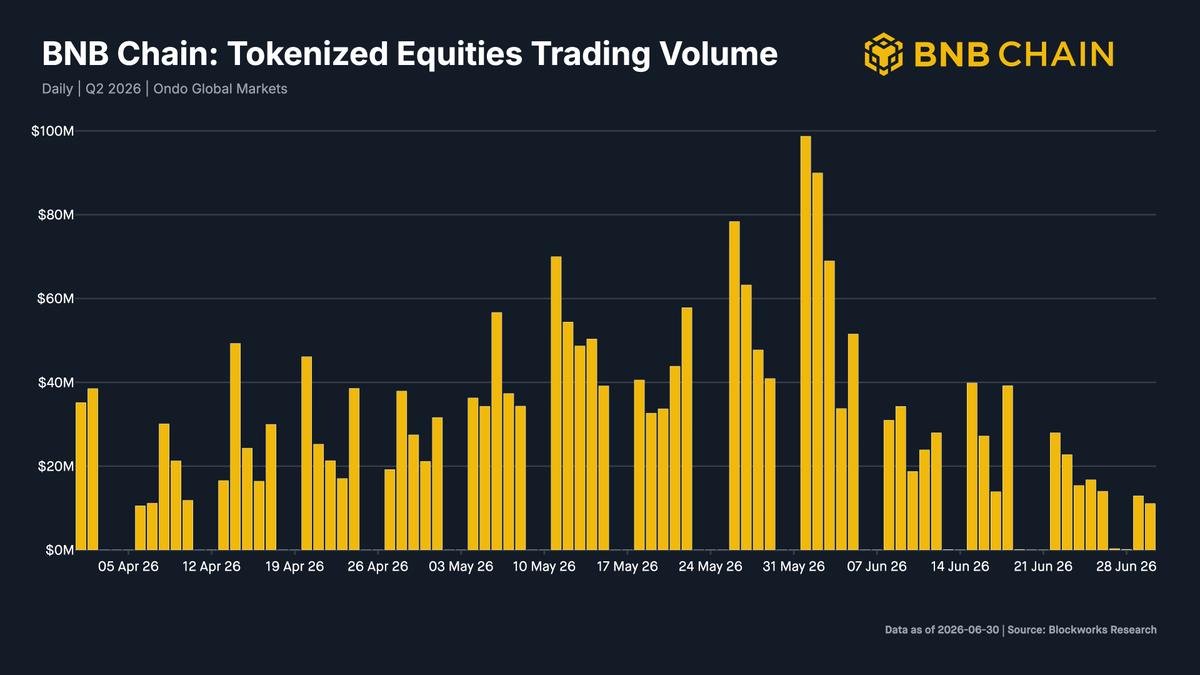
フォローReal-Value Assets (RWA) on the BNB blockchain continued their accelerated growth.
In the second quarter, tokenized equity trading volume reached approximately $2.3 billion, and decentralized exchange (DEX) trading volume increased 13-fold, primarily driven by strong performance from Binance's bStocks, Ondo, and xStocksFi.
A chart clearly illustrates everything 👇
Source: @Blockworks
 3840030
Doctor Profit 🇨🇭
フォローThe Three Giants of the Galaxy
A Tremendous Shift in the Global Landscape
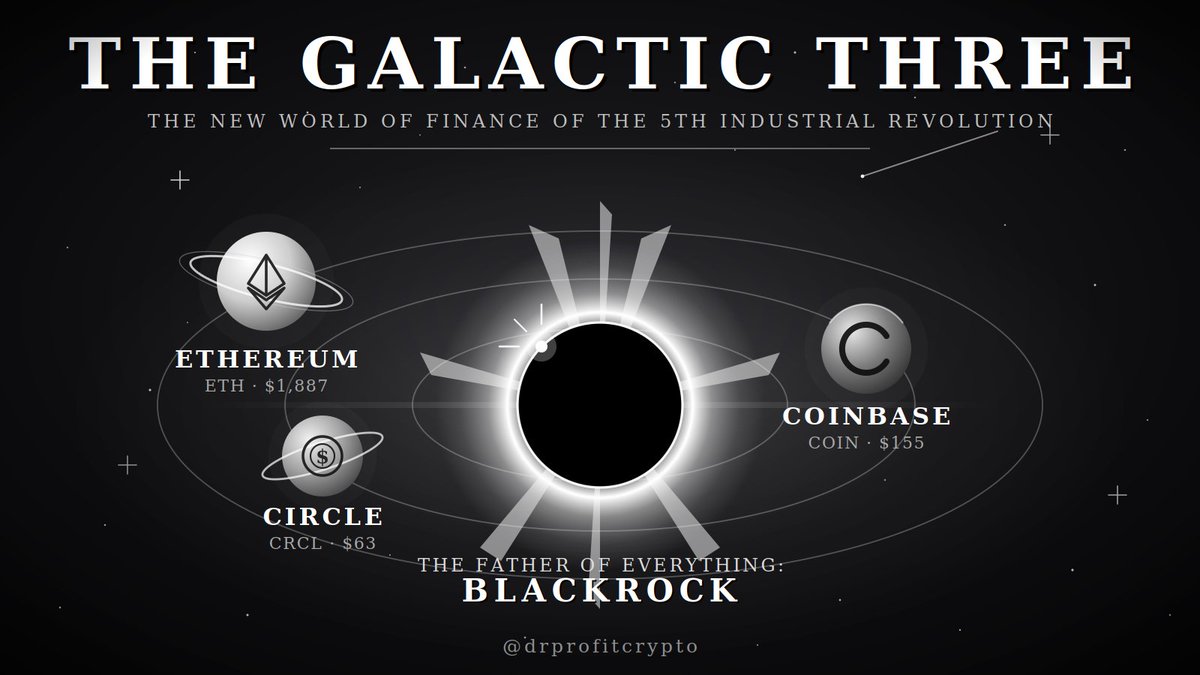
The investment world has always followed a brutal yet simple rule: whether you buy an asset early or identify an undervalued sector. Once you understand this rule and find an industry that will lead the way for decades to come, you can no longer ignore it. Today, the world is betting on artificial intelligence, but everyone seems to be overlooking the biggest transformation we face—the reshaping of the financial landscape. The financial industry is about to undergo unprecedented change, and this is part of the Fifth Industrial Revolution. In my view, the Fourth Industrial Revolution was accompanied by the rise of social media, the World Wide Web as we know it today, and e-commerce. The Third Industrial Revolution was the dot-com bubble, the internet, and the birth of the mobile phone. The Second Industrial Revolution was the era of electricity, steel, and the internal combustion engine. The First Industrial Revolution was marked by the advent of the steam engine, which brought us railways and trains. From the first cryptocurrency revolution to today's fifth revolution, approximately 260 years have passed. In each revolution, new technologies replaced old ones, and those who adopted new technologies ultimately succeeded, while those who clung to old methods, rebelled against or rejected new things ultimately failed.
2. The Three Giants
I am very bullish on the three giants: Circle, Coinbase, and Ethereum (ETH). Circle is the world's largest regulated stablecoin issuer. Coinbase is the world's largest cryptocurrency custodian and the largest cryptocurrency exchange in the United States. Ethereum is the world's largest smart contract and tokenization network. The foundation for the next generation of cryptocurrency and finance is already there, right before our eyes, and I am full of confidence in it. The reason is simple: once you truly understand this structure, you will understand. This argument is almost impossible to ignore. BlackRock proclaims itself the father of everything: every asset, every market, every major pool of funds in the world. Since the launch of cryptocurrency ETFs, this "father of everything" has also become the new "father" of cryptocurrency. Not only the father of Bitcoin, but the father of the entire cryptocurrency system. The three companies and assets most closely associated with this "father" are precisely the "galactic giants": Circle, Coinbase, and Ethereum. All my personal buy and sell orders, portfolio planning, and trading strategies are exclusively available to premium members. I will share in real time whenever I invest; I will also share in real time whenever I sell. This is exclusive to premium members. Learn more:
3. The Problem with Bitcoin:
The problem with Bitcoin is this: Don't get me wrong, I'm not bearish on Bitcoin; I'm still very bullish on it. But in this cycle, I've decided to hold 60% Ethereum and 40% Bitcoin. All the reasons are in this report. Currently, BlackRock can do almost nothing about Bitcoin except sell its exposure by packaging it into an ETF. There's no traditional business model behind Bitcoin, and no CEO. They can't just call Bitcoin and demand change. For people like Larry Fink and Wall Street, this makes Bitcoin a relatively boring asset. Yet, BlackRock is still heavily betting on Bitcoin, and IBIT has become the most successful ETF launch ever. Remember this carefully, because now you'll understand how this "problem" is solved, why Bitcoin is so important to BlackRock, and why the final outcome may not be what most people want. On July 23, BlackRock, Coinbase, Fidelity Investments, Strategy, and five other giants formed the Bitcoin Security Consortium, pledging $15 million over three years to provide Bitcoin with quantum-resistant protection. Meanwhile, Coinbase's own research estimates that 20% to 50% of all Bitcoin held in older wallet formats may be at risk of future quantum attacks. BlackRock has already listed quantum computing as an official risk factor in its ETF filings. Now, let's think further. Upgrading to quantum attack protection will be one of the most complex changes Bitcoin could face. Proposals such as BIP-360 already exist, and if the upgrade process is controversial, it could ultimately lead to a hard fork: creating two different Bitcoins. This has happened with Bitcoin Cash. So, if Bitcoin splits, which chain will the ETF track? BlackRock decides. The chain tracked by IBIT will immediately become institutional Bitcoin. The other chain will have no BlackRock backing, no ETF inflows, no reliable institutional support, and will be vulnerable to quantum attacks at any time. So, who will hold the unprotected, unsupported "original" Bitcoin? Nobody. The consortium officially claims it will not participate in Bitcoin governance. Of course, they will say that. The reality is that the Bitcoin community is slow and inefficient, Bitcoin Core development has been slow, and now, a foundation-like structure backed by the world's largest asset management company is developing a quantum-resistant Bitcoin. Meanwhile, miners are scattered across different continents, lacking communication, each operating their own decentralized business without any real cooperation or coordination. Then, Larry Fink, the father of the US dollar, stepped in and took over. He protects Bitcoin from quantum computer attacks, and in return, you use his Bitcoin. His Bitcoin operates under his institutional rules. This is why an asset that BlackRock could never directly control eventually found a "father." Connected to this entire structure are: Coinbase, holding ETF tokens; Circle, operating on reserves managed by BlackRock; and Ethereum, carrying the tokenization infrastructure. These three giants are so large that almost no one can fully understand what's happening around them. Today's update: We witnessed another hardware wallet security vulnerability today, and this will likely become the norm in the future.New technologies will eventually replace old ones, which is why the Bitcoin algorithm will need to be updated in the future.
4. Coinbase: Custodian of BlackRock's Bitcoin
Coinbase Custody is the primary custodian of BlackRock's IBIT. Read it again: the world's largest Bitcoin ETF has its underlying tokens actually custodied by Coinbase. BlackRock chose Coinbase from the beginning, not only for custody but also for access to spot market price data. When Wall Street buys Bitcoin, Coinbase holds those Bitcoins. Moreover, this partnership extends far beyond BlackRock. The vast majority of US spot Bitcoin and Ethereum ETF issuers choose Coinbase as their custodian, meaning that almost the entire ETF industry is stored in Coinbase's vault. Now let's talk about its connection to Circle, because this is where the whole structure becomes incredibly intricate. Coinbase holds equity in Circle and receives a share of the interest income generated from USDC reserves. Furthermore, Coinbase receives all the interest generated by USDC directly held on its platform. Every time USDC grows, Coinbase profits. Every time Circle profits, Coinbase also profits. Don't think of them as competitors; they run on the same machine. Coinbase has also built its own blockchain, Base, which has become one of the world's largest Layer 2 networks. And where does Base ultimately end up? Ethereum. Therefore, Coinbase is also directly funding the third member of the "Galactic Trio"—Ethereum. One company connecting every aspect of the system. Do you understand this connection? Do you understand how the sun and moon work? Everything fits perfectly; that's the Galactic Trio! Today, Coinbase is trading at around $155. The stock price is currently down about 60% from its previous high of $402, and at the same time, the company is building what I call a "universal exchange": offering tokenized stocks and options trading through the acquisition of Deribit, the world's largest crypto options platform, and launching an AI advisor registered with the U.S. Securities and Exchange Commission (SEC), USDC credit cards, and a MiCA license authorized to serve the entire European Union. But the tokenized stock business is the most important, because it's here that the connection between BlackRock, Ethereum, Circle, and Coinbase becomes undeniable.
5. Ethereum: A New World of Finance
When BlackRock launched its tokenized treasury fund, BUIDL, it chose to list it on Ethereum first. BUIDL's assets under management have exceeded $2.5 billion, and it has distributed over $100 million in dividends since its inception. Larry Fink has repeatedly stated publicly that the ultimate goal is the tokenization of all assets, including stocks, bonds, funds, and real estate. Data also confirms this vision: Ethereum's RWA (Risk-Weighted Asset) is worth approximately $16.6 billion, accounting for more than half of the entire tokenized asset market, with a year-on-year growth of 315%. BNB Chain's RWA is $3.6 billion, and Solana's is $2.5 billion. Ethereum's RWA is four and a half times that of its closest competitor, and the answer you need to know is: BlackRock CEO Larry Fink chose Ethereum.
I will discuss DTCC in more detail later in this report, but here's a brief overview: DTCC is the settlement pillar of the US capital markets, holding over $114 trillion in US securities. In 2026, DTCC received approval from the U.S. Securities and Exchange Commission (SEC) to tokenize Russell 1000 index constituents, including the entire S&P 500 and all major Nasdaq constituents, as well as major index ETFs and U.S. Treasuries. Companies like BlackRock, Goldman Sachs, and JPMorgan Chase participated. The core platform runs on the Ethereum client Besu, meaning Wall Street's underlying architecture is being rebuilt on Ethereum technology and standards. The process is simple. Currently, when you buy stocks, your broker sends an order, DTCC updates its database, and settlement takes a day. In the tokenized version, the process will change. Stocks will become tokens, transfers will occur on-chain, and settlement will be instantaneous. This infrastructure uses the language of Ethereum, so regardless of whether banks and custodians plan to integrate, they are building Ethereum-compatible infrastructure. Since EIP-1559 in 2021, a portion of every transaction fee on Ethereum has been burned and permanently lost. This upgrade predates ETFs, BUIDL, and DTCC by three years. The mechanism was already in place, but its true significance is only just beginning to emerge. Tokenized stock market changes hands: it's like Visa burning a portion of its own stock with every transaction. No other stock on Earth has this structure, and this only leads to a continuous price increase.
Ethereum underperformed in the last cycle due to a lack of regulatory clarity regarding its future. This is precisely why I avoided investing heavily in Ethereum in the last cycle, focusing primarily on Bitcoin. Remember the example of Ripple. Due to the shadow of litigation from the U.S. Securities and Exchange Commission (SEC), XRP barely performed in the 2021 bull market. Once the legal storm began to dissipate, I heavily invested in XRP, making it my second-largest investment after Bitcoin in the last cycle. I've spoken publicly about this and written several reports explaining why I bought XRP at $0.30 at the time. In the 2024 and 2025 cycles, XRP became one of the strongest performing assets. My expectations for Ethereum won't fundamentally change. Ethereum is currently priced at around $1880.Approximately 57% of the entire tokenized real-world asset market is built upon it. As the situation becomes clearer, prices will readjust, and fair value will eventually return.
6. Circle: The Deepest Connection Among the Three Stablecoins
Circle may have the deepest connection among the three stablecoins, but it's rarely mentioned, perhaps because it's still considered "a stablecoin company." But who manages the reserves behind USDC? BlackRock's Circle Reserve Fund is a government money market fund registered with the U.S. Securities and Exchange Commission (SEC), managed by BlackRock and custodied by BNY Mellon. Over 80% of the dollar funds behind USDC are held in funds managed by BlackRock. Long before mainstream media began discussing stablecoin stocks, BlackRock was already an investor in Circle in 2022. This excellent stock company is the company behind USDC, the progenitor of all future regulated stablecoins and the only large-scale dollar stablecoin in Europe regulated by MiCA. In the US, the GENIUS Act is forcing all issuers to come under regulatory oversight, and Tether (USDT) is already feeling the pressure. For the first time since 2022, USDT's circulating supply declined, decreasing by $3 billion in the first quarter of 2026. While the decline stopped in the second quarter, the real story is more complex. In the second quarter, USDC accounted for a record 12.5% of all cryptocurrency trading volume. In the first half of 2026, approximately 70% of stablecoin trading volume was completed through USDC, compared to only about 25% through USDT. In June alone, $1.21 trillion flowed through USDC, while only $576 billion flowed through USDT. The future of finance belongs to the liquid dollar. Every dollar flowing out of unregulated stablecoins ultimately ends up in the same place: USDC. And who profits? Circle.
But USDC isn't the whole story, because Circle also operates USYC: a tokenized treasury bill designed specifically for institutions. Instead of letting dollars sit idle on-chain or in bank accounts, institutions can transfer funds to USYC, which invests these funds in short-term US Treasury bonds while maintaining their on-chain availability. I've been watching the USYC supply for months. The fund has grown from approximately $350 million in October 2025 to $400 million, and now it's around $3 billion. It even surpasses BlackRock's BUIDL fund to become the world's largest tokenized treasury product. Binance now accepts it as institutional collateral. Ironically, the GENIUS Act prohibits stablecoin issuers from directly paying yields with the stablecoin itself. So where does the yield business go? The answer is USYC. Circle owns both ends of the transaction. USDC becomes a regulated digital dollar for payments and settlements; while USYC becomes a tokenized treasury bill product for yields and institutional collateral. I've been very patient, extremely patient. I'd been wanting to hold this stock and finally bought it at around $62, well below its opening price of $83 on its first day of trading and nearly 70% lower than its all-time high of $197.90. This was an excellent entry point. From today's $62, I expect it to rise to at least $500 by 2030. This is just my personal opinion and not investment advice.
7. Tokenization of Everything and the DTCC Revolution
The entire world is moving towards tokenization. Coinbase announced the launch of a tokenized US stock product pegged 1:1 to real shares, with dividends automatically distributed on-chain. Meanwhile, Kraken and Robinhood are racing to enter the same market. The Japanese stock market is trading via SBI using the Ethereum-based Ondo track. Nasdaq is also preparing its own tokenized securities framework. These companies and developments are not isolated but interconnected. Larry Fink himself has said: the dream is to tokenize everything, and it starts with stocks. Remember my words: Platforms like Hyperliquid and pure DEX infrastructure will eventually be banned if they don't implement robust KYC processes. Decentralization has no end. Stop having illusions. The elites will never allow you to control a completely independent and anonymous decentralized financial system. If you truly believe in decentralization, hold gold. Gold is the oldest existing decentralized asset. This is not investment advice. It's simply the most logical answer I can give to DeFi believers. There will be no fully decentralized financial system. You will see DeFi gradually evolve into KYC-based financial infrastructure.
If you still need definitive evidence that this transformation has already occurred, look at DTCC, the Depository Trust & Clearing Corporation. DTCC is the heart of the US financial system. It holds almost every US stock you've ever heard of and handles trillions of dollars in transactions. In 2026, it launched a tokenization service, transferring stocks onto the blockchain. When DTCC converts stocks into tokens, the actual transfer and settlement no longer occur within DTCC's own system. These things happen externally, on the blockchain, and in this case, on Besu, which is powered by Ethereum. Friends, do you see the connection? Do you understand what happens when trillions of dollars in tokenized stocks and bonds start flowing on-chain, 24/7, with instant settlement? Someone has to provide the tracks, the bridges, and the funding… Ethereum provides the tracks. This is precisely the settlement layer upon which this entirely new infrastructure operates. Coinbase provides the bridges, acting as a regulated custodian, connecting traditional capital with this entirely new digital system.Circle provides the funding. To settle large-scale tokenized transactions globally, you need a highly liquid, fully compliant digital dollar. That's USDC. Friends, a whole new financial world is before us, seize the opportunity! I'm actively investing in this revolution; I believe in this future, not a future of free-willed money. I don't believe in privacy coins or decentralized finance. I believe in compliant, regulated, and institutionally driven markets. My bet is on the other side, and many in the cryptocurrency space may not like my statement right now.
8. Clarity Act:
The Clarity Act will be extremely beneficial to the cryptocurrency industry, but I believe it will benefit Ethereum and Circle even more. Coinbase is getting more attention than Bitcoin. Bitcoin is widely considered a commodity. The Act answers the most critical questions about the other three types of tokens: which tokens are securities and which are commodities; whether exchanges are regulated by the SEC or the CFTC; which disclosure rules apply to issuers; how stablecoins and yield products will be regulated; how DeFi protocols will be regulated; and how safe harbor mechanisms for digital commodity trading will operate. The situation is clear: the bill passed the House in July 2025 with an overwhelming bipartisan vote of 294 to 134; it was approved by the Senate Banking Committee in May with a vote of 15 to 9; and now it needs a full vote before the Senate recess on August 10. Otherwise, we will have to wait until September. But in any case, the bill is about to take effect. All my personal buy and sell orders, portfolio planning, and trading strategies are exclusively shared with VIP members. I share my investment decisions in real time whenever I invest; I also share my sell decisions in real time. VIP members only. Learn more:
9. I am directly investing in change
These undervalued assets, or more accurately, the entire undervalued sector, are what I call the new finance of our new world. All the money invested in the overvalued AI market will eventually realize that we are facing a major transformation in the financial markets, and investment will flow into the financial sector. The entire sector remains undervalued because the public and many large investors still do not realize the scale of its future impact. They don't understand the impact of Coinbase, the impact of Circle, or the impact of Ethereum. They certainly don't realize the scale of the new tokenized financial system being built before their eyes. This transformation will be recorded in history. Again, our financial system is changing. I am directly investing in this transformation. I invest in leading companies and assets that drive change, operate the infrastructure, and are expected to profit the most from it. If you ask me how much I've invested, I can say I've invested a huge amount. I could even say my investment is enormous. I'm making long-term investments, and I expect these returns to benefit future generations, providing financial security for at least the next 10 to 20 years. This represents my personal opinion only and is not financial advice. Nothing I share should be considered advice to buy, sell, or hold any asset. Always do your own research and consult a licensed financial advisor before making any investment decisions. I am sharing my personal thoughts and decisions.
 3340035
CoinMarketCap
フォローCMC Market Pulse: Context-Aware Funds Rescue, But Is the Market Saved?
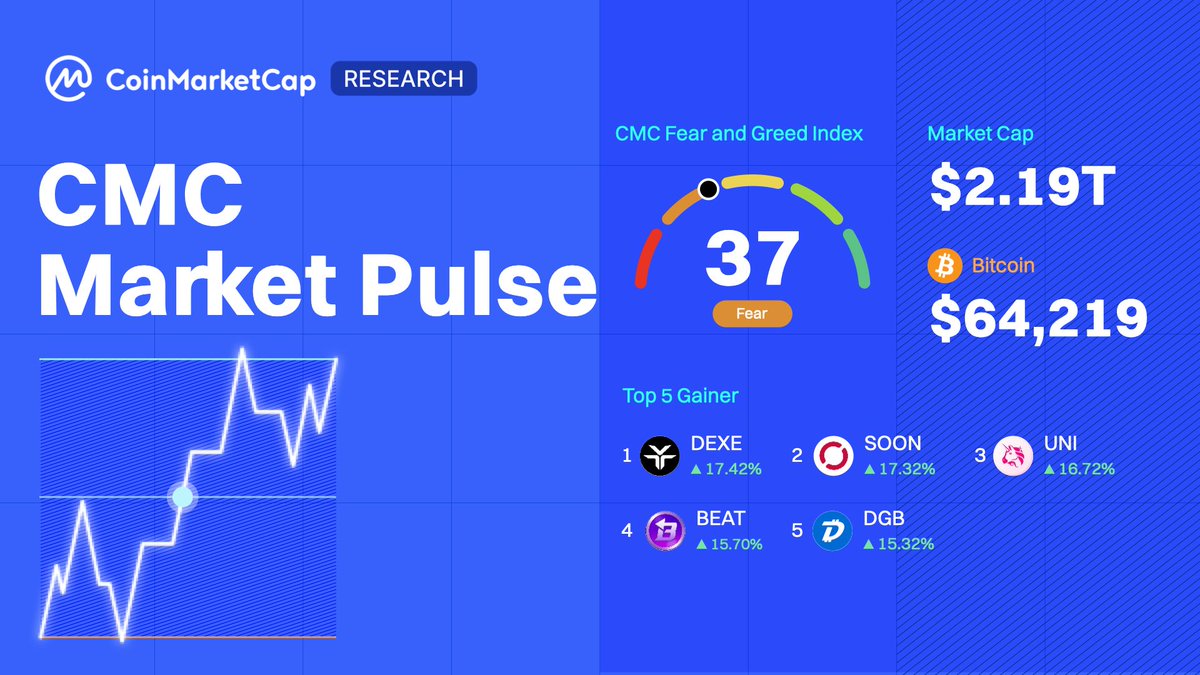
BTC fell 1.92%, ETH rose 0.72%. The total market capitalization of cryptocurrencies fell to $2.19 trillion as Citadel's bailout of Leopold Aschenbrenner's Context-Aware Fund fueled a momentum stock rally.
Let's analyze this week's hot topics in the cryptocurrency market 🧵
1/6
> Total cryptocurrency market capitalization fell 1.35% to $2.19 trillion. BTC fell 1.92%, ETH rose 0.72%.
> At the beginning of the week, nearly $1 billion in long positions were liquidated, after which the market stabilized.
> Funding rates remained stable, with some even rising into positive territory.
> Citadel's bailout of Leopold Aschenbrenner's Context-Aware Fund triggered a strong rebound in momentum stocks.
Strategy increased its dollar reserves by $525 million, bringing the total to $3.75 billion.
A New York bank launched a digital transfer agent to support native digital funds.
SK Hynix's stock price plunge triggered malicious liquidations; TradeXYZ refunded losses incurred from the stock price crash.
The S&P 500 rose 0.42%, while the Nasdaq fell 0.90%. Altcoins performed well: DEXE, SOON, UNI, BEAT, and DGB.
2/6
This Week's Highlights: The passage of the CLARITY bill is imminent.
The CLARITY bill has been stalled due to prioritizing sanctions against Russia, meaning it is unlikely to pass before the Senate recess on August 8.
If the bill fails to pass, the Securities and Exchange Commission (SEC) and the Commodity Futures Trading Commission (CFTC) announced plans to develop their own cryptocurrency rules.
> The National Fraternity of Police (NFPS) has expressed support for the bill, reversing its initial opposition.
> Clear federal rules remain a missing piece for developers looking to avoid regulatory uncertainty.
3/6
Major Project Updates:
> BitMart announced a phased closure, officially ceasing operations on January 31, 2027.
> Circle acquired nearly 1,000 blockchain patents from IBM, becoming a leading blockchain patent holder in the US.
> Ondo launched Ondo Network, an execution layer supporting Ondo Perps.
> Moonpay partnered with Stripe's Tempo to support deposit and withdrawal services.
> Base launched Base Verify Onchain, an on-chain Sybil attack defense program that prevents duplicate claims.
> Phantom discontinued support for Monad on August 26. Users can export keys to any Monad-compatible wallet.
4/6
DeFi Briefs:
> Uniswap launches Permissioned Pools, a hook standard that enables on-chain enforced compliant asset transactions.
> 1inch launches Aqua, a self-custodied shared liquidity layer that ensures liquidity across multiple positions in a user's wallet.
> Perp DEX GVRT revamps its pre-Token Generation (TGE) tokenomics model, extending all allocation periods to 12 months and linking unlocking speed to activity.
> Funding: Sam Altman's World (led by Pantera, $52.5 million), ProphetX ($35 million), Axis Robotics ($12 million seed round), Memecoin.fun ($3.5 million).
5/6
Key Points:
> BTC -1.92%, ETH +0.72%: Market cap slips to $2.19 trillion, cryptocurrencies maintain narrow range trading amid stock market turmoil
> Citadel's "situation-aware" bailout rescues hot stocks and stabilizes the overall market
> Due to Russian sanctions, the Clarity Act stalls, prompting the SEC and CFTC to prepare their own rules
> Uniswap's permissioned pool introduces regulated assets to public automated market makers (AMMs) for the first time
> Exchange consolidation continues, with BitMart becoming the latest centralized exchange (CEX) to announce its closure
Stay tuned
 3000049
吴说区块链
フォローOndo Finance is considering an acquisition worth between $250 million and $500 million, with potential targets in sectors including wealth technology, but has not yet hired formal advisors. Ondo responded that the company continuously evaluates market opportunities in its daily operations and is not currently in negotiations with any counterparty. Founded in 2021, Ondo primarily offers on-chain financial products such as tokenized US Treasury bonds and stocks, and currently manages over $2.5 billion in assets. (CoinDesk)
4380026
Crypto Tony
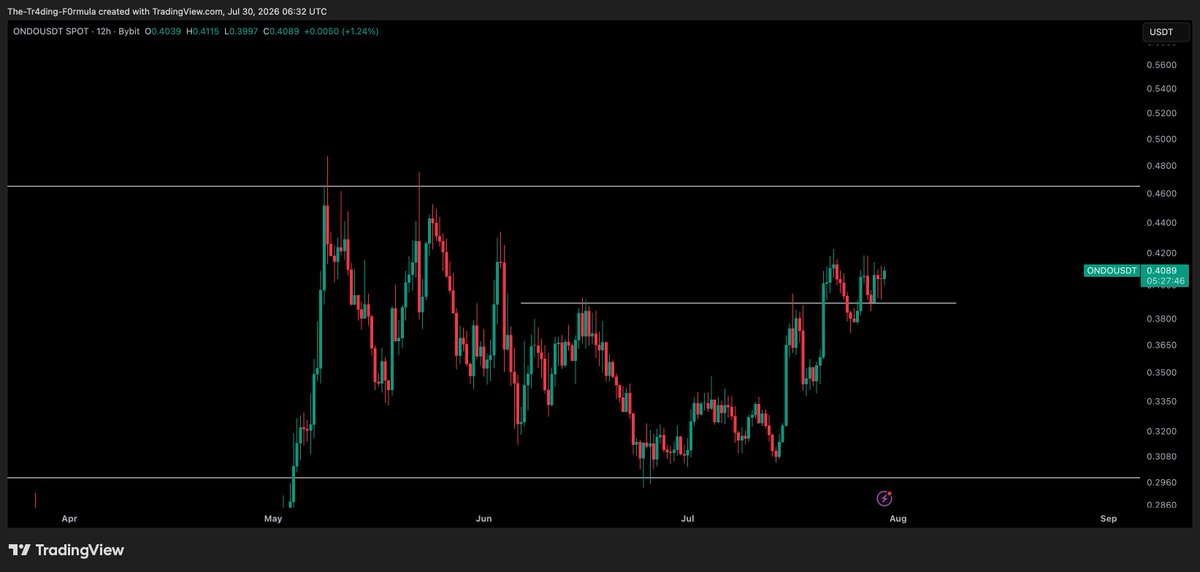
フォロー$ONDO / $USD - Latest News
If Bitcoin can hold its advantage, I expect it to break through the high today.
 3890021
梭教授说
フォロー7.29 All-in Morning Report:
An unexpected plunge, followed by a surprisingly strong rally. Storage is quite interesting; indeed, after a significant drop, these volatile assets are the perfect buy.
1. $BTC retreated along with US stocks and hasn't returned to its previous highs yet. Let's continue to wait patiently.
2. $ETH performed relatively well, only showing some strength.
3. $SOL looks so-so, only showing small-scale activity.
4. US lawmakers are pushing to include crypto assets in traditional "laundering rules" to close tax loopholes.
5. CryptoQuant: TradFi's perpetual contracts are a growth highlight, doubling to over $2 billion in two months.
Casinos still prefer gambling.
6. Ondo Finance abandons Layer 1 plans and launches the private, high-speed trading network Ondo Network.
Is it a scam?
7. SEC Chairman: Optimistic about Congress passing the Clarity Act;
8. Robinhood Chain on-chain transaction volume and user numbers continue to decline after the initial Meme coin-driven surge;
9. Informal ceasefire collapses; Iran launches missiles at US military bases this morning, crude oil surges 4%;
Are both sides treating war like a game?
10. Block Scholes analyst Thahbib Rahman: Any dovish signals from the Federal Reserve could be beneficial for Bitcoin;
11. RL1 blockchain network launches operations; the underlying platform has processed over €700 million in transactions in three years;
Is it operating covertly?
12. Jump Capital has raised $350 million for AI investments;
13. Grayscale: Hype and PE are still undervalued, with a forward P/E ratio of approximately 15 to 18;
There's reason to suspect Grayscale is planning to launch a Hype and PE ETF;
14. Fidelity Q3 Signal Report: Net unrealized gains and losses for BTC, ETH, and SOL are all at historical lows, with many indicators approaching capitulation territory;
15. Nvidia's 5-year credit default swaps surge, raising concerns in the bond market about AI infrastructure revolving financing;
Revolving loans are a familiar concept;
16. South Korea's Financial Services Commission: If demand for leveraged single-stock ETFs doesn't cool down, it will consider setting limits on individual investment amounts;
Everyone wants to know these things, but how do you recover your losses without leverage?
17. The US and Iran are close to restoring the 60-day memorandum of understanding; Iran and Oman have approved a new proposal for the Strait of Hormuz.
------------- Is today a day of great miracles for global stock markets? Wait, wait, are we finally going to break even? I can't take this continuous decline anymore.
#Bitcoin #Ethereum #Solana #Crypto #Nasdaq
4030044CoinMarketCap
フォローBreaking news: 📊 Robinhood Chain leads all tokenized stock platforms with 328,000 holders one month after its launch, but according to DWF Labs data, its $44 million stock value lags behind Ondo's $857 million and xStocks' $487 million.
 4420027
Token Terminal 📊
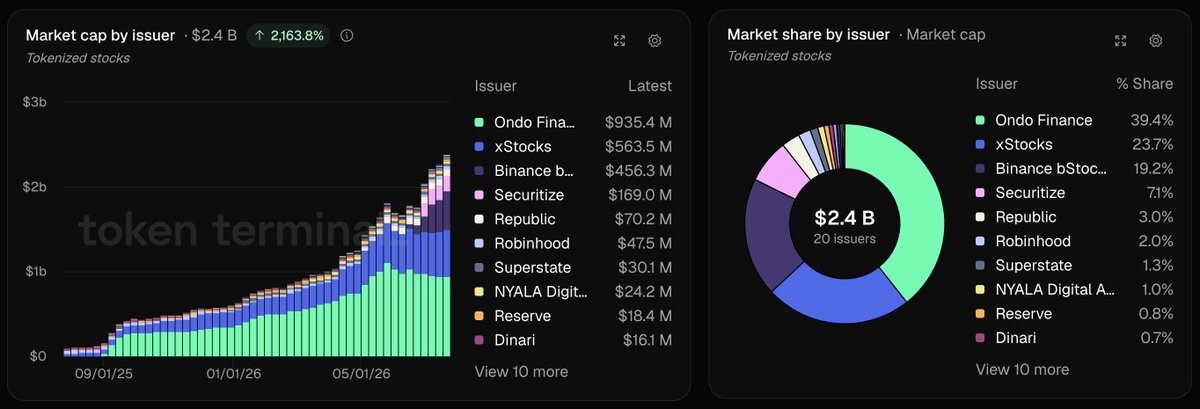
フォローOver the past year, the on-chain market capitalization of tokenized stocks has grown by 2163.8%, reaching $2.4 billion, with @Ondo accounting for 39.4% of the market share.
These issuers are racing to bring an asset class worth approximately $150 trillion onto the blockchain, and the current market growth momentum is quite similar to the early expansion of stablecoins in 2019.
Source:
 4530041
BNB Chain
フォローThis quarter, institutional access shifted from filing documents to product listings.
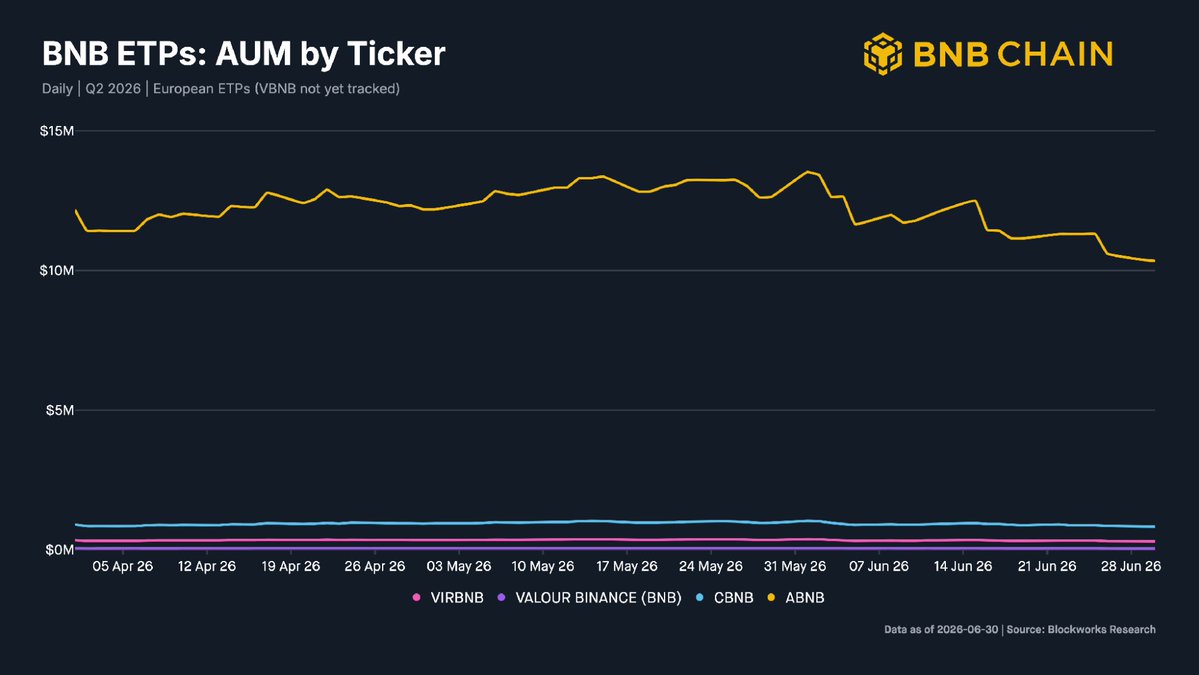
The VanEck BNB ETF (VBNB) listed on Nasdaq in late May, becoming the first U.S. spot BNB product. Grayscale's GBNB, after revisions in May, is still under review by the U.S. Securities and Exchange Commission (SEC).
Tokenized stocks are the fastest-growing vertical.
bStocks launched on June 11 as a 1:1 backed U.S. security, settled on the BNB Chain. As of June 27, 10 tokenized stocks had been listed. SpaceX's tokenized stock (SPCX) launched on June 12 in the same week through three issuers: bStocks from @binance, @Ondo, and @xStocksFi. xStocks surpassed 100 stocks listed in early May.
Trading volume of tokenized assets on the BNB Chain decentralized exchange (DEX) grew from $5.3 million in Q1 to $70.2 million in Q2, with $66 million coming after the launch of bStocks in June. Ondo Global Markets contributed $2.2 billion of this, with a single-day peak of $98.7 million.
Tokenized equity trading volume was approximately $2.3 billion this quarter. @lista_dao and @venusprotocol accepted bStocks as collateral for loans within days of launch, resulting in a rapid influx of liquidity following the issuance.
The BNB Smart Chain processed 1.41 billion transactions in Q2, a 1.3% increase from Q1, despite a decline in speculative trading. This equates to approximately 15.4 million transactions per day, primarily driven by settlement and application activity rather than transaction volume.
The number of contract deployments remained stable at 4.52 million, while the number of daily unique deployers grew by 5% to approximately 4,500. Builders did not follow the meme cyclical decline.
Stablecoin supply hit a new record of $13.9 billion, a 3.2% increase quarter-over-quarter and approximately 37% year-over-year. USDT's market capitalization remained stable at $9.2 billion, USD1 at $1.8 billion, and USDC's increased by $300 million to $1.6 billion, the largest single increase this quarter.
Stablecoin trading pairs currently account for the largest share of trading volume on decentralized exchanges (DEXs), at approximately 39%. BNB Chain also absorbed over $4.5 million in user transaction fees through its "0-Fee Carnival" event (extended to June).
The Osaka/Mendel hard fork was activated as planned on April 28: nine BEPs, requiring client upgrades. No penalty events occurred during the transition.
Final confirmation time improved by 37% to approximately 650 milliseconds. The block interval has decreased to 450 milliseconds, and according to our second-half technology roadmap, baseline throughput reached approximately 5,200 TPS in June, up from approximately 2,800 TPS in January.
Supply discipline remains mechanized. The 35th quarterly automatic burn in April removed 1.57 million BNB (approximately $1.02 billion), with an additional 5,048 BNB burned in real-time via BEP-95. The total supply at the end of Q2 was 134.8 million BNB, down from 140.8 million a year ago, and the 36th burn is expected to remove approximately 1.62 million BNB.
There is no issuance of BNB, so validator revenue comes entirely from transaction fees. Daily net emissions were negative throughout the quarter, resulting in a net income of $28.8 million for token holders without any dilution, and the staking ratio rose to 19.1%.
The BNB Agent SDK launched on the mainnet on May 18th, with initial partners including Google, AWS, Virtuals, Binance Pay, and Trust Wallet. This SDK standardizes how agents verify identities, manage funds, pay fees, and store memory.
As of the end of May, the number of registered agents based on the ERC-8004 identity standard had exceeded 100,000, and was expected to reach approximately 200,000 by mid-July. This represents about 60% of all tracked on-chain registered agents.
 3810044