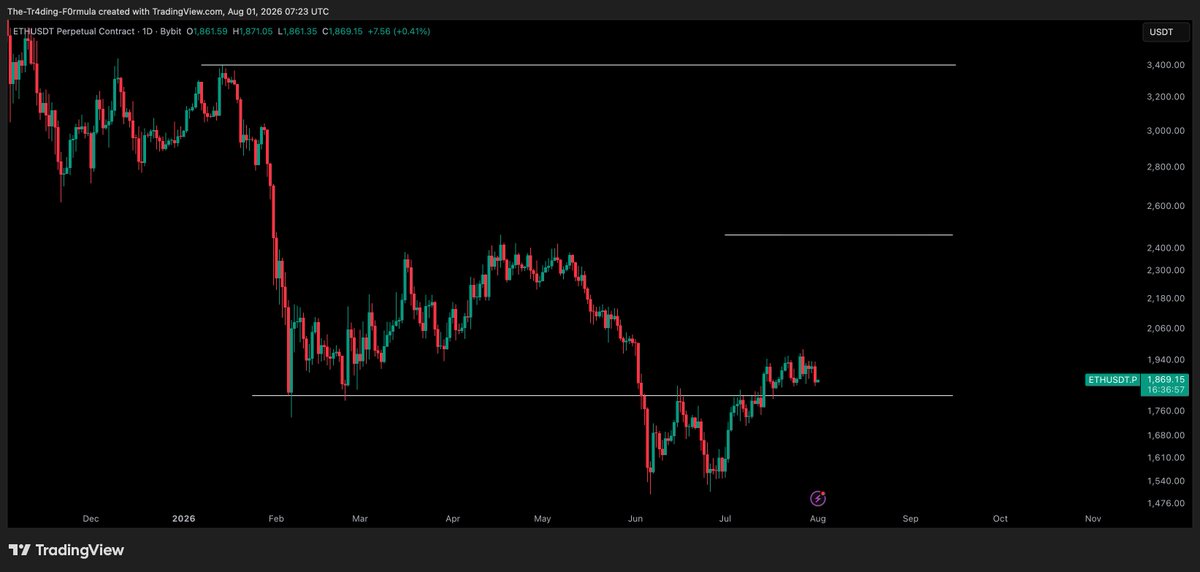
Ethereum (ETH) is currently stable around $1900, which is a bullish signal.
I predict that Ethereum will reach $10,000 within the next 2-3 years.
Interest rates will eventually be lowered, and the Clarity Act will be passed sooner or later.
RWA, stablecoins, tokenized stocks… all of these will be applied to Ethereum, which is why I am bullish on it.
408
0
0
37
BNB Chain
フォロー
BNB Chain 🤝 Sub-second Finality
Applications, bridges, exchanges, and users can now receive settlement confirmation in approximately 0.65 seconds, enabling faster deposits, cross-chain transfers, and near-instant confirmation.
This represents a nearly 70x speed improvement, without requiring an EVM migration.
Here's how BSC achieves this 🧵👇
Why is finality so important?
Many blockchains rely on probabilistic finality: as the number of blocks increases, the likelihood of a transaction being reversed decreases.
BSC uses deterministic finality. Once a block is finalized, it cannot be reversed. This provides applications with a clear signal for action.
A key design choice is separating liveness from security.
Parlia continuously generates blocks, while a dedicated finality layer confirms these blocks through validator voting. This architecture allows BSC to improve finality without impacting chain uptime.
Four BEPs reduce final confirmation time from approximately 45 seconds to approximately 0.65 seconds 👇
BEP-590 makes fast final confirmation more stable.
As block times shorten, later validator votes are discarded, causing breakpoints in the final confirmation chain.
BEP-590 absorbs network jitter by extending voting to the most recent ancestor block, reducing the average final confirmation time to approximately 0.9 seconds 👇
BEP-648 eliminates next-hop latency.
An in-memory voting pool allows votes to be aggregated in real time without waiting for the next proposer to package them. Final confirmation takes effect immediately once a two-thirds quorum is reached.
Final confirmation time is approximately 0.65 seconds 👇
BEP-667 prepares the BSC for shorter block intervals.
Validators do not need to vote on every block, but can vote every N blocks, thus distributing the fixed network overhead across multiple blocks. BEP-667 is still under development 👇
Each BEP addresses the bottlenecks exposed by the previous one.
Learn more about how BSC achieves sub-second finality confirmation through a carefully designed protocol 👇
483
0
0
46
看不懂的SOL
フォロー
Goodnight, brothers! – Today's Market Recap: BTC Consolidates, US Stocks Diverge
Brothers, today is Thursday, and the market is generally consolidating:
BTC is consolidating within its current narrow range, with short-term sentiment relatively stable.
US stocks: The three major indices are diverging, with technology and growth sectors performing actively, but overall trading volume is cautious, indicating a consolidation phase at high levels.
Short-term volatility is normal in the market. Whether it's BTC or US stocks, the underlying demand remains unchanged.
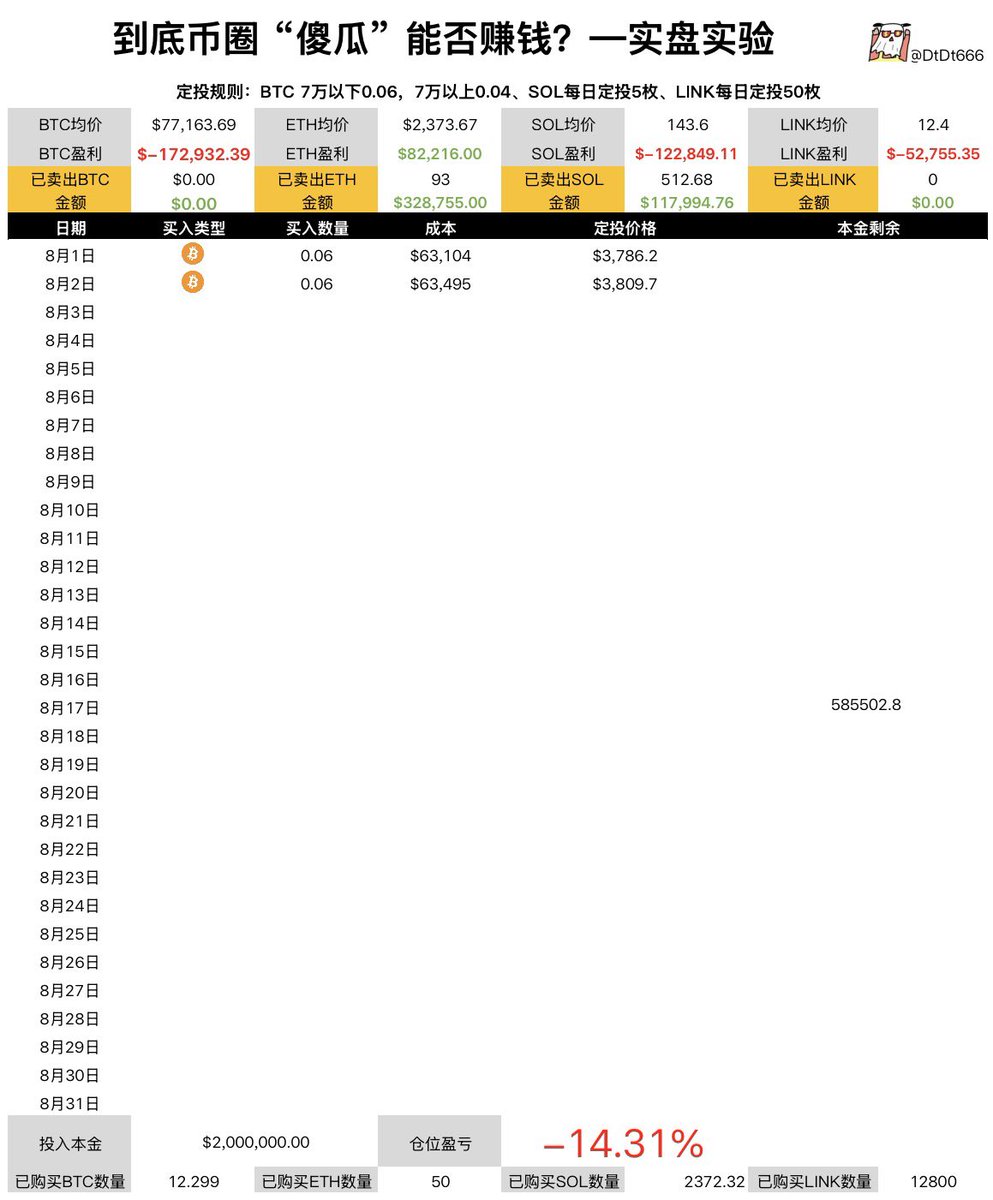
Staying consistent with dollar-cost averaging is still the safest option – invest a fixed amount at fixed intervals, avoid chasing highs and lows, smooth out costs over time, and enjoy the power of compound interest.
Brothers, stay rational and maintain your rhythm. The more volatile the market, the more it tests our patience and discipline.
367
0
0
21
Bitcoin News
フォロー
The Federal Reserve's interest rate decision triggered sharp market volatility, resulting in losses of up to $286 million for Bitcoin/cryptocurrency traders.
While major cryptocurrency prices remained relatively stable over the past 24 hours, data from CoinGlass shows that the dramatic price fluctuations surrounding the Fed meeting led to the liquidation of approximately $286 million in funds for over 87,000 traders.
Long positions were liquidated for $186 million, while short positions were liquidated for $100 million.
Bitcoin alone suffered losses of approximately $57 million, with losses on both long and short sides nearly equal. A price fluctuation of about 2% was enough to force both leveraged long and short positions out of the market.
With the expiration of leveraged trading, Bitcoin is currently trading at a higher price than when the Fed announced its decision to maintain interest rates.
308
0
0
44
阿布说币
フォロー
A review of the core styles of renowned Chinese investment gurus reveals starkly different approaches, with no single correct answer:
✅Duan Yongping: Value investing, buying good companies, refusing to chase hot trends, not investing in what they don't understand, and emphasizing a margin of safety.
✅Lin Yuan: Embracing monopolistic sectors, profiting from the sustained growth of monopolistic companies, holding promising businesses long-term to reap lifelong dividends.
✅Wang Wen: Deep value investing, favoring undervalued, high-dividend, and stable cash flow assets to earn genuine returns from companies.
✅Dan Bin: Sectoral trend investing, selecting leading companies in high-quality sectors and following the trend.
✅Zhang Jianping: Focusing on industry leaders, adept at swing trading, and capitalizing on valuation fluctuations.
✅Zhang Yaqun: Extreme long-termism, holding a significant stake in Moutai for 24 years, accompanying the company's growth.
✅Wang Fujie: Holding Pien Tze Huang for 16 years, achieving wealth growth through the compounding effect of the core brand.
✅Ma Manran: Deeply involved in branded consumer goods, tobacco and alcohol, and traditional Chinese medicine sectors, with a firm long-term investment strategy.
Some hold stocks and earn compound interest, while others engage in swing trading to profit from valuation differences; some chase sectors, while others only pick up undervalued stocks.
There's no inherent superiority or inferiority among strategies; the best system is one that suits your personality and can be implemented long-term.
So, among these investment gurus, who is your investment idol?
(Contract trading guru monitoring)
369
0
0
45
币圈女菩萨 | Pizza披萨🍕
フォロー
At this stage, it's all about who can maintain a stable mindset.
In a bull market, you can make money by doing all sorts of things.
In a bear market, many people's income sources dry up,
leading them to make desperate and haphazard decisions.
Specifically, this manifests as:
1️⃣ High leverage
2️⃣ Frequent trading
3️⃣ A gambling mentality, continuing to gamble even after loans have been exhausted
4️⃣ Loss of self-judgment
Today, person A says Korean stocks are profitable, so they trade Korean stocks; tomorrow, person B says US stocks are good, so they trade US stocks; the day after, person C says memes are hot again, so they switch to memes, getting burned in the process.
338
0
0
30
Mister Crypto
フォロー
The US core Personal Consumption Expenditures (PCE) inflation data will be released at 8:30 AM ET, before the US stock market opens. This is the Federal Reserve's most closely watched inflation indicator, and its importance today is self-evident.
Here's a simple way to interpret market reactions:
→ Lower than expected: Risk assets may rise
→ In line with expectations: The market may remain stable
→ Higher than expected: Stocks and cryptocurrencies may fall
The situation will become more complex after this week. Strong inflation data will provide stronger support for interest rate hikes, while weak inflation data will buy more time for dovish politicians.
This data release before the market opens will determine the market tone for the day.
All eyes will be on 8:30 AM.
337
0
0
21
0xNobler
フォロー
🚨 Breaking News
🇺🇸 The US will officially release its latest inflation data today at 8:30 AM Eastern Time!
If the PCE index > 3.4% → Market crash
If the PCE index is between 3.2% and 3.3% → Market remains stable
If the PCE index < 3.2% → Market will experience a parabolic rise
All eyes are on it! 👀
469
0
0
41
TheCryptoBasic
フォロー
U.S. Securities and Exchange Commission Chairman Paul Atkins stated that if Congress does not approve the proposed CLARITY Act, the agency is prepared to use its existing powers to set rules for the cryptocurrency market, noting that the legislation would provide a more stable regulatory framework.
446
0
0
48
GiGi 發財豬
フォロー
Microsoft's cloud revenue surpasses $100 billion, but Meta's guidance is weak; is the AI narrative diverging?
BTC is currently at $63,930. The market awaits tonight's answer; let's first discuss what was released last night:
Microsoft's Q4 revenue reached $90 billion, up 18%, with accelerated Azure growth and better-than-expected Copilot enterprise paid user data. This is AI monetization, not just an AI story. Every Copilot subscription represents a real monthly fee, and every Azure AI call represents a real bill.
Meta's revenue reached $60.8 billion, up 28%, a faster growth rate than Microsoft's. However, free cash flow hit a four-year low, and capital expenditures are expected to reach $130-145 billion. The market reaction was a decline.
🤔 Why did a higher growth rate lead to a decline?
Because these two companies are doing fundamentally different things. Microsoft sells AI to enterprises, while Meta uses AI to burn money building infrastructure. One is revenue, the other is investment.
Meta's business model is essentially advertising. AI has improved the accuracy of its ad targeting, which is already reflected in its revenue, as evidenced by the +28% increase.
But Zuckerberg wants more than that. He's betting on AGI, the Llama open-source ecosystem, and next-generation computing infrastructure. The return on these investments won't be seen in just one quarter.
🤔 The question is: with so much money being burned, how long is the market willing to wait?
I'm reminded of Amazon from 2013 to 2018. During those years, the market constantly criticized Bezos for burning money without making any, but AWS was quietly becoming the world's largest cloud computing platform. Today, AWS's gross margin supports the entire Amazon ecosystem. Zuckerberg is probably making the same bet, only this time on the infrastructure of the AI era.
But there's a key difference: Amazon is burning money to build the cloud, with a clear B2B monetization path. What is Meta burning money to build? Open-source models, self-developed chips, and super data centers. The beneficiaries are the entire industry. Where is Meta's own competitive advantage? Until this question has a clear answer, the continued decline in FCF will remain a variable suppressing valuations.
Therefore, this isn't a divergence in the AI story, but rather an inherent difference in monetization pace.
Microsoft is pursuing a SaaS embedded approach; AI has entered Office, Teams, and Azure, with enterprise customers paying per seat, and cash flow is visible today. Meta is pursuing a platform reshaping approach; AI needs to redefine what kind of company it is, and this answer may not be clear for another three years.
Tonight's Amazon earnings report is the most important validation today. If AWS accelerates, it indicates that enterprise AI cloud demand hasn't peaked, making Microsoft Azure's story more stable. If AWS guidance falls short of expectations, then Microsoft's rise last night was an isolated event, not an industry-wide resonance. The key to Apple is service revenue and Apple Intelligence penetration rate; these are the first real data points for AI monetization in the consumer market.
Only after these two earnings reports are released will the full picture of AI monetization be complete tonight.
Until then, the direction of BTC remains uncertain.
DYOR (Not investment advice)