I, the "God of War" with 10U, have reopened my long position in SPCXUSD1 today.
At 20x leverage, I'm currently slightly profitable, having made a few dollars.
However, this time I'm not just looking at a single SpaceX long position.
I traded a Nasdaq stock price exposure, and the settlement code is now solana:USD1ttGY1N17NEEHLmELoaybftRBUSErhqYiQzvEmuB
////////////////////////////
SPCXUSD1 is Binance's first stock perpetual trade settled in USD1.
The underlying asset is SpaceX, supporting up to 25x leverage, and it's available 24/7.
Previously, USD1 was used in trading crypto assets like BTC and ETH; now it's expanding into equity assets.
From Crypto to TradFi, it may seem like just adding another trading pair, but behind it lies a significant expansion of the usage boundaries of $USD1.
///////////////////////////
Currently, USD1 has a market capitalization of approximately $4 billion, placing it among the top mainstream stablecoins.
Market capitalization is certainly important for stablecoins.
But what I'm more concerned about is how many real transaction chains it's actually being integrated into.
Spot trading, collateral, crypto perpetual bonds, and even stock perpetual bonds like SPCX.
Each additional asset class adds another layer of trading and settlement demands surrounding USD1.
///////////////////////////
So, I'm certainly concerned about how much profit this deal can generate.
But I also want to continue observing whether Binance will integrate more stocks, ETFs, or even other TradFi assets into the USD1 settlement system in the future.
Stablecoins truly became infrastructure, and this is roughly how they gradually expanded.
High-leverage contracts are risky; I only participate with small positions. Be careful to control leverage. (DYOR)
373
0
0
27
藤蔓鲁哥
08-02 13:54
フォロー
Great! From now on, when buying cryptocurrencies, we'll not only have to distinguish between uppercase and lowercase letters, correct images, OG or not, Four or Butterfly, but also differentiate between BNB, XAUT, USDT, USD1, SPCB, SKHYB, SPYB, QQQB, NVDAB, AAPLB, TSLAB, BTC, ETH, and SOL pools. And then there's the added burden of splitting the price into 8888, 7777, and 1.25% tax, 2% tax, 3.25% tax, and 4% tax.
So, if you didn't buy at the bottom, would you buy at the top?
446
0
0
46
Niner 🍡九儿🔶
07-31 23:40
フォロー
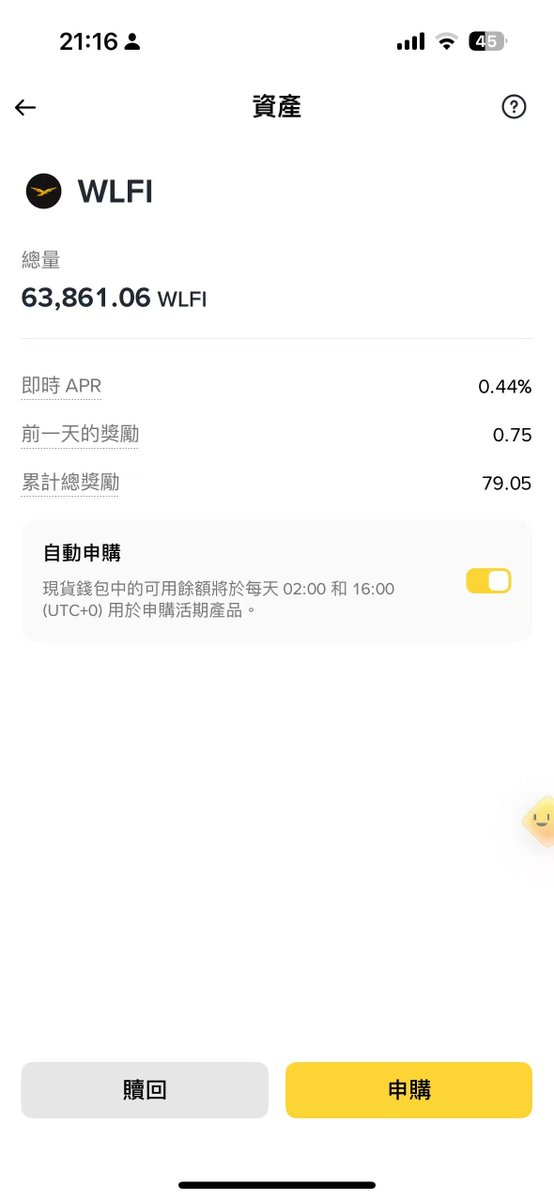
Today is payday for USD1 again.
I saw others getting tens of thousands of dollars in $wlfi, but mine is only 3400 USD, which I haven't sold at all.
On Binance, the APR in my futures account is currently 5.21, and in my wealth management account, a 2000 USD investment has a limit of 8.52%.
Other exchanges also have promotions, but I haven't looked into them.
It feels pretty good to receive a weekly paycheck.
390
0
0
31
Niner 🍡九儿🔶
07-31 21:19
フォロー
Today is payday for USD1 again.
I saw others getting tens of thousands of dollars in $wlfi, but mine is only 3400 USD, which I haven't sold at all.
On Binance, the APR in my futures account is currently 5.21, and in my wealth management account, a 2000 USD investment has a limit of 8.52%.
Other exchanges also have promotions, but I haven't looked into them.
It feels pretty good to receive a weekly paycheck.
431
0
0
33
baby
07-29 22:56
フォロー
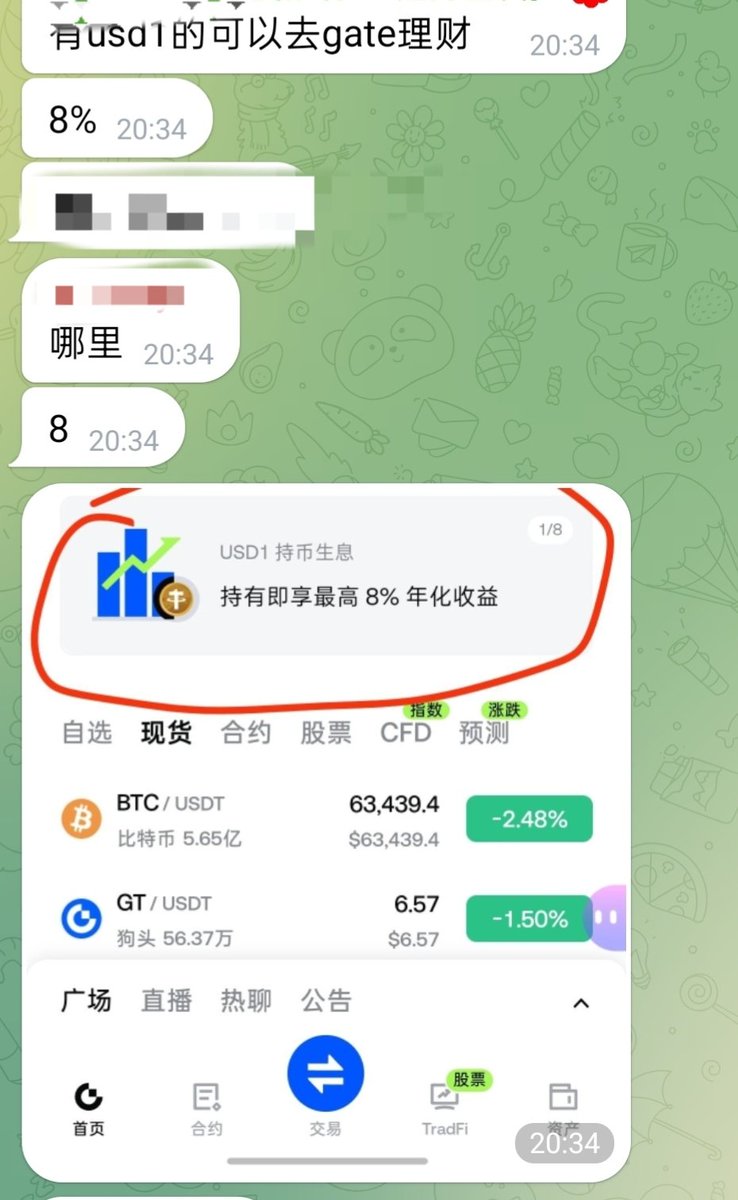
Our group consists entirely of investment experts. You don't need to worry about which platform offers the highest interest rate.
The platform just updated its announcement a second ago, and the next second it's in the group chat (the screenshot I took is from yesterday's conversation). It's like they're keeping a close eye on us, even with millions in USD. This truly proves the saying: the wealthier you are, the easier it is for your wealth to steadily increase.
Since February of this year, these experts have been consistently investing with #USD1. Honestly, given this year's market environment, as long as you hold #USD1 throughout your investment, you've already outperformed 99% of those who are blindly trading.
As for the small percentage who still manage to make extra money, they are truly one in a million, the chosen ones.
468
0
0
39
BNB Chain
07-29 01:24
フォロー
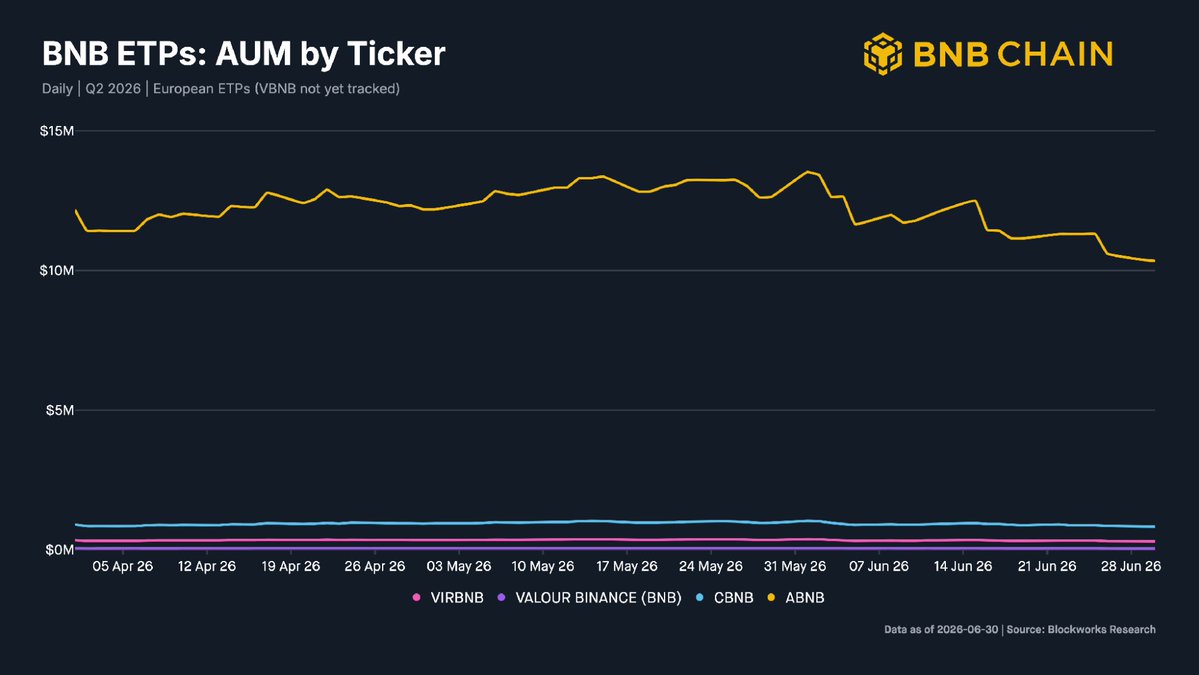
This quarter, institutional access shifted from filing documents to product listings.
The VanEck BNB ETF (VBNB) listed on Nasdaq in late May, becoming the first U.S. spot BNB product. Grayscale's GBNB, after revisions in May, is still under review by the U.S. Securities and Exchange Commission (SEC).
Tokenized stocks are the fastest-growing vertical.
bStocks launched on June 11 as a 1:1 backed U.S. security, settled on the BNB Chain. As of June 27, 10 tokenized stocks had been listed. SpaceX's tokenized stock (SPCX) launched on June 12 in the same week through three issuers: bStocks from @binance, @Ondo, and @xStocksFi. xStocks surpassed 100 stocks listed in early May.
Trading volume of tokenized assets on the BNB Chain decentralized exchange (DEX) grew from $5.3 million in Q1 to $70.2 million in Q2, with $66 million coming after the launch of bStocks in June. Ondo Global Markets contributed $2.2 billion of this, with a single-day peak of $98.7 million.
Tokenized equity trading volume was approximately $2.3 billion this quarter. @lista_dao and @venusprotocol accepted bStocks as collateral for loans within days of launch, resulting in a rapid influx of liquidity following the issuance.
The BNB Smart Chain processed 1.41 billion transactions in Q2, a 1.3% increase from Q1, despite a decline in speculative trading. This equates to approximately 15.4 million transactions per day, primarily driven by settlement and application activity rather than transaction volume.
The number of contract deployments remained stable at 4.52 million, while the number of daily unique deployers grew by 5% to approximately 4,500. Builders did not follow the meme cyclical decline.
Stablecoin supply hit a new record of $13.9 billion, a 3.2% increase quarter-over-quarter and approximately 37% year-over-year. USDT's market capitalization remained stable at $9.2 billion, USD1 at $1.8 billion, and USDC's increased by $300 million to $1.6 billion, the largest single increase this quarter.
Stablecoin trading pairs currently account for the largest share of trading volume on decentralized exchanges (DEXs), at approximately 39%. BNB Chain also absorbed over $4.5 million in user transaction fees through its "0-Fee Carnival" event (extended to June).
The Osaka/Mendel hard fork was activated as planned on April 28: nine BEPs, requiring client upgrades. No penalty events occurred during the transition.
Final confirmation time improved by 37% to approximately 650 milliseconds. The block interval has decreased to 450 milliseconds, and according to our second-half technology roadmap, baseline throughput reached approximately 5,200 TPS in June, up from approximately 2,800 TPS in January.
Supply discipline remains mechanized. The 35th quarterly automatic burn in April removed 1.57 million BNB (approximately $1.02 billion), with an additional 5,048 BNB burned in real-time via BEP-95. The total supply at the end of Q2 was 134.8 million BNB, down from 140.8 million a year ago, and the 36th burn is expected to remove approximately 1.62 million BNB.
There is no issuance of BNB, so validator revenue comes entirely from transaction fees. Daily net emissions were negative throughout the quarter, resulting in a net income of $28.8 million for token holders without any dilution, and the staking ratio rose to 19.1%.
The BNB Agent SDK launched on the mainnet on May 18th, with initial partners including Google, AWS, Virtuals, Binance Pay, and Trust Wallet. This SDK standardizes how agents verify identities, manage funds, pay fees, and store memory.
As of the end of May, the number of registered agents based on the ERC-8004 identity standard had exceeded 100,000, and was expected to reach approximately 200,000 by mid-July. This represents about 60% of all tracked on-chain registered agents.
381
0
0
44
BNB Chain
07-26 05:40
フォロー
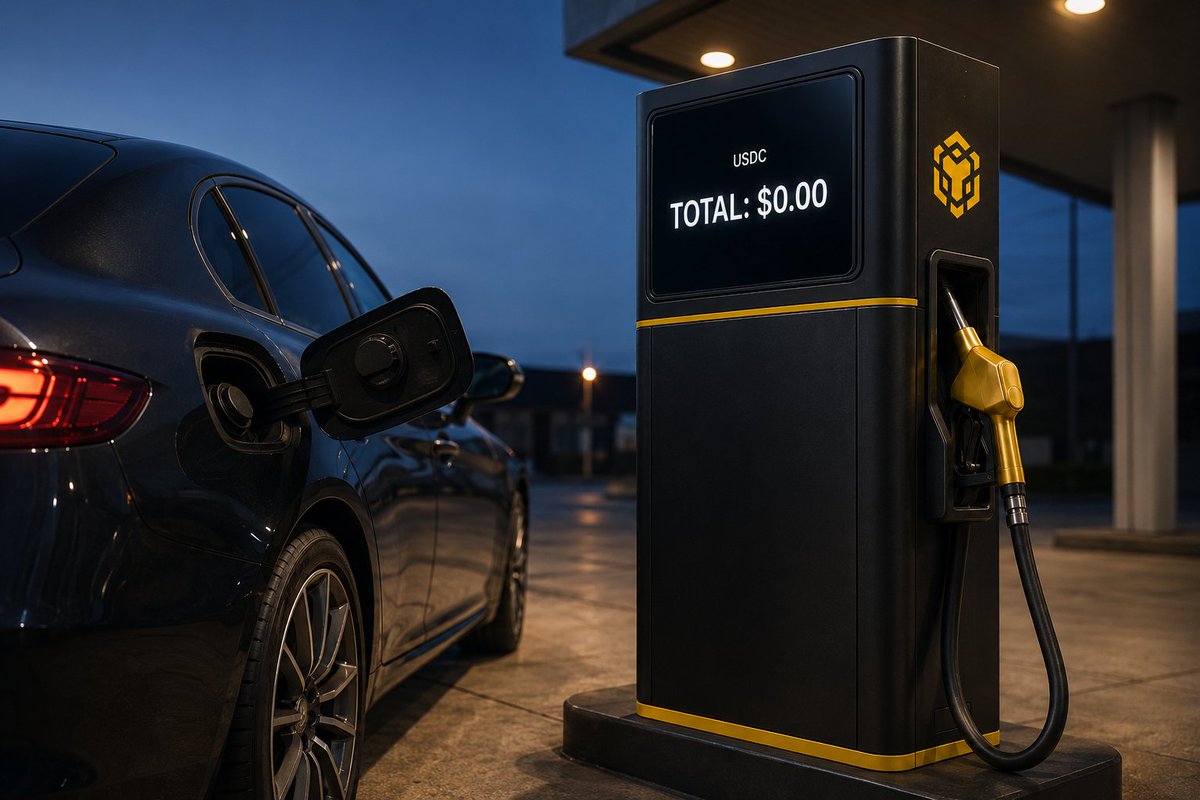
Deposit freely; the deposit amount will remain zero until July 31st.
Payments on BNB Chain using USDC, USD1, and U will be free of charge until July 31st.
For more information, please click the link below 👇
431
0
0
37
大宇
07-24 09:17
フォロー
A significant part of the ethical controversy surrounding the CLARITY bill is that Democrats cited "presidential family stablecoins" as their primary reason for opposition.
It is virtually impossible for USD1 to compete with USDC, whether due to partisan politics or the likelihood of institutions tying trillions of dollars in assets to a politically-backed stablecoin.
405
0
0
38
Mr.理想三旬(🌸,🍃)(FREE,WON)
07-23 13:31
フォロー
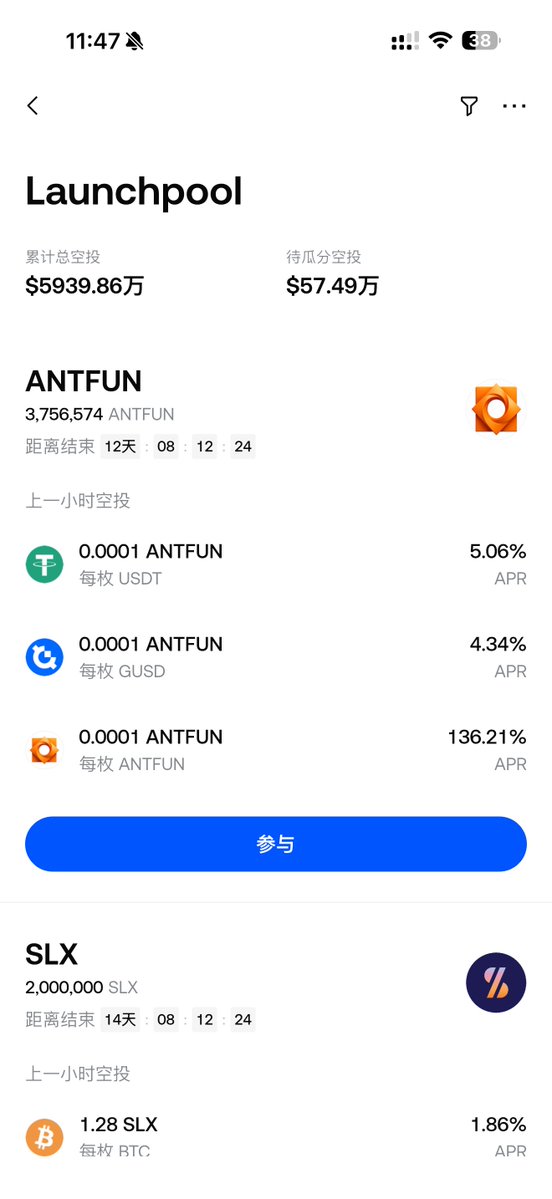
Recently, Gate (@Gate @Gate_zh) has updated many investment strategies, and the one I'm most interested in discussing is $GUSD. This strategy now essentially offers "one stablecoin, multiple returns."
First, mint GUSD using USDT, USDC, or USD1 to earn the current 3.8% minting yield. Then, put the GUSD into Launchpool to mine ANTFUN, effectively adding another layer of yield to the same stablecoin.
With the recent launch of lossless fast redemption for GUSD, fund flexibility has been improved.
GUSD minted in its original currency can be redeemed 1:1 in real-time within the corresponding limit, with zero fees. You can withdraw directly when you need funds without tying up your capital for an extra layer of yield.
However, it's important to note that the lossless limit only recognizes minting records in the original currency.
For example, minting with USDC but then redeeming for USDT, or directly buying GUSD from the spot market, will not count towards the corresponding lossless limit.
Additionally, VIP users can now participate in USDT fixed-term wealth management, with an APR of 3.8% for 7 days and 4% for 30 days.
The final return depends on the mining pool's output, but for those already planning to hold stablecoins, this strategy of earning multiple levels of returns with a single investment is quite practical.
Activity Details:
396
0
0
25
baby
07-22 17:28
フォロー
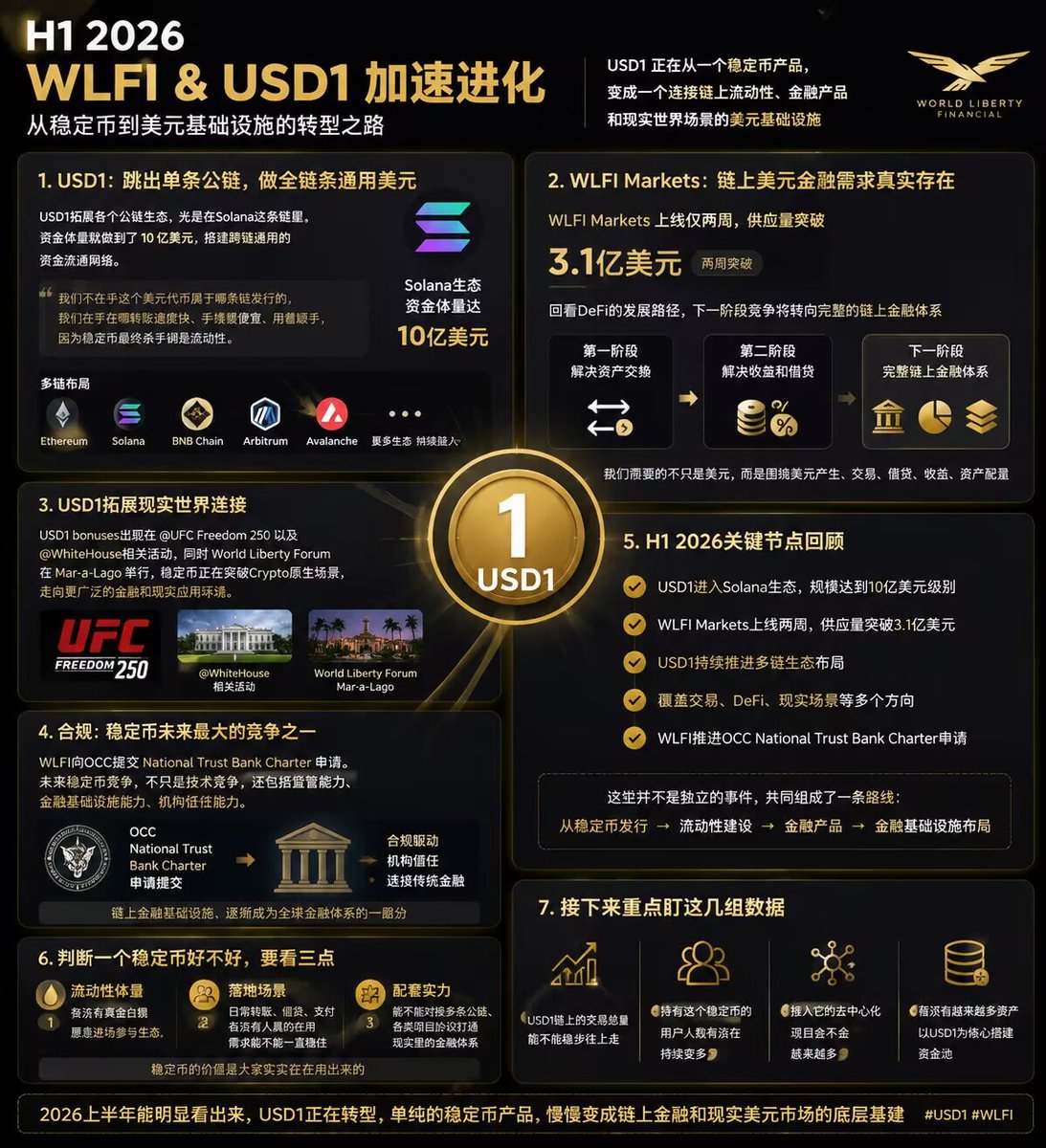
H1 2026 was a significant acceleration phase for WLFI and USD1.
USD1 is evolving from a stablecoin product into a dollar infrastructure connecting on-chain liquidity, financial products, and real-world scenarios.
USD1: Moving Beyond Single Public Chains to Become a Universal Dollar Across All Chains
Notable moves in the first half of the year: USD1 expanded into various public chain ecosystems. Within the Sol chain alone, the amount of funds reached $1 billion. I personally believe this figure represents more than just adding a new chain; it indicates that it's no longer tied to a specific circle, but rather building a cross-chain universal fund circulation network. Going forward, we won't care which chain the dollar token is issued on; we'll care about where transfers are fast, fees are low, and it's convenient to use, because the ultimate killer feature of stablecoins is liquidity.
WLFI Markets: Another noteworthy data point
WLFI Markets, launched just two weeks ago, has already surpassed $310 million in supply. This figure illustrates the genuine market demand for on-chain USD financial products. Let's review the development path of DeFi:
Phase 1: Solving asset exchange
Phase 2: Solving yield and lending
Next Phase: Competition may shift to a complete on-chain financial system. Because what we need is not just USD, but rather a system encompassing USD generation, trading, lending, yield, and asset allocation.
USD1----Connecting to H1 2026
USD1bonuses appeared at @UFC Freedom 250 and @WhiteHouse events, while the World Liberty Forum was held in Mar-a-Lago. Strategically, stablecoins are attempting to break through the native Crypto scenarios, moving from trading platform DeFi protocols to broader financial and real-world applications.
Compliance: One of the biggest future competitions for stablecoins
WLFI submitted an application to the OCC for National Trust Bank Charter. I believe the importance of this move even surpasses short-term market data. Because future competition among stablecoins will not just be a technological competition. This also includes regulatory capabilities, financial infrastructure capabilities, and institutional trust capabilities. For the past few years, Crypto has been attempting to enter the traditional financial system, but in the future, another direction may emerge: crypto financial infrastructure gradually becomes part of the global financial system.
Looking back at H1 2026, if we combine the key milestones of the past six months:
—USD1 entered the Solana ecosystem, reaching a scale of $1 billion.
—WLFI Markets launched, with supply exceeding $310 million within two weeks.
—USD1 continued to advance its multi-chain ecosystem layout.
—Covering multiple areas including trading, DeFi, and real-world scenarios.
—WLFI advanced its OCC National Trust Bank Charter application.
These are not independent events. Together, they form a roadmap, from stablecoin issuance to liquidity building, and then to financial infrastructure development. The first half of 2026 clearly shows that USD1 is transforming from a simple stablecoin product into the underlying infrastructure for on-chain finance and the real-world dollar market.
#USD1