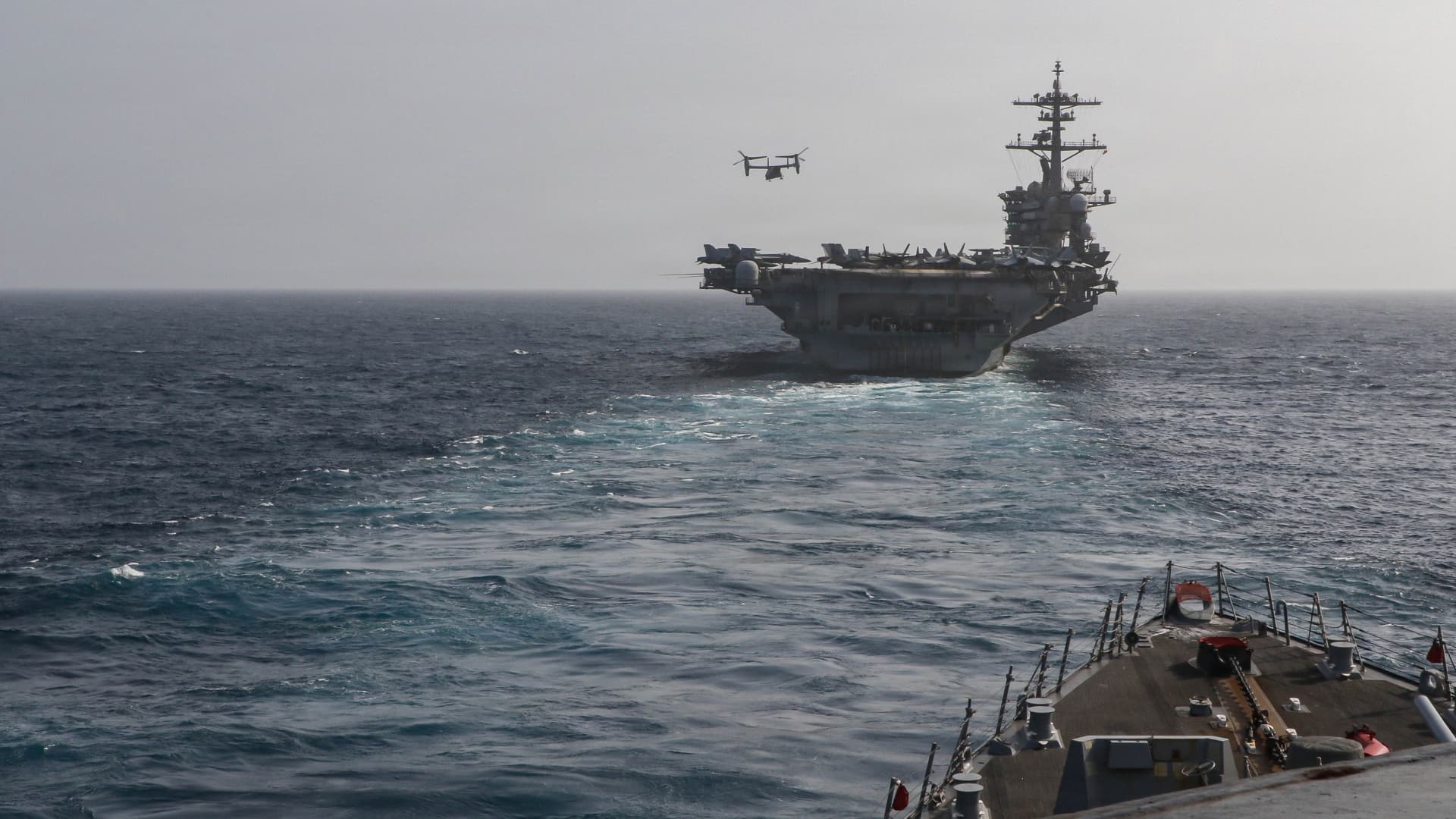


The U.S. military began its ninth consecutive night of strikes against Iran on Sunday, targeting its military capabilities around the Strait of Hormuz. As the conflict continues, shipping in the strait has slowed, oil prices have risen, and the regional situation has once again become the focus of the global energy market.
Traffic volume in Hormuz drops to a near three-week low
The U.S. Central Command stated that a new round of strikes began at 7 p.m. Eastern Time on Sunday, aimed at weakening Iran's ability to attack transit merchant ships. The Strait of Hormuz, which handled approximately 20% of global oil shipments before the conflict, has now become a central area in this war.
Shipping intelligence agency Kpler reported that traffic in the Strait of Hormuz has fallen to its lowest level in nearly three weeks following a new round of hostilities. Only eight ships passed through on Thursday, down from 15 the previous day. Affected by the escalating situation, Brent crude futures rose nearly 3% to around $90.7 per barrel, while WTI crude futures rose 2.5% to around $84.6.
- Brent crude oil was trading at approximately $90.7 per barrel.
- WTI crude oil was trading at approximately $84.6 per barrel.
- Passage through the Hormuz dropped to 8 vessels last Thursday.
Casualties on both sides continue to rise
The U.S. military said on Sunday that another American service member had died in recent fighting with Iran, and the remains of a previously missing service member had been found in Jordan. This brings the total number of American deaths in the nearly five-month-long conflict to 17.
Iran claims that at least 50 people have been killed and more than 500 injured since the US resumed its strikes this month. As both sides expand their operations in the region, concerns are growing about a full-scale escalation of the conflict.
Security pressure is rising in several Gulf countries
The US military has recently expanded its strikes to include some civilian infrastructure. Reports indicate that an attack on an Iranian desalination plant left approximately 10,000 people without water. Meanwhile, Tehran has also launched retaliatory strikes in the Gulf region, targeting neighboring countries such as Bahrain, Saudi Arabia, Jordan, and Kuwait.
The U.S. Embassy in Manama, Bahrain, said on Monday that information indicated Iran might launch an attack on an unspecified location in downtown Manama and warned U.S. citizens in the area to remain vigilant.
U.S. officials emphasized that shipping through the Strait of Hormuz has not completely ceased. U.S. Energy Secretary Chris Wright stated on Sunday that approximately two-thirds of the pre-conflict traffic is still flowing through the waterway, equivalent to about 14 million barrels per day. Before the conflict, the waterway transported approximately 20 million barrels of crude oil and refined products daily.